
The Borghese Gallery masterpieces you cannot miss

Caravaggio’s Boy with a Basket of Fruit, in the Borghese Gallery in Rome, shows a young man holding a wicker basket filled with fruit and leaves. His head tilts to one side, and his loose white shirt leaves one shoulder bare. Light catches his face, shoulder, and the fruit, while shadows separate the grapes and folds of fabric.
Read more
Caravaggio’s David with the Head of Goliath, displayed in Room 8 of the Borghese Gallery in Rome, shows the young David holding Goliath’s severed head by the hair. His sword is lowered, and his gaze rests on the defeated giant.
Read more
Caravaggio’s Young Sick Bacchus shows a young man wearing an ivy wreath and holding green grapes. His body turns away while his face looks toward the viewer. Light catches his bare shoulder against the dark background.
Read more
Titian’s Sacred and Profane Love shows two similar-looking women beside a carved stone sarcophagus filled with water. One wears a white dress; the other is nude, with drapery across her lap and a lamp raised in one hand. Between them, Cupid stirs the water.
Read more
Caravaggio’s Basket of Fruit shows a wicker basket filled with fruit and leaves, set against a pale background. The basket projects slightly over the ledge beneath it, while blemished fruit and curling leaves interrupt the impression of abundance. These details give the still life its tension between ripeness and decay.
Read more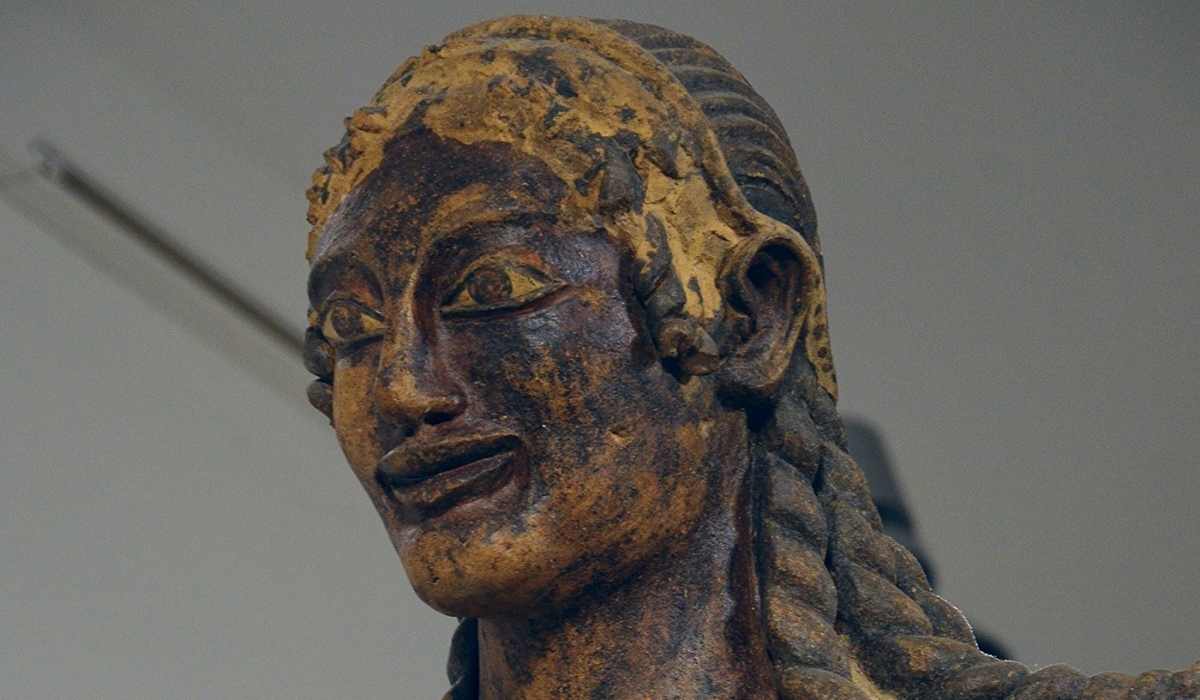
The Apollo of Veii, also known as Apulu, is an Etruscan statue made of painted terracotta around 510–500 BCE. It depicts Apollo advancing toward Heracles in a dispute over a sacred deer. Originally placed on the roof of the Temple of Minerva at Veii, the statue formed part of a larger mythological scene.
Read more
La Fornarina by Raphael is a Renaissance portrait painted around 1520 and housed at Palazzo Barberini in Rome. Its title is commonly translated as “the baker’s daughter.” The woman is traditionally identified as Margherita Luti, Raphael’s reputed lover.
Read more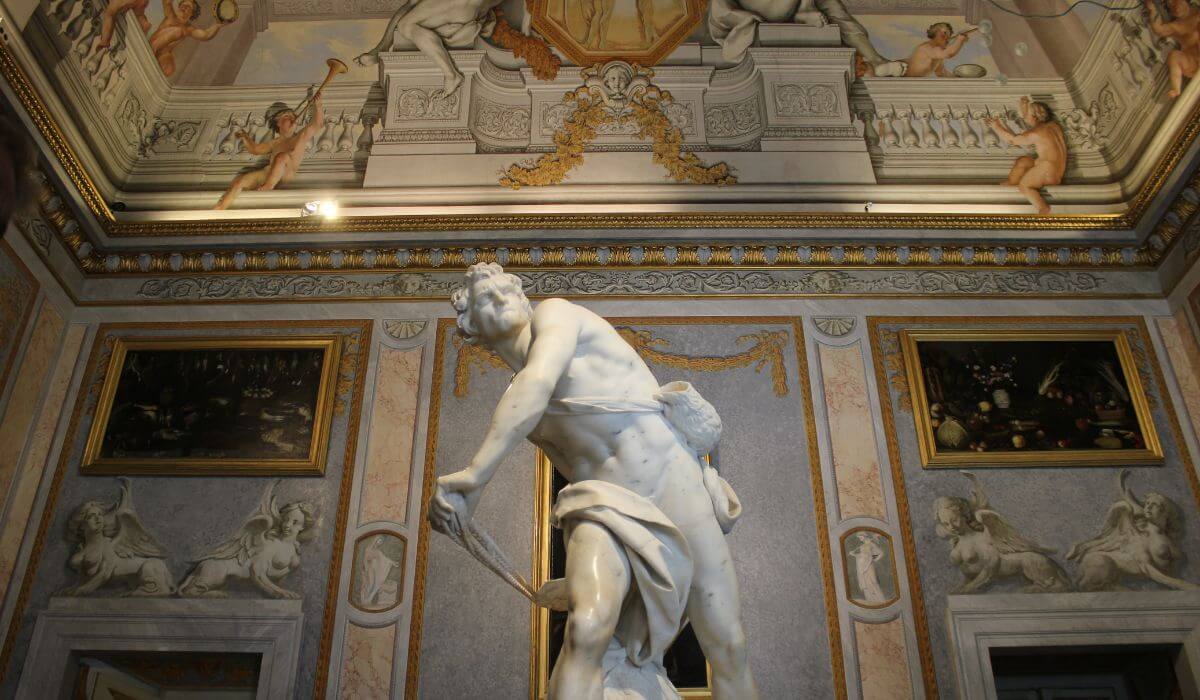
Bernini’s David is a life-size marble sculpture carved in 1623–1624 and displayed at the Borghese Gallery in Rome. It captures the biblical hero twisting his body to launch a stone at Goliath.
Read more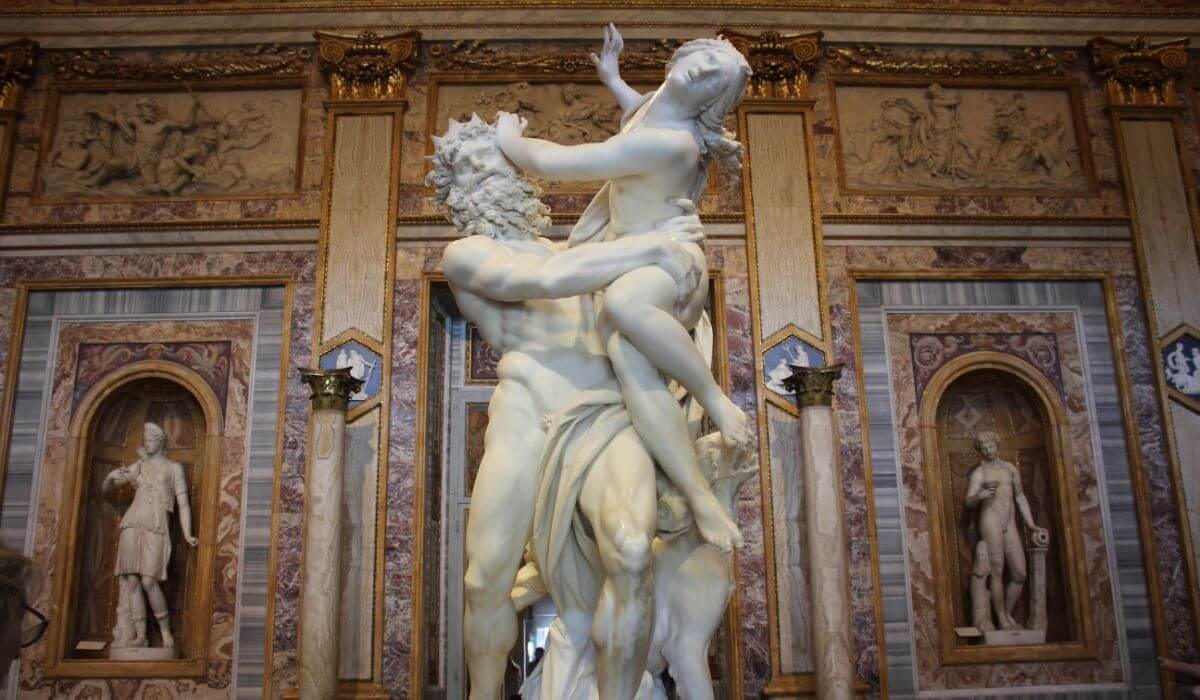
The Rape of Proserpina by Bernini, also known as The Abduction of Proserpina, is a marble sculpture created in 1621–1622 and displayed at the Borghese Gallery in Rome. It depicts Pluto abducting Proserpina as she struggles to escape.
Read more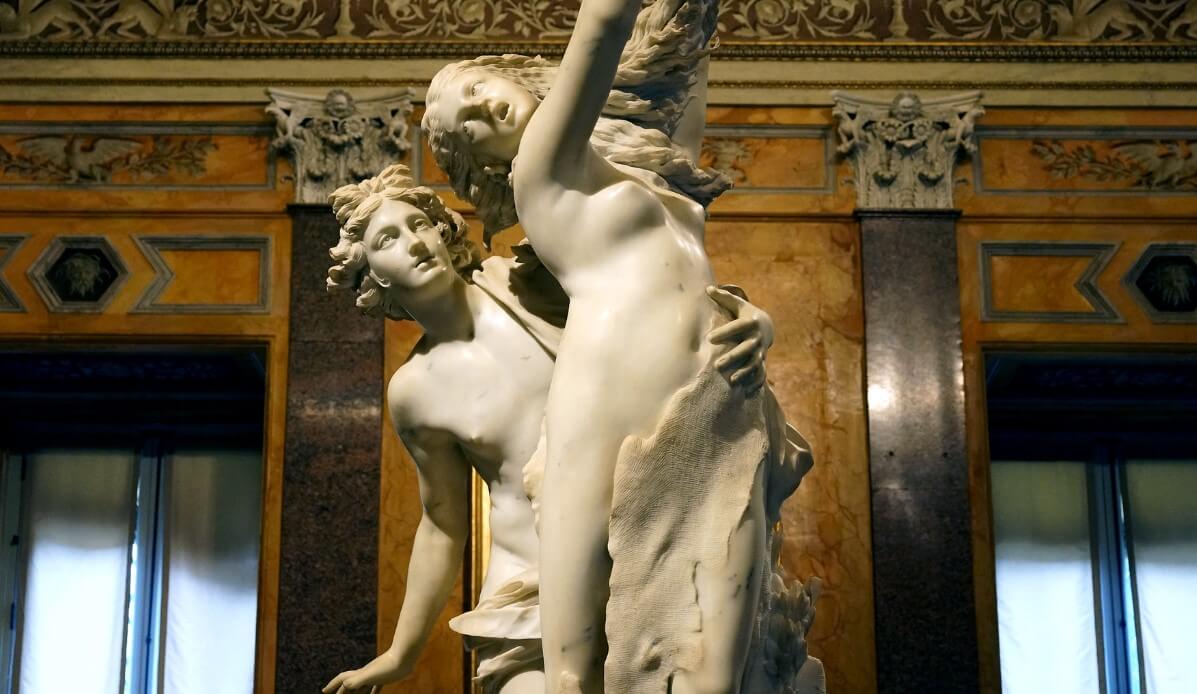
Apollo and Daphne by Bernini is a life-size marble sculpture carved between 1622 and 1625 and displayed in Room 3 of the Borghese Gallery in Rome. It captures the moment Daphne transforms into a laurel tree to escape Apollo, with bark spreading across her body and leaves growing from her fingers.
Read more