
- On September 29, 2026
- In ABOUT VILLA BORGHESE Art collections
The Rape of Proserpina by Bernini: Sculpture, Story and Meaning
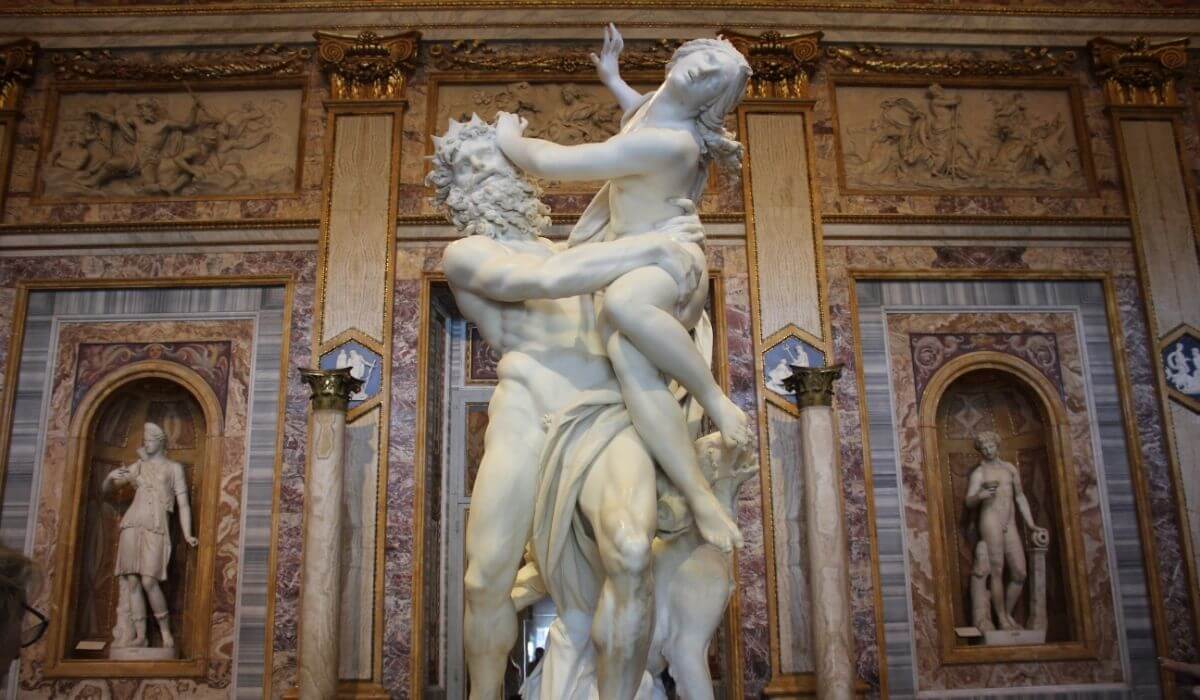
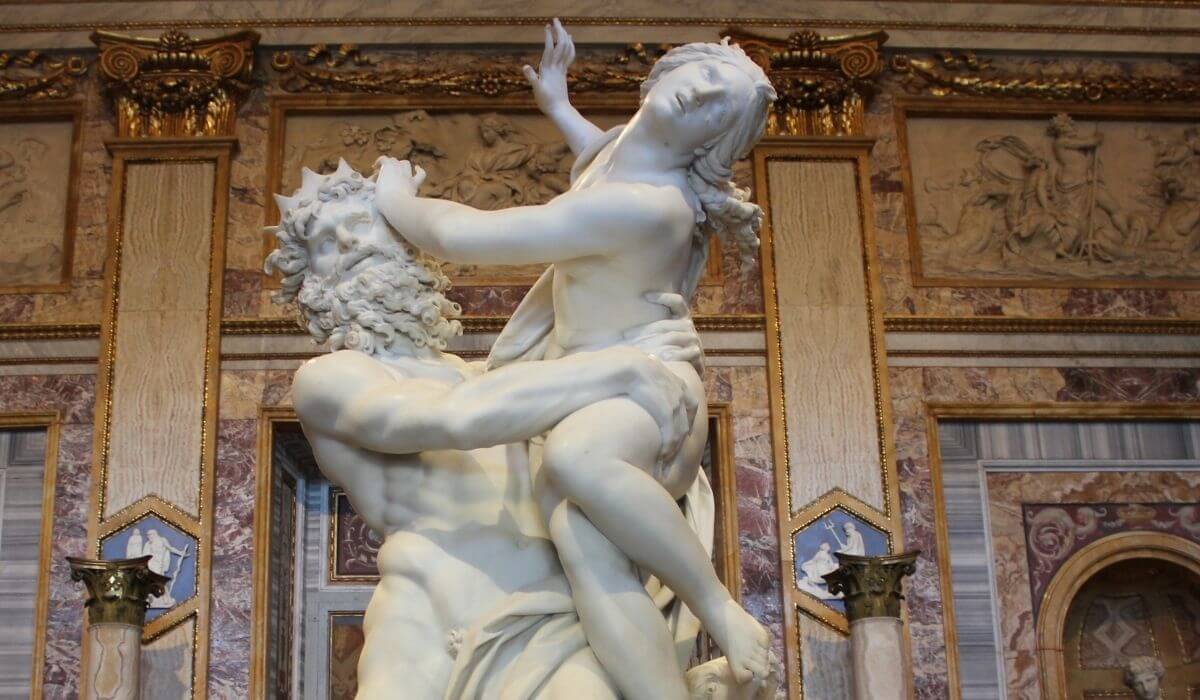
The Rape of Proserpina by Bernini, also known as The Abduction of Proserpina, is a marble sculpture created in 1621–1622 and displayed at the Borghese Gallery in Rome. It depicts Pluto abducting Proserpina as she struggles to escape.
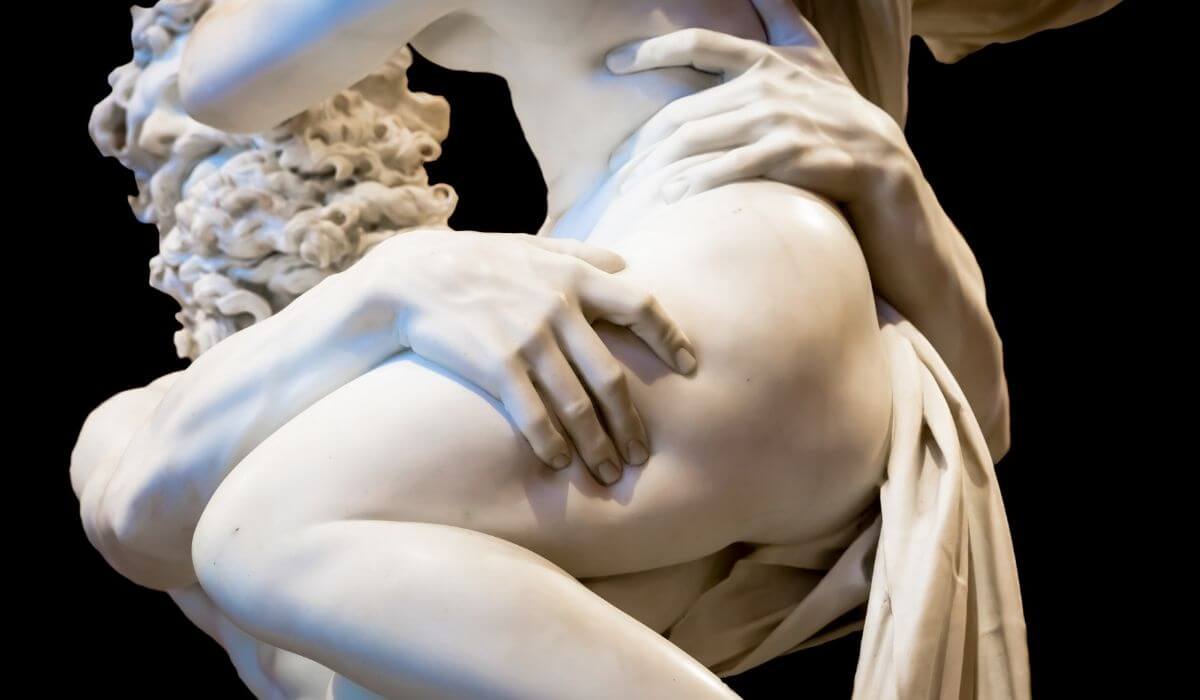
Pluto’s fingers appear to sink into her thigh, making solid marble look like soft flesh. Her twisting body, tears and hand pushing against his face capture the violence of the abduction.
The Rape of Proserpina by Bernini: Key Facts
- Artist: Gian Lorenzo Bernini
- Created: 1621–1622
- Subject: Pluto (Hades) abducting Proserpina (Persephone)
- Story source: Ovid’s Metamorphoses, Book 5
- Style: Baroque
- Material: Carrara marble
- Height: 255 cm (about 8 ft 4 in), excluding the base
- Commissioned by: Cardinal Scipione Borghese
- Location: Room 4 of the Borghese Gallery in Rome
- Admission: Included with museum admission. Timed booking required.
What does Bernini’s Rape of Proserpina depict?
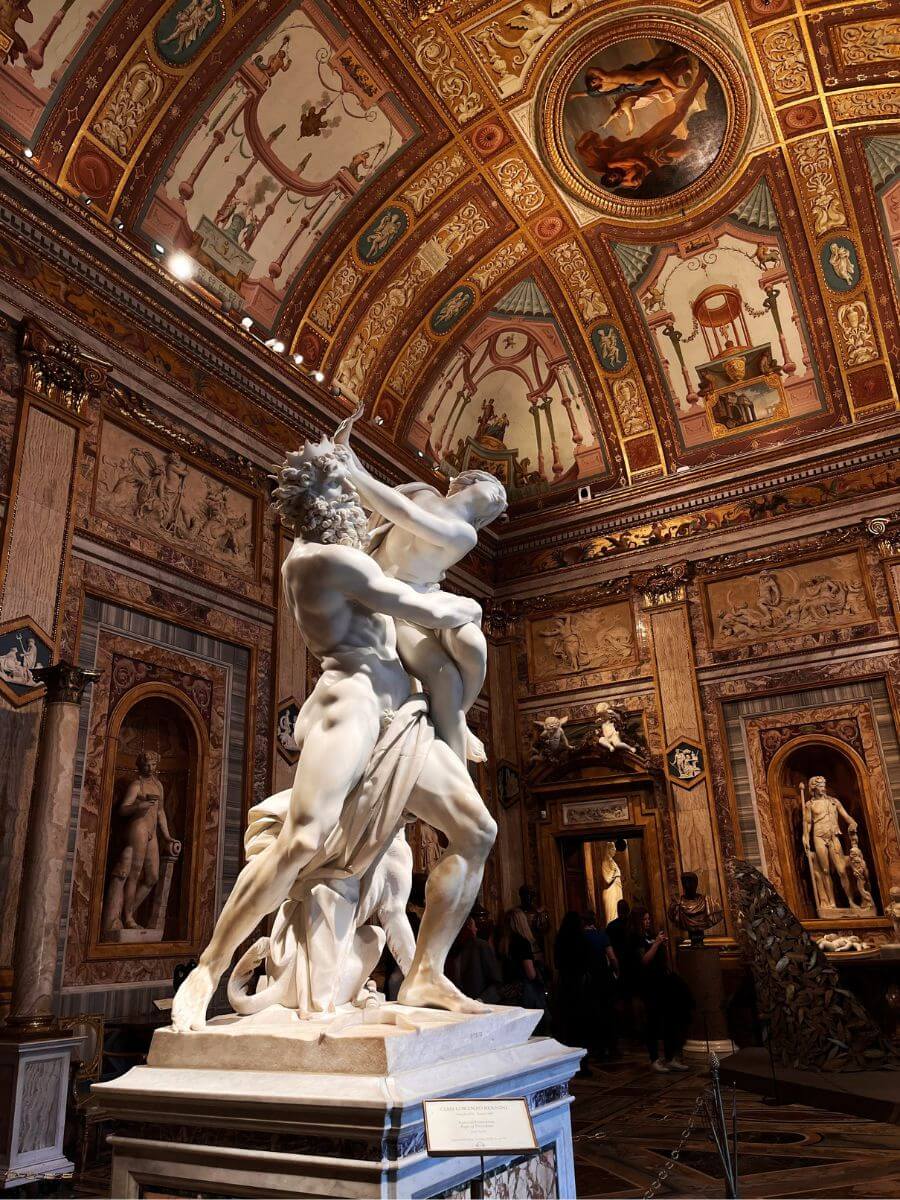
Bernini captures Pluto abducting Proserpina and carrying her toward the underworld. He lifts her off the ground while she twists away and pushes against his face, trying to break free.
At their feet stands Cerberus, the three-headed dog that guards the underworld, identifying the realm to which Pluto is taking her.
Pluto and Proserpina are the Roman equivalents of Hades and Persephone. The sculpture is also known as Pluto and Proserpina.
“Rape” in the title uses the historical meaning of forcible seizure or abduction. This explains the alternative title The Abduction of Proserpina, or Il Ratto di Proserpina in Italian.
Why is Bernini’s Rape of Proserpina so famous?
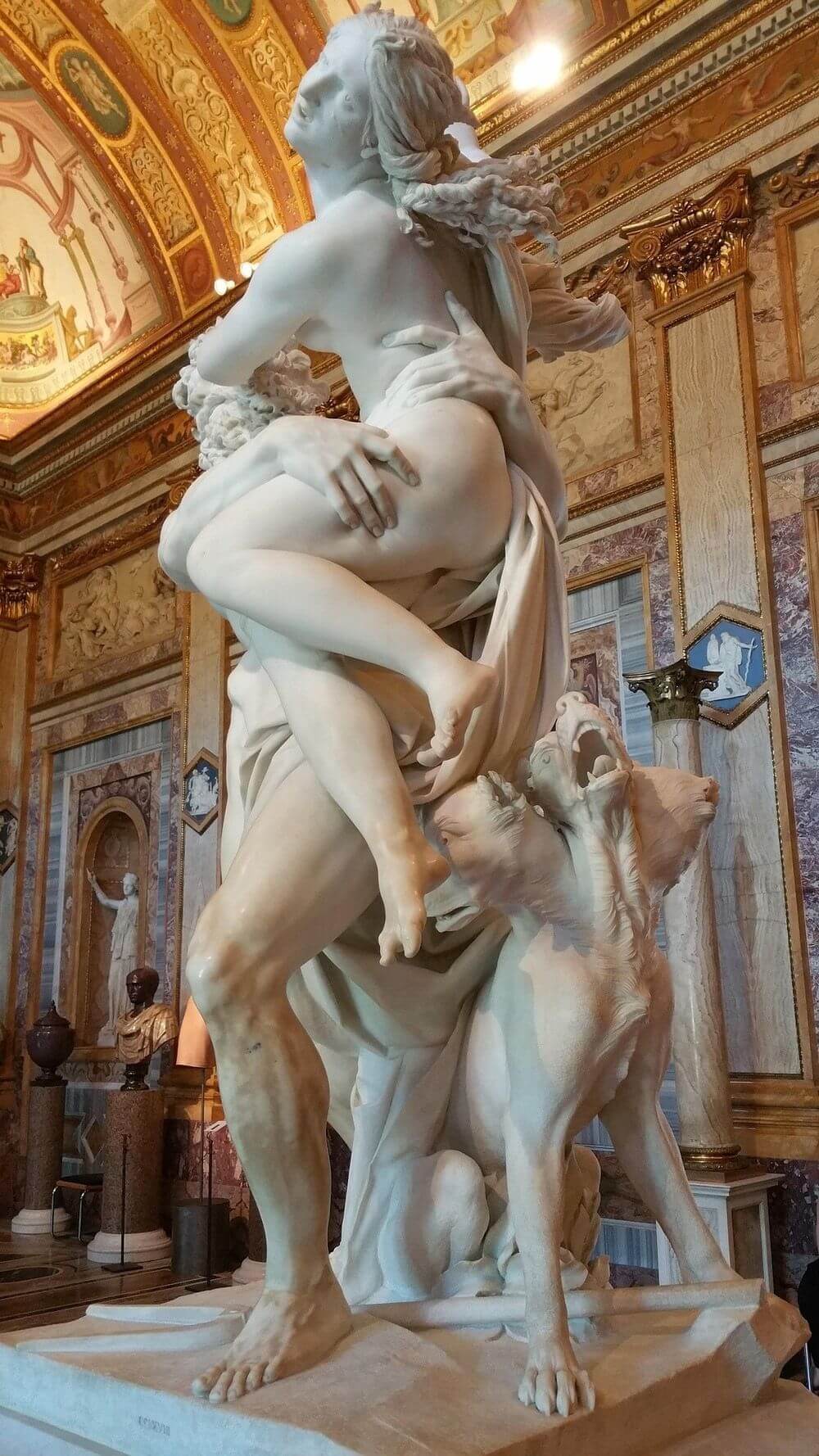
Bernini’s Rape of Proserpina is famous for its lifelike marble flesh, dramatic movement and emotional intensity. The carving makes both the physical pressure of Pluto’s grip and Proserpina’s distress visible.
Pluto’s fingers and the illusion of soft flesh
Look at Pluto’s fingers pressing into Proserpina’s thigh. The marble dips beneath his grip, while the surrounding flesh appears compressed and pushed outward.
Bernini carved these indentations and rounded contours into solid stone. The carefully shaped surface makes the thigh look soft enough to yield under pressure.
Compare the smooth skin with Pluto’s deeply carved hair and beard, then look at Cerberus’s rougher fur. Bernini used a toothed chisel, or gradine, to create the dog’s textured coat. These contrasting finishes help the same material suggest both soft flesh and coarse hair.
Proserpina’s resistance and the sculpture’s meaning
Proserpina’s tears and parted lips convey fear and pain. Her hand pushes against Pluto’s face while her body turns away from him.
These gestures reveal the scene’s central conflict: Pluto holds her captive while she tries to escape.
The famous hand detail is therefore more than a display of sculptural skill. It shows how firmly Pluto restrains her, connecting the illusion of soft flesh to the violence of the abduction.
Movement, balance and the Baroque style
Pluto’s planted legs support the group, while Proserpina’s lifted body, twisting torso and outstretched arm suggest movement. Their opposing poses make the action appear unfinished, as though the struggle could continue.
This sense of action unfolding before you, combined with expressive faces and dramatic gestures, is characteristic of Baroque sculpture.
 You can compare Bernini’s treatment of flesh here with Apollo and Daphne, where fingers become leaves and skin turns into bark. Both works show how he used marble to suggest textures far removed from hard stone.
The myth of Pluto and Proserpina
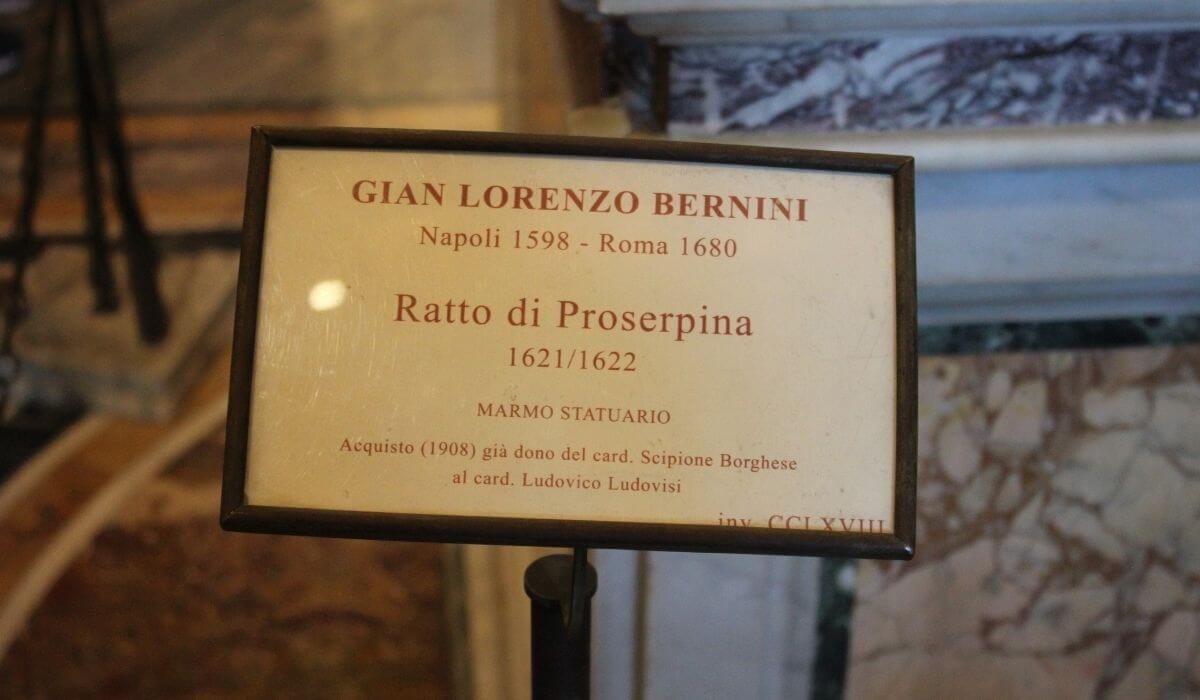
Proserpina is picking flowers near Lake Pergusa in Sicily when Pluto abducts her and carries her into the underworld.
Her mother, Ceres, goddess of agriculture, searches for her. In her grief and anger, she stops crops from growing, threatening humanity with famine. Jupiter, Proserpina’s father and king of the gods, intervenes to arrange her return.
But Proserpina has eaten pomegranate seeds in the underworld. Eating food there binds her to Pluto’s realm, preventing her from returning permanently to her mother.
In Ovid’s Metamorphoses, Book 5, Jupiter settles the conflict by dividing her year: six months with Ceres and six months with Pluto.
This separation and reunion explain the cycle of the seasons. The earth becomes barren while Ceres mourns her daughter’s absence, then fertile again when Proserpina returns.
The commission and history of the Rape of Proserpina
Cardinal Scipione Borghese commissioned the sculpture from Bernini, who completed it in 1622 at the age of 23.
Shortly afterward, Scipione gave it to Cardinal Ludovico Ludovisi, nephew of Pope Gregory XV. The gift may have been intended to win favor with the new pope’s family after the death of Scipione’s uncle, Pope Paul V.
The sculpture remained in the Ludovisi collection for nearly three centuries. In 1908, the Italian state purchased it and brought it to the Borghese Gallery.
The original pedestal carried a short poem by Maffeo Barberini, later Pope Urban VIII. Speaking in Proserpina’s voice, it asked people gathering flowers to witness her abduction. That pedestal is now lost; the present base dates to 1911.
How to see it at the Borghese Gallery?
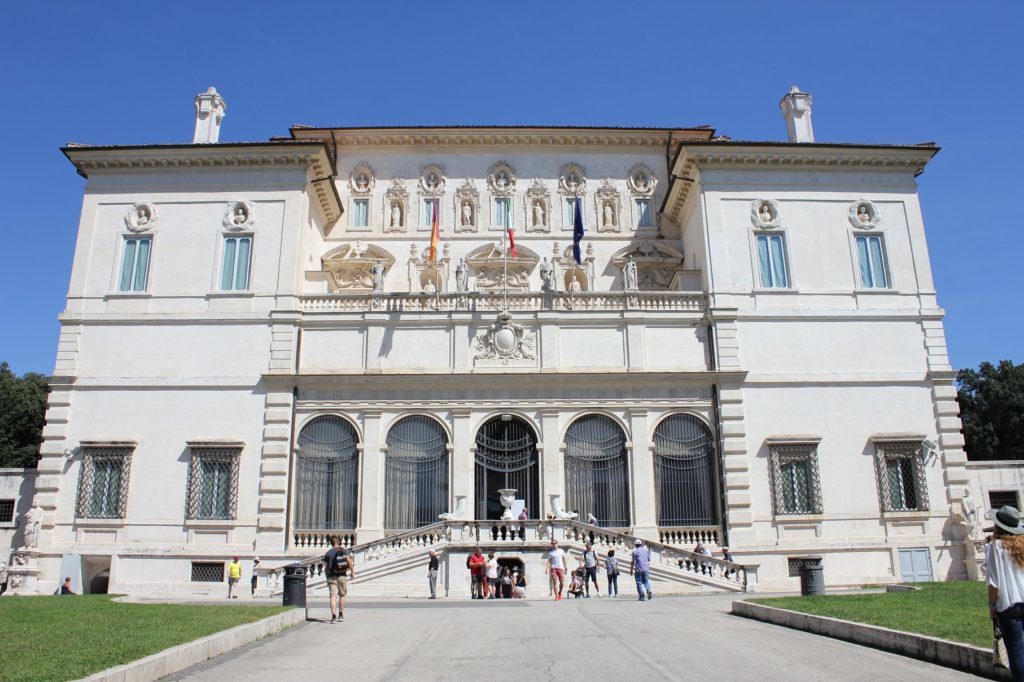
You’ll find The Rape of Proserpina in Room 4, the Sala degli Imperatori (Room of the Emperors), on the ground floor of the Borghese Gallery in Rome.
Start in front of the sculpture to take in the whole group, then move to either side. Notice how Proserpina twists away from Pluto, and look closely at his fingers pressing into her thigh. Changing your viewing angle helps you see the depth of the carving.
Allow a few minutes to look beyond the famous hand detail. Elsewhere in the museum, Bernini’s David offers another example of how he carved a body in motion.
Practical information
- Opening hours: Tuesday–Sunday, 9 a.m.–7 p.m. Last admission is at 5:45 p.m.
- Museum visit duration: Standard visits last two hours. The final 5:45 p.m. entry allows 1 hour 15 minutes.
- Closures: Mondays, January 1 and December 25. Check the official calendar for exceptions.
- Reservations: A timed reservation is required for all visitors, including those eligible for free admission.
- Tickets: Access to the sculpture is included with your Borghese Gallery ticket; no separate ticket is needed.
Book ahead to secure your preferred time. See our Borghese Gallery tickets guide for booking options and practical advice.
Sources
- Galleria Borghese — Rape of Proserpine: official catalogue entry covering the sculpture’s commission, history, dimensions and original pedestal.
- Museum With No Frontiers — The Rape of Proserpina: analysis of Bernini’s marble carving, composition and depiction of emotion.
- Ovid — Metamorphoses, Book 5, via Theoi: translated excerpts describing Proserpina’s abduction, the pomegranate seeds and the division of her year.

Fanny, a skilled writer with a keen interest in art and culture, has been enchanted by the Borghese Gallery’s exquisite collection and its history. As a significant contributor to the Visit Borghese Gallery blog, she artfully shares insights and stories, bringing the gallery’s masterpieces and the lush gardens to life for readers around the world.