

- On October 22, 2026
- In PLAN YOUR VISIT Top attractions
Temple of Asclepius in Rome: What to See in Villa Borghese
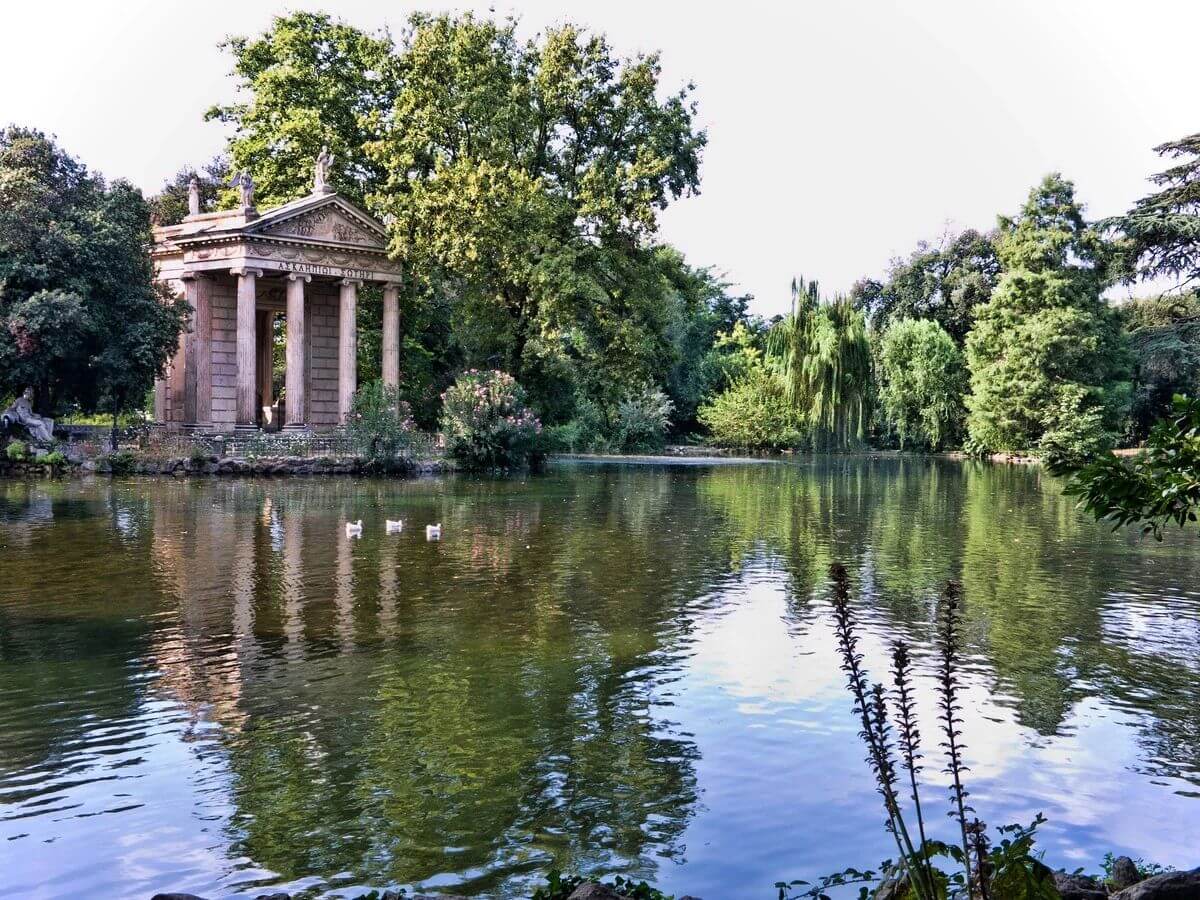
A small island, a neoclassical temple, and columns reflected in the water: the Temple of Asclepius is a distinctive stop on a walk through Villa Borghese in Rome. Also known as the Temple of Aesculapius, it looks ancient but was built in the 18th century as part of the park’s landscape garden.
You can admire it for free from the lakeside paths or rent a rowboat for a view from the water. Here’s how to reach the lake, what to look for, and how to fit the temple into your visit.
Temple of Asclepius: Key Facts
- Location: Giardino del Lago, Villa Borghese, Rome.
- Access: Free to view from the lakeside paths.
- Park hours: Dawn to dusk.
- Built: 1785–1792.
- Rowboats: Available for a fee when rentals are operating.
How to Get to the Temple of Asclepius
The temple is in the Giardino del Lago, the Lake Garden within Villa Borghese. On your map, look for Tempio di Esculapio (also called Tempietto di Esculapio), the monument on the small island in the lake.
- By metro: Take Metro Line A to Flaminio, then enter Villa Borghese at Piazzale Flaminio.
- Inside the park: Head to Largo Santander and the Arch of Septimius Severus (Arco di Settimio Severo) at the entrance to the Lake Garden.
- At the lake: Follow the garden paths to the lakeside for a view of the temple.
For a broader walk through the park, use our Villa Borghese Gardens walking route.
Visiting the Temple of Asclepius and the Lake
Seeing the Temple for Free
Villa Borghese is open from dawn to dusk, and you can see the temple from the paths around the lake for free. Walk along the shore to take in the columns, sculptures, and their reflection in the water.
Renting a Rowboat on the Lake
Rent a rowboat at the rental point on Viale dell’Aranciera for a different view of the temple from the water. For planning, budget around €5 per person for 20 minutes on the lake. Confirm the current price and rental time at the booth before paying.
You receive a numbered ticket. Keep it handy: staff use the number to call you back when your rental time is up.

What to Look for at the Temple of Asclepius
The Ionic Columns and the Greek Inscription
The four Ionic columns across the front have grooved shafts and capitals that curl like scrolls. These curled tops are a defining feature of the Ionic style.
Above them, the Greek inscription translates as “To Asclepius the Savior,” a dedication to the Greek god of medicine.
The Pediment and Sculptures
The triangular pediment above the inscription contains a stucco relief of Asclepius’s arrival in Rome. The scene depicts a sacred snake representing the god, recalling the legend of how his worship reached the city.
 The temple’s upper decoration includes copies of ancient Roman statues. Seven originals are now in the Villa Borghese sculpture collection at the Museo Pietro Canonica.

A Short History of the Temple of Asclepius
An ancient colossal statue of Asclepius, found near the ruins of the Mausoleum of Augustus, was the starting point for the temple’s design. Antonio Asprucci first planned an architectural backdrop for the statue, then developed the idea into the freestanding temple on the island, built between 1785 and 1792.
The lake was just as carefully planned. In the late 1700s, Marcantonio IV Borghese transformed this part of the estate into an English-style landscape garden. Its artificial lake was designed to resemble a natural pond, giving the temple the setting you see from the shore.
What to See Near the Temple of Asclepius
Continue your walk through Villa Borghese with one of these four stops:
- Piazza di Siena: Named for the Borghese family’s home city, this oval arena hosts international equestrian events. Its broad, tree-lined setting offers a change of scenery after the lake.
- Pincio Terrace: The terrace looks down over Piazza del Popolo, with Rome’s rooftops and St. Peter’s dome beyond. Choose this stop if you want to extend your park walk with a panoramic view of the city.
- Museo Pietro Canonica: For more sculpture, visit the museum’s collection of original Roman statues from the temple. They offer a closer look at the decoration represented by copies at the lake.
- National Gallery of Modern and Contemporary Art: On Viale delle Belle Arti, this museum takes you from 19th-century painting to contemporary art, with works spanning Impressionism, Futurism, and more recent movements. Choose it if you want to add a modern art museum to your walk.

Fanny, a skilled writer with a keen interest in art and culture, has been enchanted by the Borghese Gallery’s exquisite collection and its history. As a significant contributor to the Visit Borghese Gallery blog, she artfully shares insights and stories, bringing the gallery’s masterpieces and the lush gardens to life for readers around the world.
What does the wording on the temple say at the top? I am a school teacher and I wanted to use this temple in my decorating.
I do not understand why this site has so many 1-star ratings! It’s a beautiful temple, in a beautiful area, not overcrowded like many other tourist attractions, and the fee to rent a row boat to take out on the lake is very reasonable! I definitely recommend this place, it was a wonderful experience.
My family name is D’Esculapio. My grandfather who emigrated to the US from Italy in the early 1900’s told me that the name comes from the Roman God of Medicine- Aesculapius. I am planning a trip to Italy next year and will definitely be visiting Villa Borghese.