
- On September 16, 2026
- In Borghese Gardens Day trip PLAN YOUR VISIT
Terrazza del Pincio – Rome’s Best Free Viewpoint at Sunset
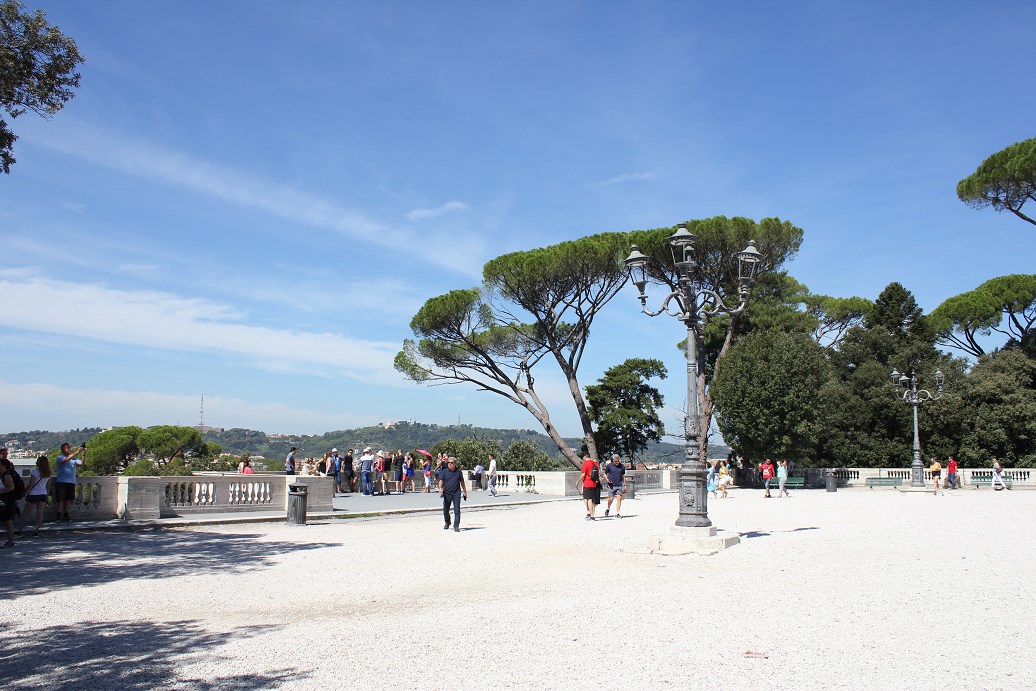
The Terrazza del Pincio is a panoramic viewpoint on the edge of Villa Borghese, directly above Piazza del Popolo. From the balustrade, you can see St. Peter’s dome, Monte Mario and Rome’s rooftops.
The terrace is particularly popular at sunset, when the view opens west across the city. Here is how to get there, when to arrive and what to see around the Pincio promenade.
Quick Answer
- Entry: Free; no ticket or reservation required
- Opening hours: Always open
- Location: Piazzale Napoleone I, above Piazza del Popolo
- Nearest metro: Flaminio, Line A
- Walk from Flaminio: About 10 minutes uphill via Via Gabriele D’Annunzio
- Best time to visit: Arrive 30 to 45 minutes before sunset
- Time needed: 30 to 45 minutes; around one hour with the nearby Pincio landmarks
How to Get to the Terrazza del Pincio?
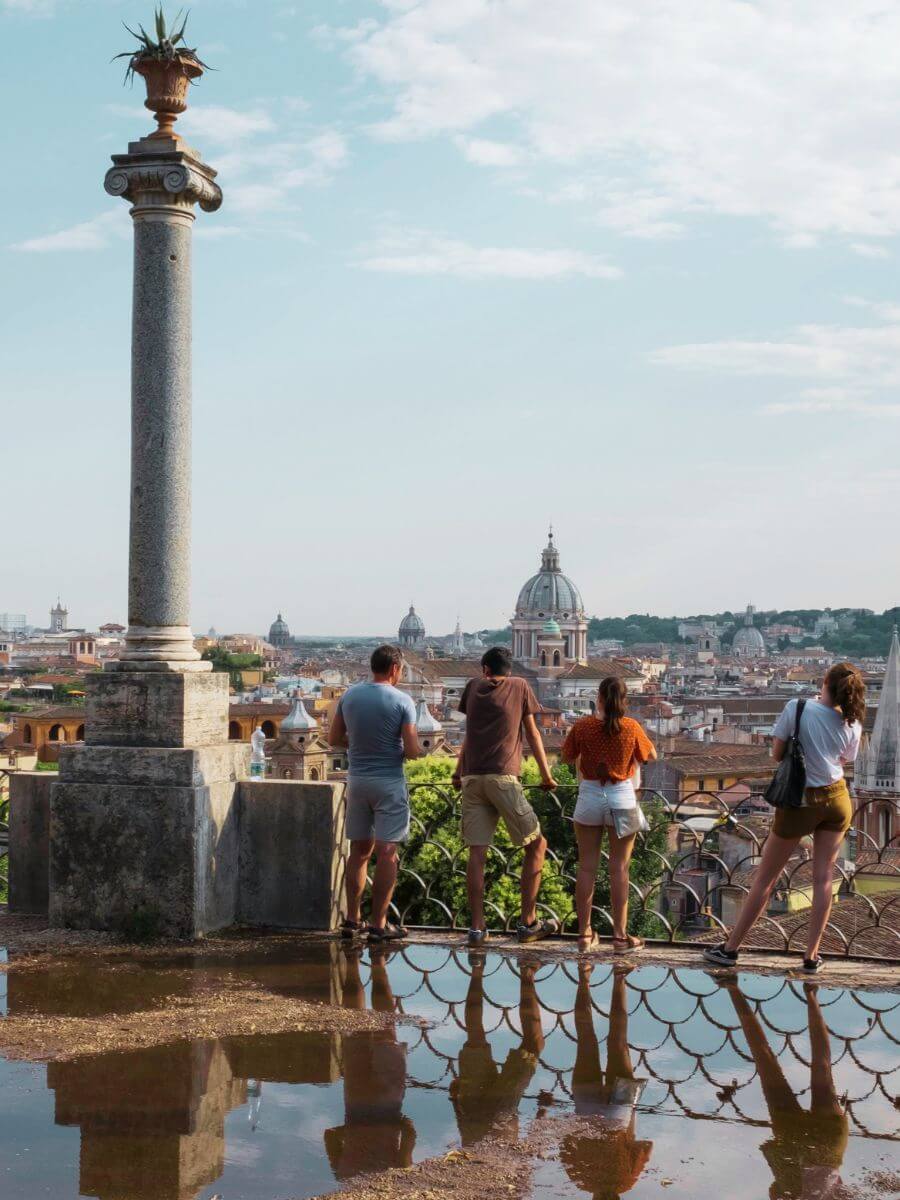
You can reach the terrace from Piazza del Popolo, the Spanish Steps or Villa Borghese. The fastest route starts at Flaminio metro station.
Terrazza del Pincio Map
Use the map below to locate the viewpoint at Piazzale Napoleone I, directly above Piazza del Popolo.
Best Routes to the Pincio Terrace
- From Flaminio and Piazza del Popolo: Take Metro Line A to Flaminio, cross Piazza del Popolo and follow the Via Gabriele D’Annunzio ramps to Piazzale Napoleone I. Allow about 10 minutes for the steady uphill walk.
- From the Spanish Steps: From the top of the steps, follow Viale della Trinità dei Monti past Villa Medici. The walk takes about 15 minutes and is mostly level after the steps.
- From Villa Borghese: From the Borghese Gallery, follow the park paths southwest and allow 20 to 25 minutes to reach the Pincio through the Villa Borghese Gardens. If the museum is part of your day, reserve your Borghese Gallery tickets before planning the rest of your visit.
 Flaminio is the most convenient public transportation stop. There is no dedicated visitor parking, and driving is rarely the easiest option in central Rome.
Is the Terrazza del Pincio Accessible?
The ramps from Piazza del Popolo avoid stairs but have a steady incline. The route through Villa Borghese is flatter, although some park surfaces may be uneven.
Two public elevators are located near the end of Viale dell’Orologio, but check their operating status locally before relying on them.
Best Time to Visit the Terrazza del Pincio
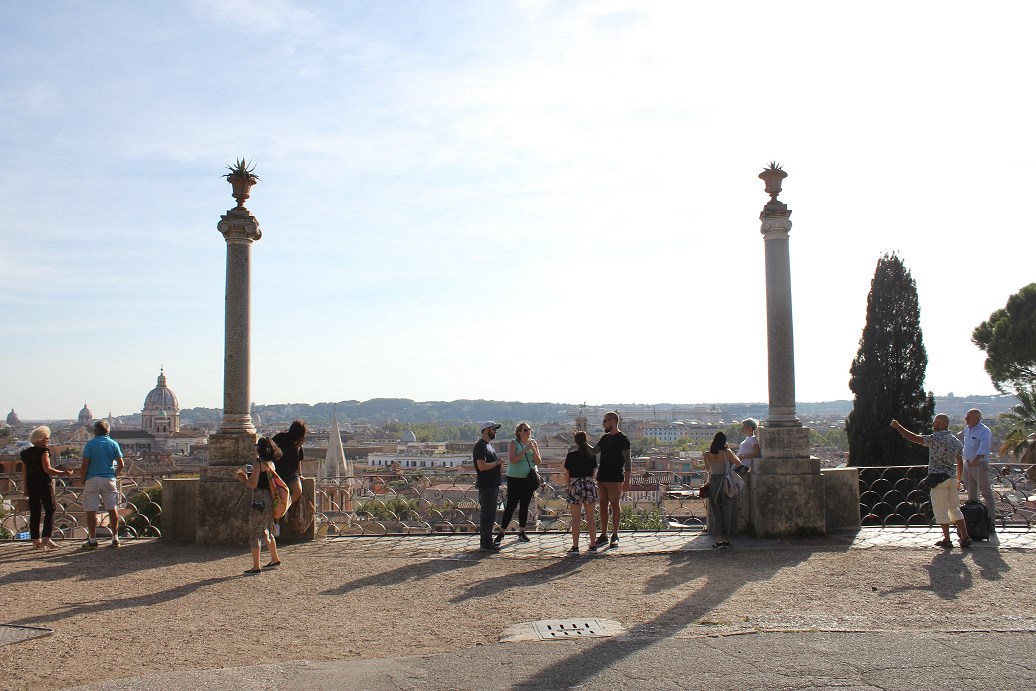
- Best time for sunset: Visit in the late afternoon. The terrace faces west, with the sun setting behind St. Peter’s dome and Rome’s rooftops.
- When to arrive: Come 30 minutes before sunset, or 45 minutes early on weekends and summer evenings.
- For blue hour: Stay for 15 to 20 minutes after sunset to see the city lights appear.
- For fewer crowds: Visit in the morning. Midday still offers clear views, but the light is less flattering for photographs.
Approximate Sunset Times in Rome
The table gives typical local sunset ranges. Times change throughout each month, and the clocks change in late March and late October.
Check the exact sunset time for your date before you go.
Month | Typical sunset time |
January | 4:50 to 5:25 pm |
February | 5:25 to 6:00 pm |
March | About 6:00 pm early in the month; 7:30 pm after clocks change |
April | 7:35 to 8:10 pm |
May | 8:10 to 8:40 pm |
June | 8:40 to 8:50 pm |
July | 8:30 to 8:50 pm |
August | 7:45 to 8:30 pm |
September | 6:55 to 7:45 pm |
October | About 6:50 pm early in the month; 5:05 pm after clocks change |
November | 4:40 to 5:05 pm |
December | 4:40 to 4:50 pm |
What You Can See from the Terrace?
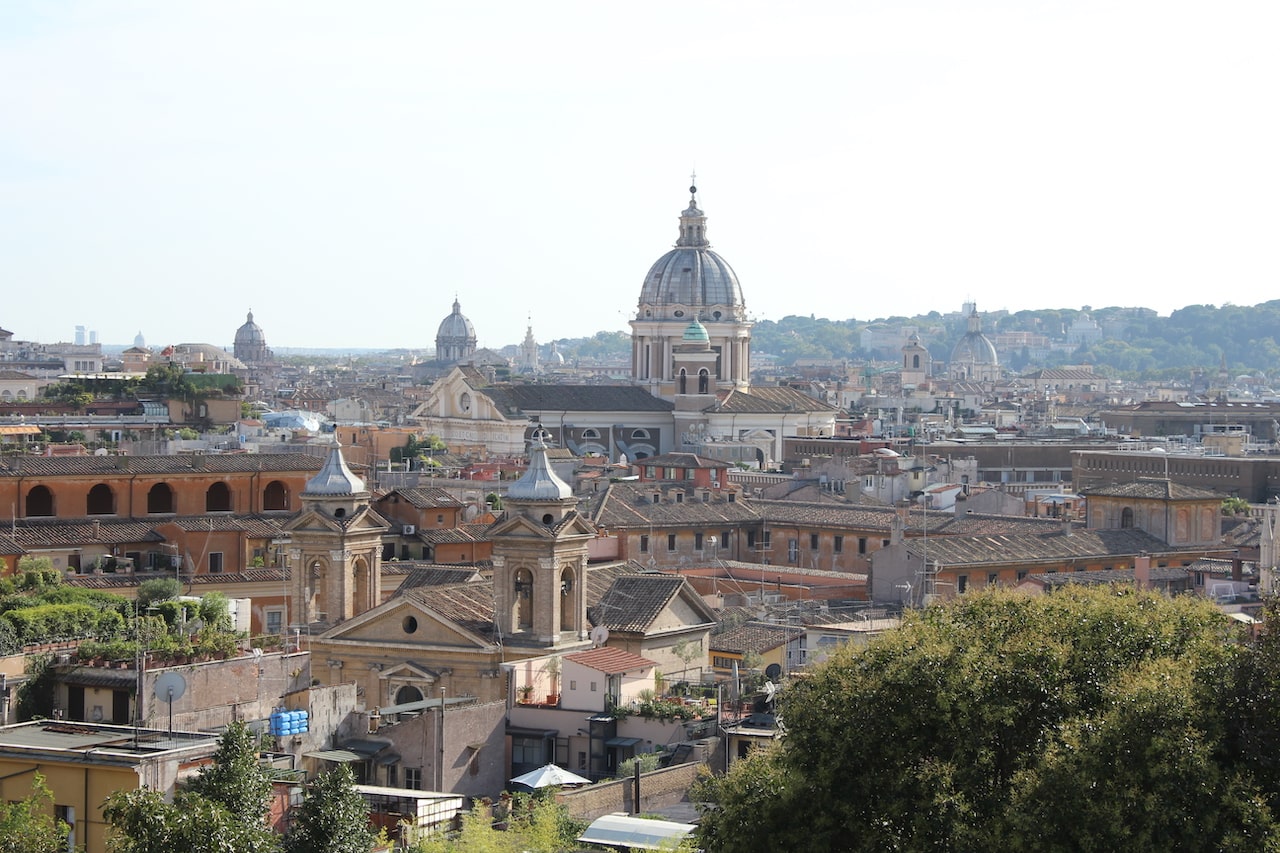
The viewpoint looks directly over Piazza del Popolo. Its oval layout, central Flaminio Obelisk and twin churches are easier to appreciate from above.
Beyond the square, the panorama includes:
- St. Peter’s dome on the western skyline
- Monte Mario to the right
- The Quirinal Hill to the left
- The distant Janiculum Hill and the monument to Giuseppe Garibaldi
The central balustrade gives you the classic photograph of Piazza del Popolo. Move a little to either side if the center is crowded.
A zoom lens or phone telephoto camera helps bring St. Peter’s dome closer in the frame.
A Short History of the Pincio
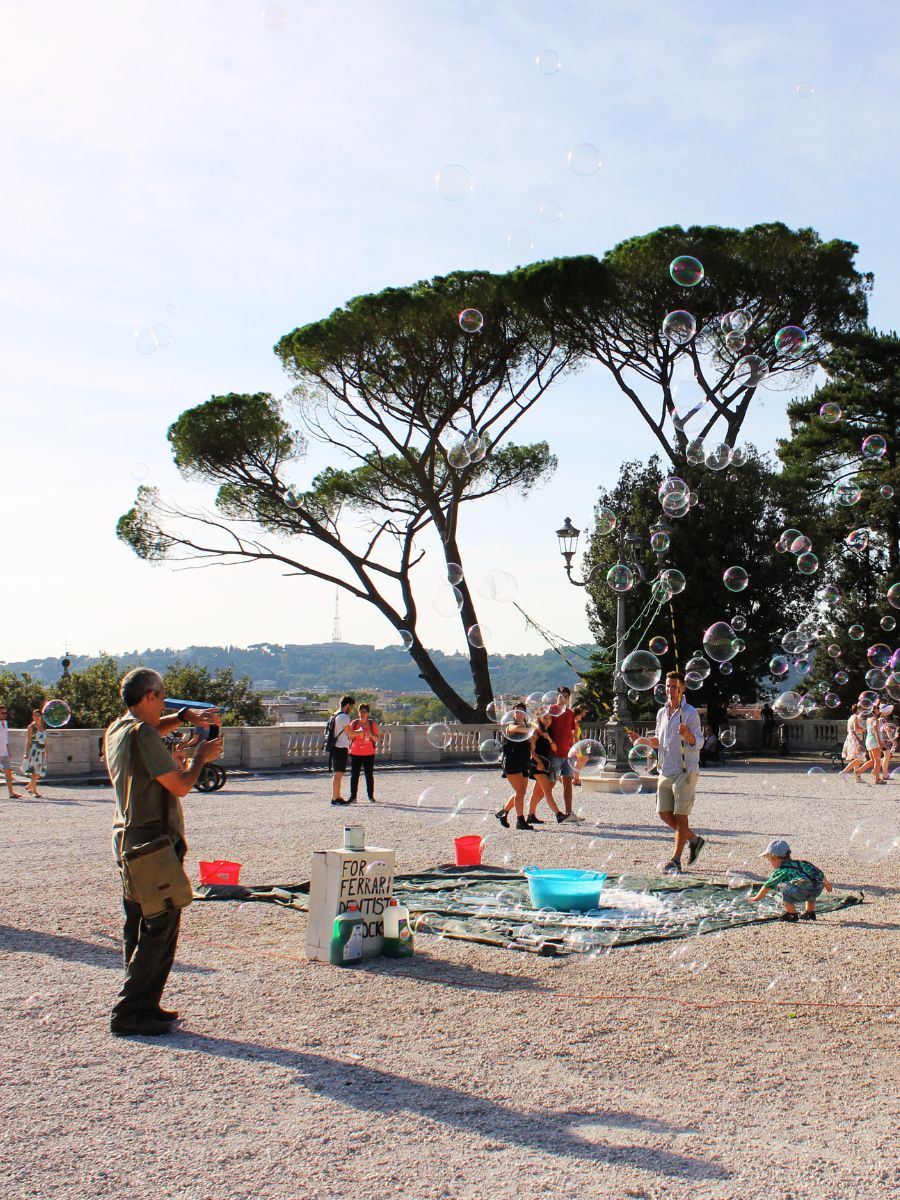
The Pincio takes its name from the Gens Pincia, a Roman family that owned land on the hill. In antiquity, the area contained grand estates and gardens, including the Gardens of Lucullus.
The modern promenade was designed by Louis Martin Berthault under French rule in the early 19th century. After Napoleon’s fall, Giuseppe Valadier continued the project and linked the hill to Piazza del Popolo with the ramps still used today. The park took its recognizable form by 1834 and continued to evolve into the early 20th century.
What Else to See Around the Pincio?
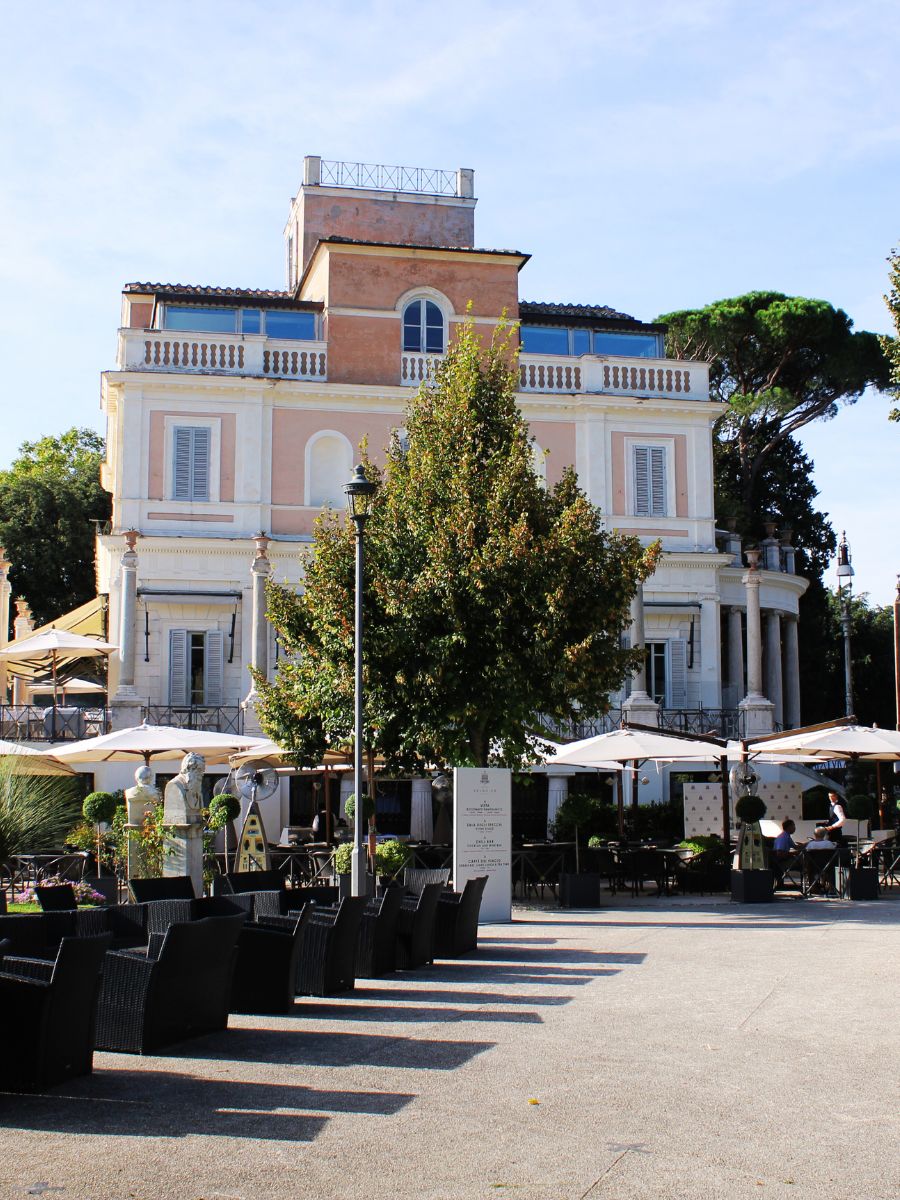
The Pincio promenade includes four landmarks worth seeing near the terrace:
- Pincio Water Clock: This water-powered hydrochronometer stands on a small island along Viale dell’Orologio. Designed by Dominican friar Giovan Battista Embriaco, it has occupied this spot since 1873.
- Obelisk of Antinous: Emperor Hadrian commissioned this Roman obelisk in memory of Antinous. It was moved from near Porta Maggiore to the Pincio in 1822.
- Commemorative Busts: The Pincio avenues are lined with 229 busts honoring prominent figures from Italian history, science, literature and the arts. The collection began in 1849.
- Casina Valadier: Giuseppe Valadier transformed this building into a neoclassical landmark in the early 19th century. Check its current opening status before planning a meal or drink.

Fanny, a skilled writer with a keen interest in art and culture, has been enchanted by the Borghese Gallery’s exquisite collection and its history. As a significant contributor to the Visit Borghese Gallery blog, she artfully shares insights and stories, bringing the gallery’s masterpieces and the lush gardens to life for readers around the world.