
- On January 31, 2021
- In PLAN YOUR VISIT Top attractions
Villa Torlonia in Rome: What to See and How to Visit
Villa Torlonia in Rome is a historic estate where you can combine a walk through the park with visits to museums and Mussolini’s wartime shelters. The Casina delle Civette is a highlight for stained glass, while Casino Nobile offers grand reception rooms and twentieth-century art.
This guide helps you decide which spaces to visit, understand the different tickets and opening hours, and plan how to get there.
Villa Torlonia Key Facts
- Location: Via Nomentana 70, in Rome’s Nomentano neighborhood, outside Villa Borghese.
- Admission: The park is free. The museums require tickets, with individual and combined admission options.
- Museum days: The main museums usually open Tuesday–Sunday and close on Mondays.
- Bunker visits: Guided tours only, with advance booking and a separate ticket.
- Serra Moresca: Closed in July and August.
What to See at Villa Torlonia?
Casina delle Civette (House of the Owls)
Owls, swans, flowers, and butterflies appear in the stained-glass windows of the Casina delle Civette. The glass collection unfolds across the rooms of this former private home. Its stylized motifs belong to Liberty, Italy’s Art Nouveau style, which also shaped the house’s decoration.
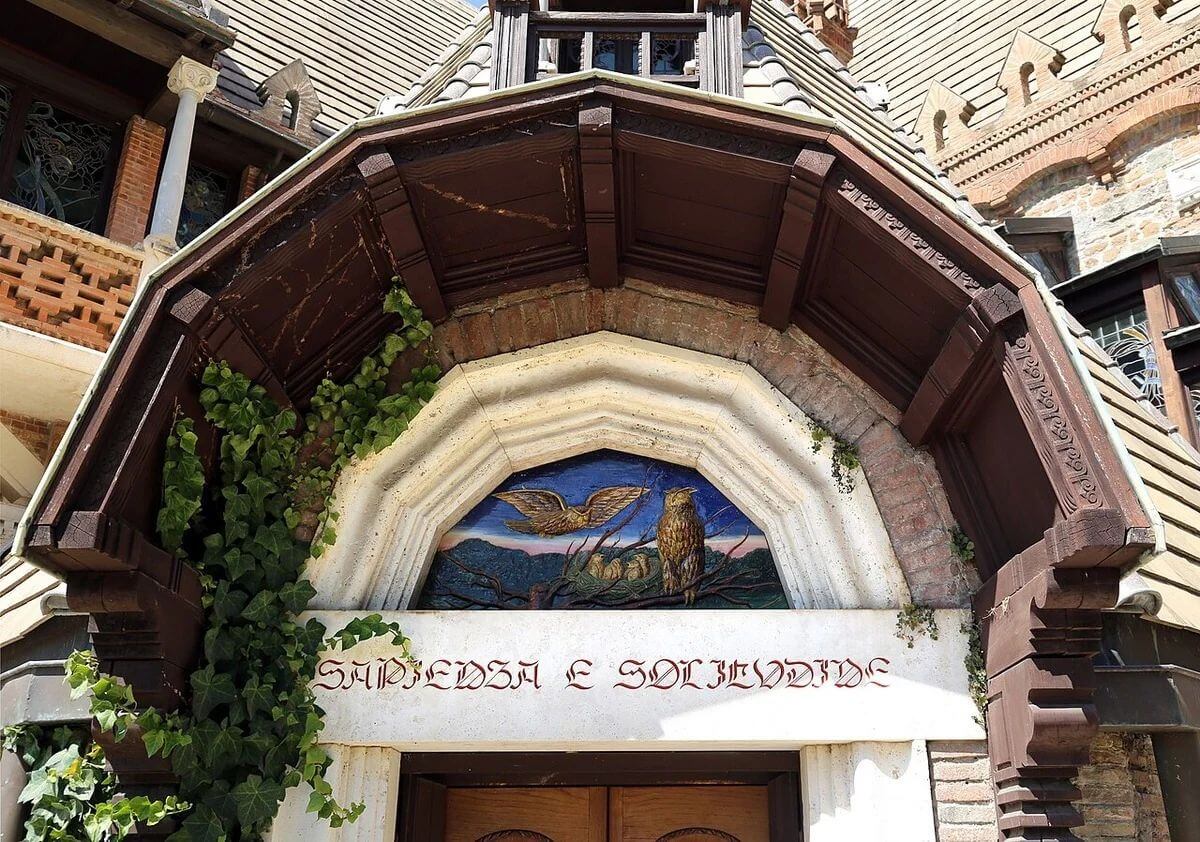
The house’s pointed roofs and small towers make the exterior worth exploring, too. Above one doorway, an owl panel echoes the birds in the windows.
Casino Nobile and the Scuola Romana Collection
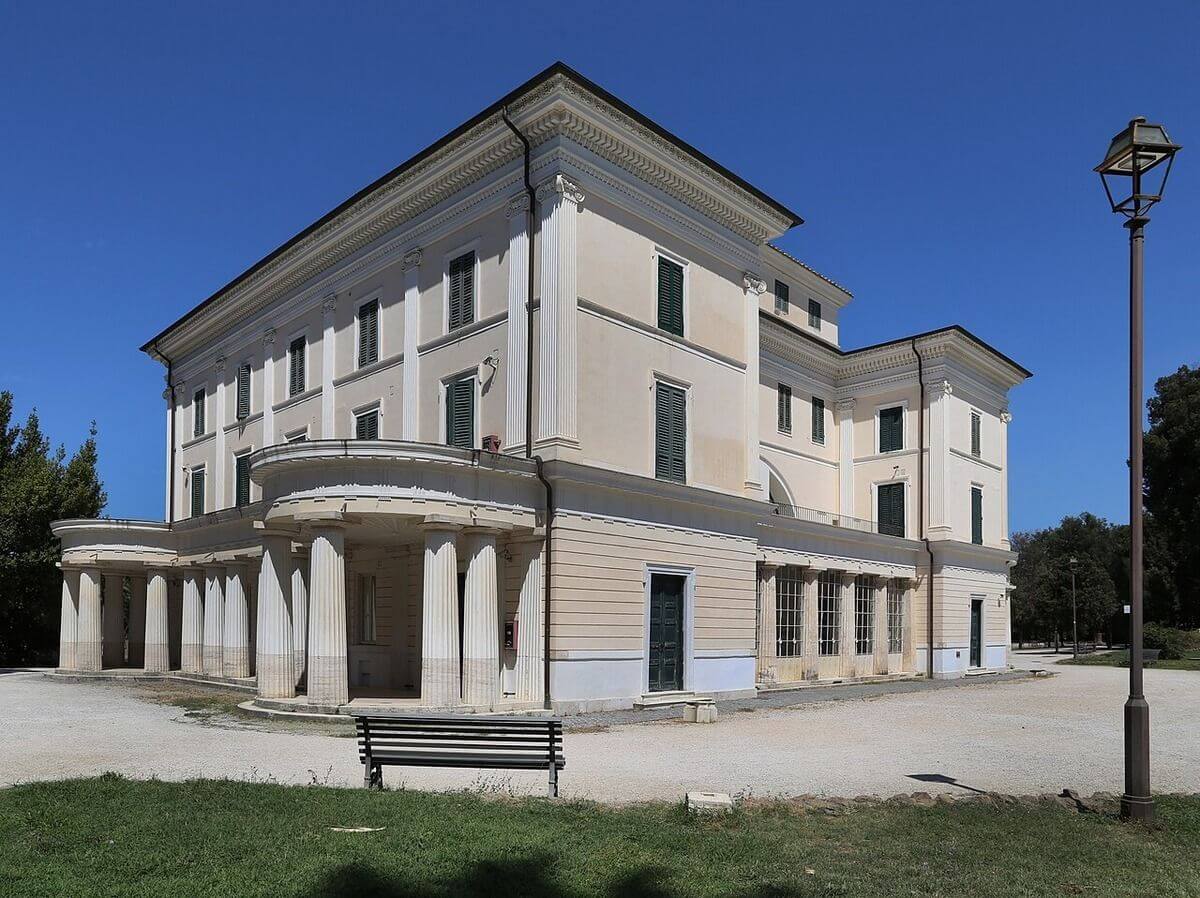
The ballroom is a highlight of Casino Nobile’s grand reception rooms, with painted decoration, ornamental plasterwork, and mirrors that helped spread the light and make the space seem larger.
On the second floor, the Scuola Romana collection introduces another side of Rome through twentieth-century paintings and sculpture. Portraits, city views, and images of building sites show a city being lived in and reshaped, especially between the world wars.
The Mussolini Bunker and Air-Raid Shelters
Follow the guided route from Casino Nobile into the wartime shelters beneath the estate. Displays introduce Mussolini’s family life at the villa and the bombing of Rome, then projections and sound recreate scenes of people taking refuge during air raids.
A steep staircase leads down to the purpose-built bunker. In this last space, an air-raid simulation combines sirens, approaching planes, and explosions with vibrations underfoot.
Built after the reinforced shelter beneath the villa, this bunker was still unfinished when Mussolini fell from power in 1943. He never used it.
Serra Moresca and the Moorish Tower (Torre Moresca)
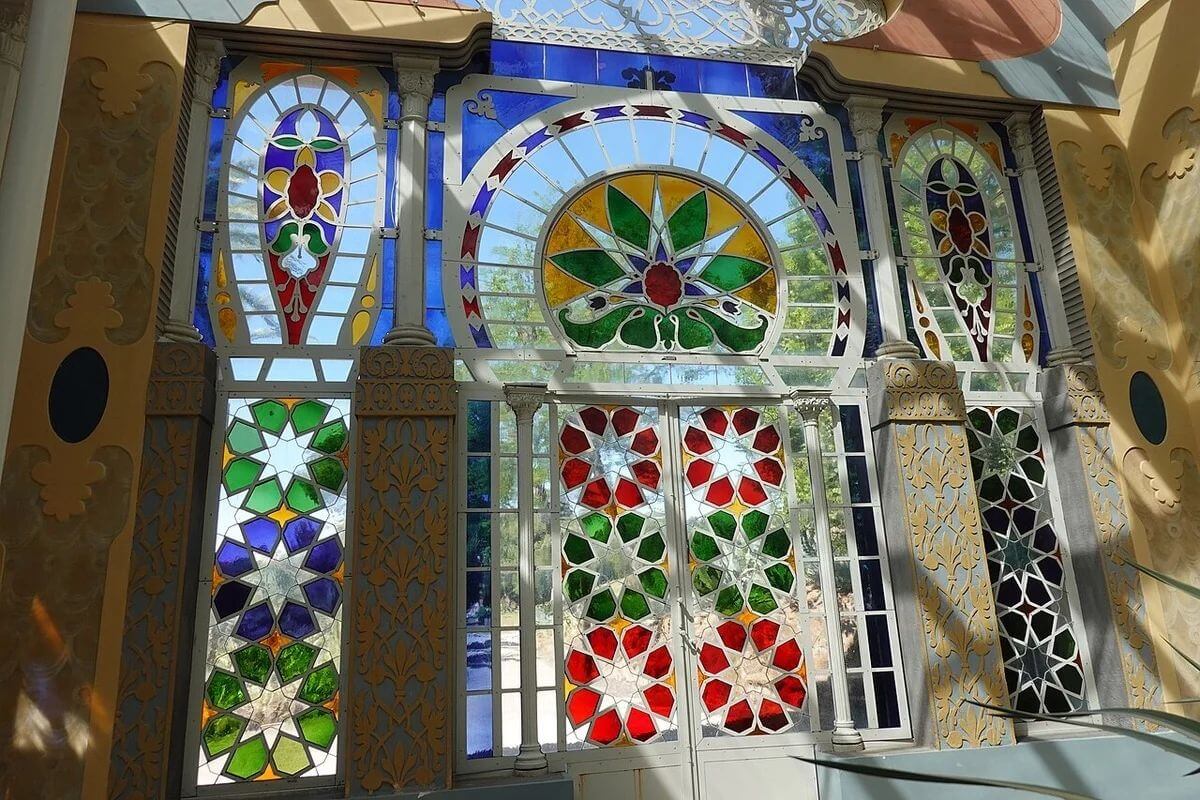
Inside the Serra Moresca, colored glass and slender ironwork frame the plants and fountain. Inspired by the Alhambra in Granada, this Moorish-style greenhouse has geometric patterns and plantlike shapes worked into its windows.
An artificial grotto and ponds form the outdoor setting, with the Moorish Tower rising beside them. Staff accompany visits inside the tower, and the complex’s visiting hours differ from those of the main museums.
A Walk Through the Park
You can enjoy Villa Torlonia’s park on its own, without entering a museum. The formal paths around Casino Nobile give way to winding walks through the romantic garden.
The Temple of Saturn and decorative ruins give parts of the park the look of a landscape dotted with ancient remains, although they were built as garden ornaments. The two pink-granite obelisks commemorate Alessandro Torlonia’s parents.
For a break during your walk, La Limonaia, the former orangery, provides a refreshment stop within the park.
Casino dei Principi and Teatro Torlonia
- Casino dei Principi: Visit this smaller villa for its temporary exhibitions; access to the interior depends on the exhibition program. It also houses the Scuola Romana research archive, whose consultation service is suspended.
- Teatro Torlonia: You can see inside this nineteenth-century theater during performances or tours led by actors. These have their own schedules and tickets, separate from museum admission.
Villa Torlonia Tickets and Opening Hours
Free Park Admission and Gate Hours
The park is free to enter, whether you come for a walk or plan to visit the museums.
- October–March: 7 a.m.–7:30 p.m.
- April–September: 7 a.m.–8:30 p.m.
- Holiday closures: January 1 and December 25, except for announced special openings.
Museum Tickets and Combined Admission
At the full prices below (check on this page), the combined ticket costs less than separate admission to Casino Nobile and the House of the Owls. It also covers Casino dei Principi and the Serra Moresca when open.
Ticket | Full price | Reduced price |
Casino Nobile + Casino dei Principi exhibition | €13.50 | €9 |
Casina delle Civette with exhibition | €10.50 | €7 |
Serra Moresca and Moorish Tower | €8 | €5 |
Combined: Casino Nobile, Casino dei Principi and exhibition, Casina delle Civette, and Serra Moresca | €17 | €13 |
Combined ticket when Serra Moresca is closed | €14 | €11 |
hu I Pini Village | A family resort with occasional Rome trips | Transfer to Fara Sabina station → train |
Buy the combined ticket at the ticket office; it does not include the bunker. Individual museum tickets are available at the ticket office or through the official ticketing site.
- Booking fees: Advance tickets cost an extra €1 and cannot be changed or refunded. Same-day tickets bought at the museum have no booking fee.
- Serra Moresca reservations: Advance booking is recommended. For free admission, reserve by calling +39 060608.
Free and reduced museum admission :
- Children and young visitors: Children under 6 enter free; nonresidents ages 6–25 pay the reduced rate. Bring proof of eligibility.
- Other free admission: Visitors with disabilities and one companion enter free, as do residents of Rome and its metropolitan area with valid proof of residence.
- Free Sundays: Museum entry is free on the first Sunday of the month. The Moorish Tower is closed, and the bunker still requires its own ticket.
- Wednesday discount: Nonresidents receive 50% off during the last two opening hours, subject to the usual last-entry time.
- Roma Pass: Use a Roma Pass for an included museum visit, or reduced admission once its included visits have been used. Bunker admission is separate.
Museum Hours and the Serra Moresca Calendar
On regular opening days from October to March, start with the Serra Moresca if you arrive in the afternoon. Its last entry is at 3:20 p.m., while Casino Nobile and the Casina delle Civette admit visitors until 6 p.m.
Space and season | Opening hours | Last entry |
Casino Nobile, Casina delle Civette, and Casino dei Principi | 9 a.m.–7 p.m. | 6 p.m. |
Serra Moresca: April–June and September | 10 a.m.–7 p.m. | 6:20 p.m. |
Serra Moresca: October–March | 10 a.m.–4 p.m. | 3:20 p.m. |
Serra Moresca complex: July–August | Closed | — |
- Regular closures: Museums and Serra Moresca close on Mondays, May 1, and December 25.
- December 24 and 31: Casino Nobile, Casina delle Civette, and Casino dei Principi close at 2 p.m., with last entry at 1 p.m.
- Moorish Tower: Staff accompany visitors every 30 minutes during opening hours. The tower is closed on the first Sunday of the month.
- New Year’s Day and special openings: Holiday hours are announced in the museum’s visitor notices.
Bunker Tours: Booking and Access Rules
Allow 50 minutes for the guided bunker visit. Choose an English- or Italian-language departure through the official booking calendar, or reserve at a Villa Torlonia ticket office. A separate booking is required even if you have a museum ticket.
- Price: €13 full price (€12 + €1 booking fee), or €7 reduced (€6 + €1). The reduced rate applies to ages 6–17, MIC card and Roma Pass holders, and visitors with disabilities and their companions. Children ages 0–5 enter free without a reservation.
- Your departure: Tickets are for a fixed date and time and cannot normally be changed or refunded. Late arrivals cannot move to another tour.
- Route: Enter through Casino Nobile and exit into the park. There are steep stairs at both ends and no step-free access. You must stay with the group and cannot turn back along the route.
- Before booking: The tour is not recommended if you have claustrophobia or sensitivity to light or sound.
- Clothing and belongings: Wear comfortable, waterproof shoes. Strollers, bulky bags, animals, food, and drinks are not allowed underground. There are no restrooms along the route.
Can You Visit the Jewish Catacombs?
The Jewish catacombs beneath Villa Torlonia are not open to visitors. They are separate from the wartime shelters and are not included in the bunker tour.

Where Is Villa Torlonia? Getting There and Accessibility
Set your destination to Via Nomentana 70, the main entrance to Villa Torlonia in Rome’s Nomentano neighborhood.
From Termini and the Metro
- By bus from Termini: Take bus 90 toward Labia and get off at Nomentana/Regina Margherita. Continue along Via Nomentana, away from the city center, to the main entrance at number 70.
- By metro: Take Line B/B1 toward Rebibbia or Jonio to Policlinico, two stops from Termini. From there, continue on foot to the Via Lazzaro Spallanzani side of the estate.
From Villa Borghese and Porta Pia
If you are walking from Villa Borghese, use Porta Pinciana, at the top of Via Veneto, as your starting point :
- Follow Via Campania, join Corso d’Italia, and continue through Piazza Fiume toward Porta Pia.
- From there, follow Via Nomentana away from the city center to number 70. Allow extra time to reach Porta Pinciana from your starting point within the gardens.
You can combine Villa Torlonia with a stop at Porta Pia, farther along Via Nomentana toward the city center.
Entrances, Paths, and Step-Free Access
Enter at Via Nomentana 70 for Casino Nobile and the main museum ticket office. You can also reach the park through Via Lazzaro Spallanzani 1 and 5.
- Park paths: Gravel paths climb gently between the buildings. Vehicles displaying a disability permit can enter and park via Via Nomentana 70 to reach the museums.
- Bicycles: Bicycles are not allowed inside the estate.
- Casino Nobile: The side ramp has a small step; an elevator serves the upper floors.
- Casina delle Civette: Ask staff to open the dedicated entrance: its doorway is 75 cm wide, with a step of about 3 cm. Staff also operate the upper-floor lift, which has a 73 cm opening.
- Casino dei Principi: Use the dedicated ramped entrance to the exhibition rooms; ask staff to operate the lift to the upper level.
- Serra Moresca: The greenhouse is level, while the path to the Grotto is gravel. You cannot continue from the Serra to the other museums by wheelchair or car.
- Bunker: The underground route has steep stairs and no step-free access.
- Teatro Torlonia: The entrance involves stairs; contact the theater about access when booking a performance or visit.
Before relying on the Via Siracusa entrance for the Serra Moresca, call +39 060608. If you need a step-free visit, ask about tower access at the same time.
 The museum’s mobility-access guide gives full lift dimensions and arrangements for assistance. A tactile orientation map is available near the Via Nomentana entrance, and guided tactile visits can be requested.
How the Torlonia Estate Became a Public Park?
The Torlonia Family’s Changing Villa
Casino Nobile was meant to announce the Torlonias’ place among Rome’s noble families. After buying the estate in 1797, banker Giovanni Torlonia asked Giuseppe Valadier to turn it into a princely residence. The architect remodeled the main buildings and gave the grounds around the palace a formal layout.
His son Alessandro later brought a more playful character to the estate. Giovan Battista Caretti added the Temple of Saturn and ornamental ruins, while Giuseppe Jappelli created a romantic garden of winding paths, ponds, and exotic plants. Jappelli also designed a Swiss-style retreat, later transformed by Giovanni Torlonia Jr. into his home, the Casina delle Civette.
Mussolini’s Residence and the Estate’s Restoration
Prince Giovanni Torlonia Jr. offered the villa to Benito Mussolini in 1925. Italy’s Fascist dictator first used it for official meetings, then moved into Casino Nobile with his family in 1929. The rooms combined private life with official receptions; even the ballroom became a setting for private movie screenings.
Fear of air raids later led to a succession of shelters: first a converted cellar across the grounds, then a reinforced room beneath Casino Nobile, and finally the purpose-built bunker. Moving protection beneath the residence avoided the exposed walk to the first shelter.
Anglo-American troops occupied the estate from 1944 to 1947, followed by a long period of decline. Rome’s municipal government bought Villa Torlonia in 1977.
The park opened to the public in 1978. Restoration campaigns beginning in the 1990s gradually brought the buildings back into use, turning former private spaces into the museums you can visit today.
What to See Near Villa Torlonia?
- Villa Paganini: This small public garden opposite Villa Torlonia is a pleasant place to linger among the trees. Winding paths and a little pond preserve the feel of a nineteenth-century romantic garden, on a more modest scale than Torlonia.
- Quartiere Coppedè: A chandelier suspended over the street, a fountain decorated with frogs, and elaborate facades make this cluster of buildings around Piazza Mincio a delight to explore on foot. Animal motifs and painted decoration reward a closer look.
- MACRO: Contemporary art occupies a former Peroni brewery, giving this museum a very different setting from Rome’s palace galleries. Alongside the changing exhibitions, you can explore Odile Decq’s modern extension, where staircases and connecting galleries open up different views through the building.
- Porta Pia: Michelangelo’s city-facing design and the grand nineteenth-century facade on the opposite side give this monumental gate two very different faces. The nearby breach memorial adds another reason to stop: it marks where Italian troops entered Rome in 1870.
- Santa Costanza: Ancient mosaics of curling vines and grape harvesting are the highlight of this circular fourth-century mausoleum. Paired columns frame the central space, while the mosaics cover the vault above the surrounding passage—a reason to slow down and study the scenes overhead.
- Villa Borghese Gardens: Farther afield, this much larger park offers room for a longer outing, with an island temple reflected in the lake and wide views over Piazza del Popolo from Pincio Terrace. The gardens are free to enter. A visit to the Borghese Gallery is a separate activity requiring a reserved, timed ticket.

Fanny, a skilled writer with a keen interest in art and culture, has been enchanted by the Borghese Gallery’s exquisite collection and its history. As a significant contributor to the Visit Borghese Gallery blog, she artfully shares insights and stories, bringing the gallery’s masterpieces and the lush gardens to life for readers around the world.