

- On February 18, 2022
- In PLAN YOUR VISIT Top attractions
Porta Pia in Rome: What to See and How to Visit
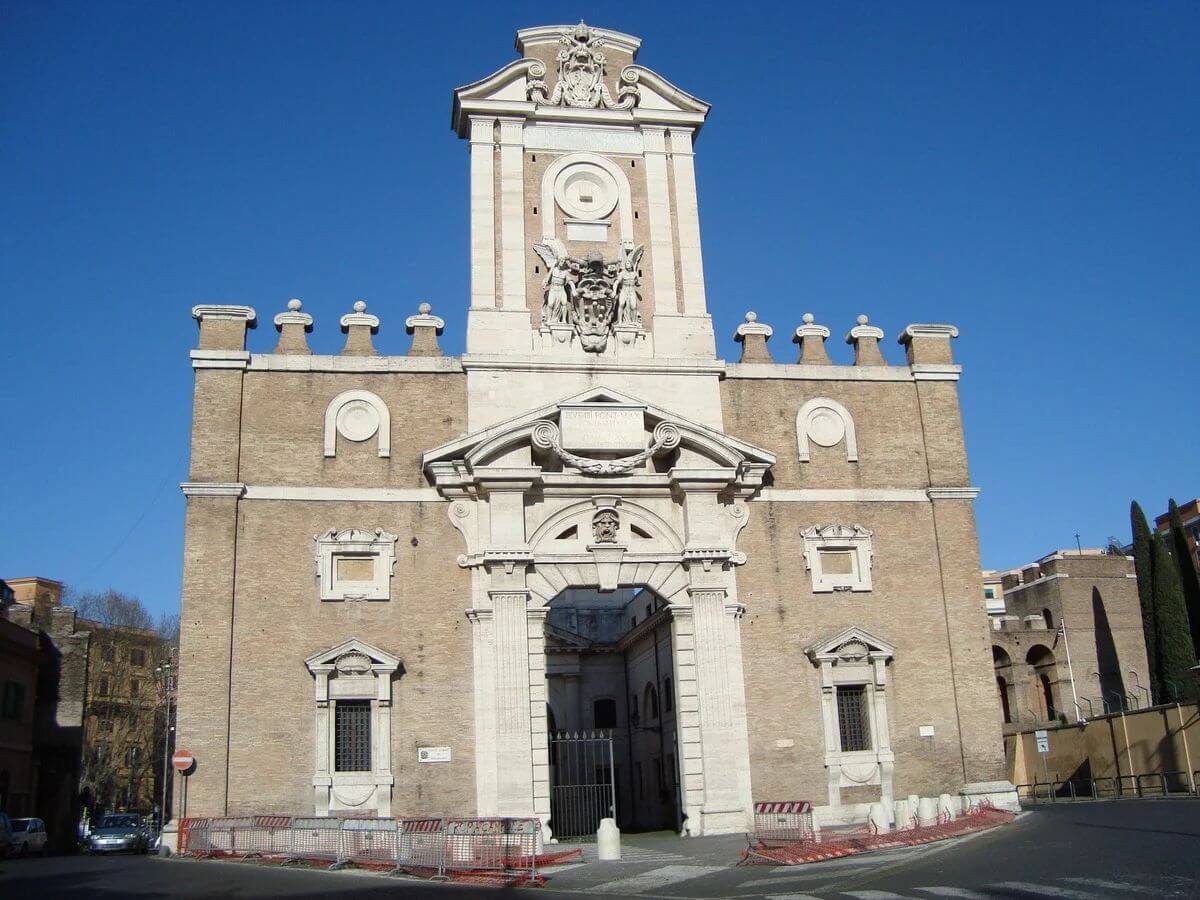
Porta Pia closes the view along Via XX Settembre with a broken pediment and bold papal emblems. Its city-facing facade follows Michelangelo’s design; on the Via Nomentana side, statues and a grand 19th-century arch give the gate a very different appearance.
In 1870, Italian troops entered Rome through a breach in the walls beside Porta Pia. You can explore both facades from the surrounding streets, with the option of visiting the military museum between them.
Porta Pia Key Facts
- Location: Piazzale di Porta Pia, where Via XX Settembre meets Via Nomentana, outside Villa Borghese.
- Architecture: Michelangelo designed the city-facing facade, later extensively rebuilt; Virginio Vespignani created the 19th-century facade facing Via Nomentana.
- Historical significance: Italian troops breached the nearby walls on September 20, 1870, bringing papal rule in Rome to an end.
- Outdoor visit: You can view the facades from public streets for free.
- Museum: The Museo Storico dei Bersaglieri (Bersaglieri Museum) occupies the complex between the facades. Admission is free, with separate opening hours.
Where Is Porta Pia? Map and Getting There
Porta Pia stands at the end of Via XX Settembre, with its outer facade facing Via Nomentana. Roads run around the monument.
From Termini or Castro Pretorio
- From Termini: Allow around 15–20 minutes on foot. The walking route follows Via Marghera, turns left onto Via Palestro, then right onto Via XX Settembre.
- By metro: Get off at Castro Pretorio (Line B), about 10 minutes’ walk from the gate. Follow Viale Castro Pretorio, then Viale del Policlinico, to Piazzale di Porta Pia.
Walking from Villa Borghese
- Start at Porta Pinciana, beside the Villa Borghese park at the top of Via Veneto.
- Follow Via Campania, join Corso d’Italia, and continue through Piazza Fiume toward Porta Pia.
- Allow about 20 minutes from Porta Pinciana, plus the time needed to reach it from your starting point in the gardens or at the Borghese Gallery.
Porta Pia’s Two Facades: What to Look For?
Michelangelo’s City-Facing Facade
Above the doorway, the broken pediment opens around a central inscription. Its ends curl inward like scrolls, with a carved stone garland hanging between them.
Follow the decoration upward to two winged figures supporting a papal coat of arms. Pale stone frames and reliefs stand out against the brickwork. The facade’s design is Michelangelo’s, but much of its present appearance comes from 19th-century reconstruction.
Vespignani’s Facade on Via Nomentana
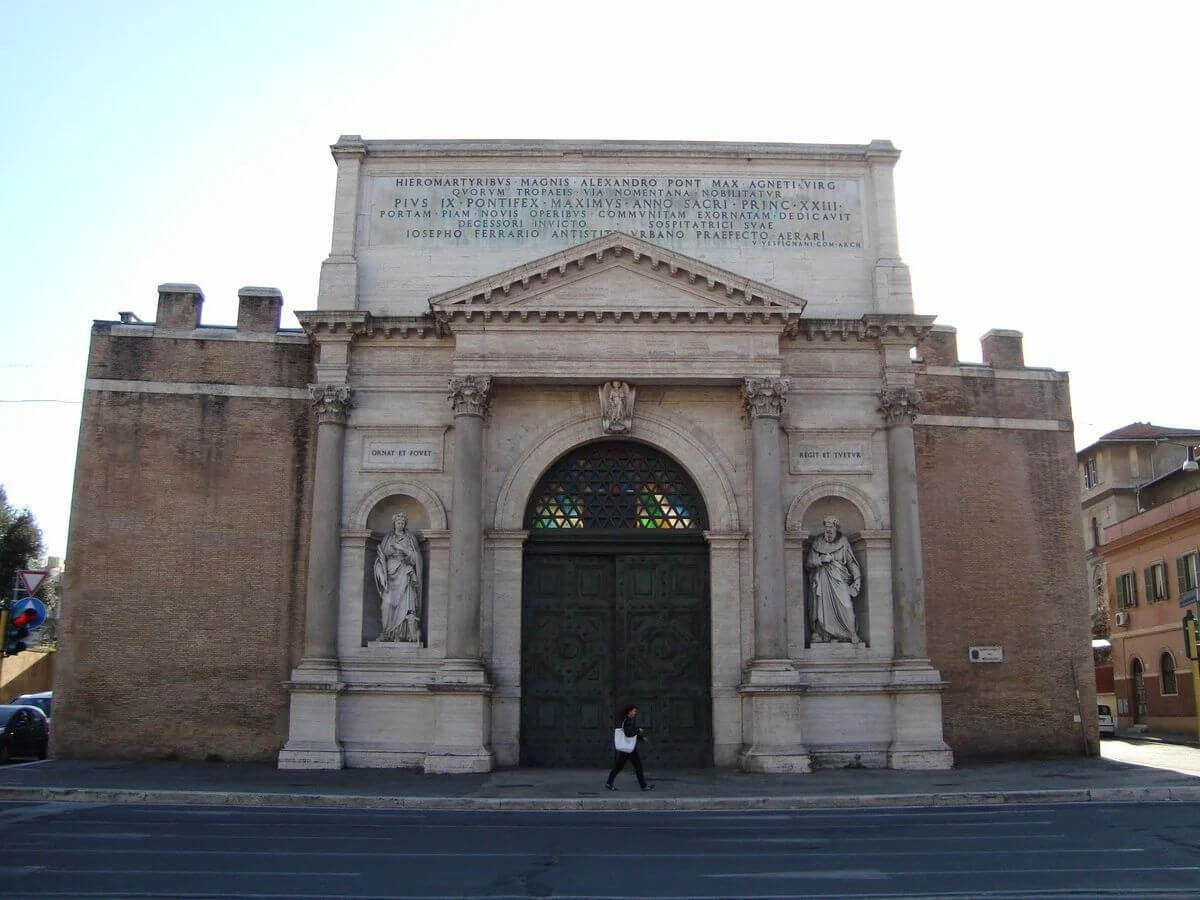
On the Via Nomentana side, Vespignani’s 19th-century facade has a single rounded arch, four columns, and two statue niches. It recalls a Roman triumphal arch.
Look for Saint Agnes on the left and Saint Alexander on the right. Above them, a triangular pediment sits below a long Latin inscription. You can pick out PIVS IX, the name of Pope Pius IX, in the lettering.
Why Porta Pia Matters in Rome’s History?
Pius IV, Michelangelo, and Porta Nomentana
Pope Pius IV commissioned Michelangelo in the early 1560s to replace the nearby Porta Nomentana. Named after the pope, the gate was designed to stand at the end of Via Pia, the straight road now called Via XX Settembre.
After Michelangelo’s death in 1564, Giacomo Del Duca continued the project. A lightning strike in 1851 led Pope Pius IX to commission Virginio Vespignani to rebuild the city-facing front. Vespignani then added the outer facade in the 1860s.
The Breach of September 20, 1870
On September 20, 1870, Italian artillery opened a breach in the Aurelian Walls beside Porta Pia, through which Bersaglieri troops entered Rome. The capture ended the pope’s political rule over the city and brought Rome into the Kingdom of Italy. Rome became the kingdom’s capital the following year.
The assault was later depicted by Carlo Ademollo in The Breach of Porta Pia. Painted around 1880, the work is held at the Museo del Risorgimento in Milan.
The breach memorial along Corso d’Italia marks the site in the walls. It is separate from the bronze Bersagliere monument in front of the gate.

Visiting the Bersaglieri Museum
The Museo Storico dei Bersaglieri traces the history of this Italian infantry corps through uniforms, weapons, and personal documents. A highlight is Alessandro La Marmora’s handwritten proposal to establish the corps, displayed in the Hall of Honor.
Admission is free. Enter through Vespignani’s arch on the Via Nomentana side, which leads into the museum courtyard.
Opening hours listed by Turismo Roma in September 2026:
- Monday–Thursday: 9:00 a.m.–1:00 p.m. and 2:00–3:00 p.m.
- Friday: 9:00–11:00 a.m.
 Before you go, contact the museum at +39 06 486723 or museo_bersaglieri@esercito.difesa.it to confirm these indicative hours, discuss access, or arrange a guided visit.
If you need step-free access, ask which parts of the museum you can reach before visiting.

What to See Near Porta Pia?
Choose your next stop according to what you want to see:
- Villa Torlonia and the Casina delle Civette: Follow Via Nomentana away from the city center for a landscaped park dotted with historic buildings. Visit the Casina delle Civette for its stained-glass windows and owl decorations.
- The Quirinal Palace: Follow Via XX Settembre, then Via del Quirinale, toward Piazza del Quirinale. Once home to popes and kings, the palace now houses the Italian presidency. In the square, look for the two figures with horses beside the obelisk.
- Villa Borghese Gardens: Head toward Porta Pinciana if you want to continue among trees and garden paths. Choose the lake and its island temple for a waterside stop, or Pincio Terrace for views over Piazza del Popolo.

Fanny, a skilled writer with a keen interest in art and culture, has been enchanted by the Borghese Gallery’s exquisite collection and its history. As a significant contributor to the Visit Borghese Gallery blog, she artfully shares insights and stories, bringing the gallery’s masterpieces and the lush gardens to life for readers around the world.
Who owns or has authority over the Porta Pia? The city of Rome? The national government of Italy? Thank you for your attention.
Hi,
Thank you for your comment! 😊
The Porta Pia is primarily under the jurisdiction of the City of Rome, managed by the Sovrintendenza Capitolina ai Beni Culturali, which oversees the city’s cultural heritage. However, since Porta Pia is also a site of national historical importance, the Italian national government, through the Ministry of Culture, may also have a role in its broader preservation.
If you’re interested in its history or significance, feel free to ask—I’d be happy to help!