
- On September 24, 2026
- In Art collections
Apollo and Daphne by Bernini: Sculpture, Story and Meaning
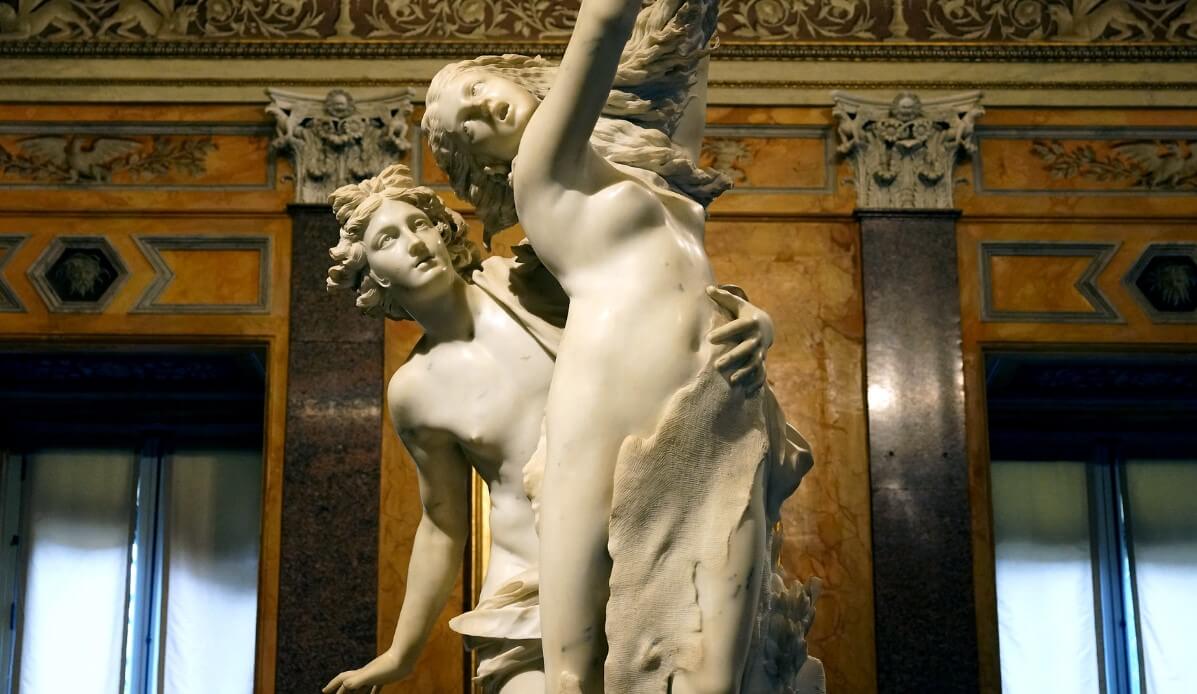
Apollo and Daphne by Bernini is a life-size marble sculpture carved between 1622 and 1625 and displayed in Room 3 of the Borghese Gallery in Rome. It captures the moment Daphne transforms into a laurel tree to escape Apollo, with bark spreading across her body and leaves growing from her fingers.
Below, you’ll find the myth behind the scene, the sculpture’s meaning, the techniques Bernini used to create movement in marble, and the details to look for during your visit.
Apollo and Daphne by Bernini: Key Facts
- Artist: Gian Lorenzo Bernini
- Created: 1622-1625
- Subject: Daphne transforming into a laurel tree to escape Apollo
- Story source: Ovid’s Metamorphoses, Book 1
- Style: Baroque
- Material: Carrara marble
- Height: 243 cm (about 8 feet)
- Commissioned by: Cardinal Scipione Borghese
- Location: Room 3 of the Borghese Gallery in Rome
- Best place to start viewing: Apollo’s right side, the viewpoint Bernini originally intended
- Admission: Advance reservation is required for a timed entry to the Borghese Gallery
What Does Bernini’s Apollo and Daphne Sculpture Depict?
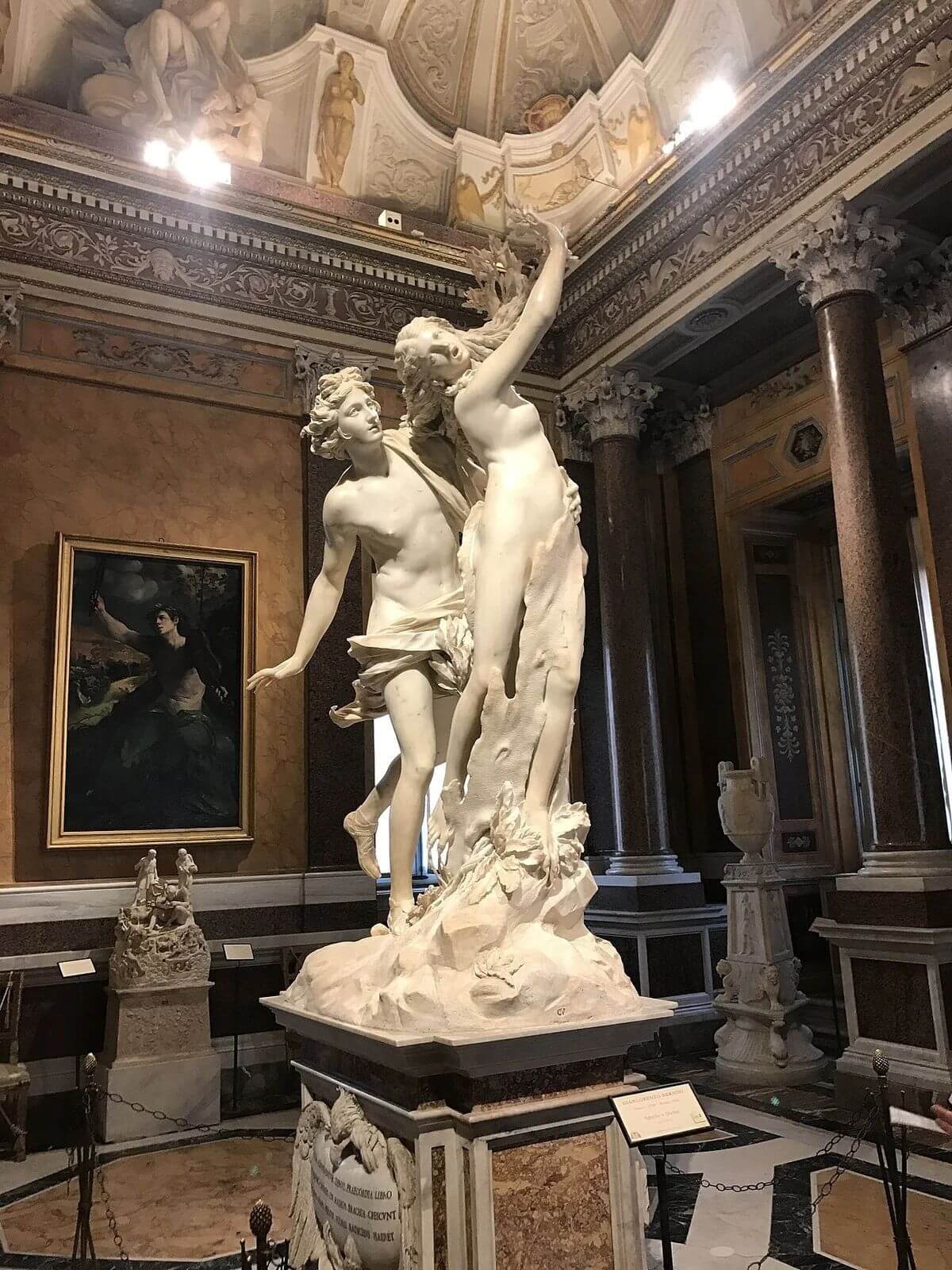
Bernini’s Apollo and Daphne sculpture depicts the climax of Ovid’s myth: Apollo chasing Daphne at the instant she begins turning into a laurel tree.
Apollo is still running. One foot touches the ground while the other remains raised, and his flowing drapery emphasizes his speed. His left hand touches Daphne, but her transformation has already begun.
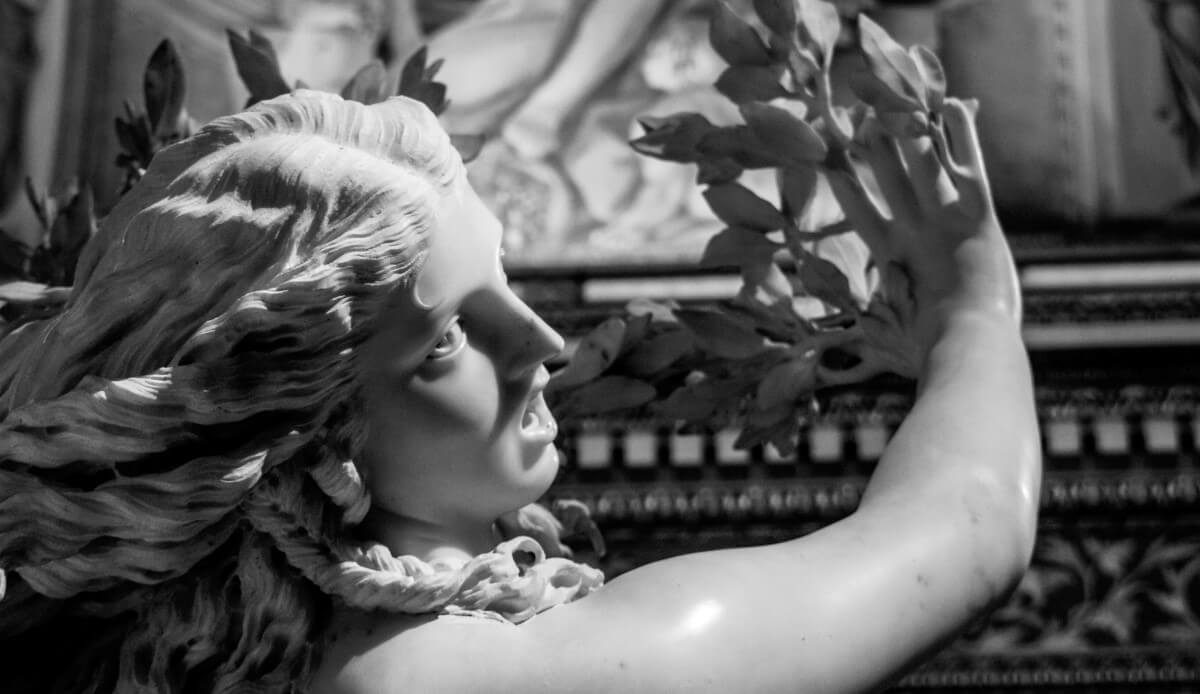
Daphne’s toes become roots, bark spreads across her body, and leaves grow from her fingers and hair. She stretches upward and twists away from Apollo, with her raised arms and open mouth expressing fear.
The sculpture captures the end of the chase, the moment of contact and the metamorphosis in a single scene. Apollo appears to have caught Daphne, but her transformation turns his apparent victory into failure.
What Is the Myth of Apollo and Daphne?
The best-known version of the Apollo and Daphne story appears in Book 1 of Ovid’s Metamorphoses. It tells how Apollo’s pride leads to an unwanted pursuit and how Daphne escapes by turning into a laurel tree.
Although sometimes described as a love story, the myth is primarily about pride, rejected desire, pursuit and transformation.
Why Does Apollo Chase Daphne?
After killing the serpent Python, Apollo boasts about his skill with a bow and mocks Cupid, the Roman god of love.
Cupid takes revenge by shooting two different arrows:
- A golden arrow makes Apollo desire Daphne.
- A lead-tipped arrow makes Daphne reject love.
Daphne wants to remain unmarried and live freely in the woods as a follower of Diana. Apollo pursues her, but she repeatedly rejects him and tries to escape.
Why Does Daphne Turn into a Laurel Tree?
Apollo is faster than Daphne and eventually begins to catch her. Unable to outrun him, she calls on her father, the river god Peneus, and asks him to change her form.
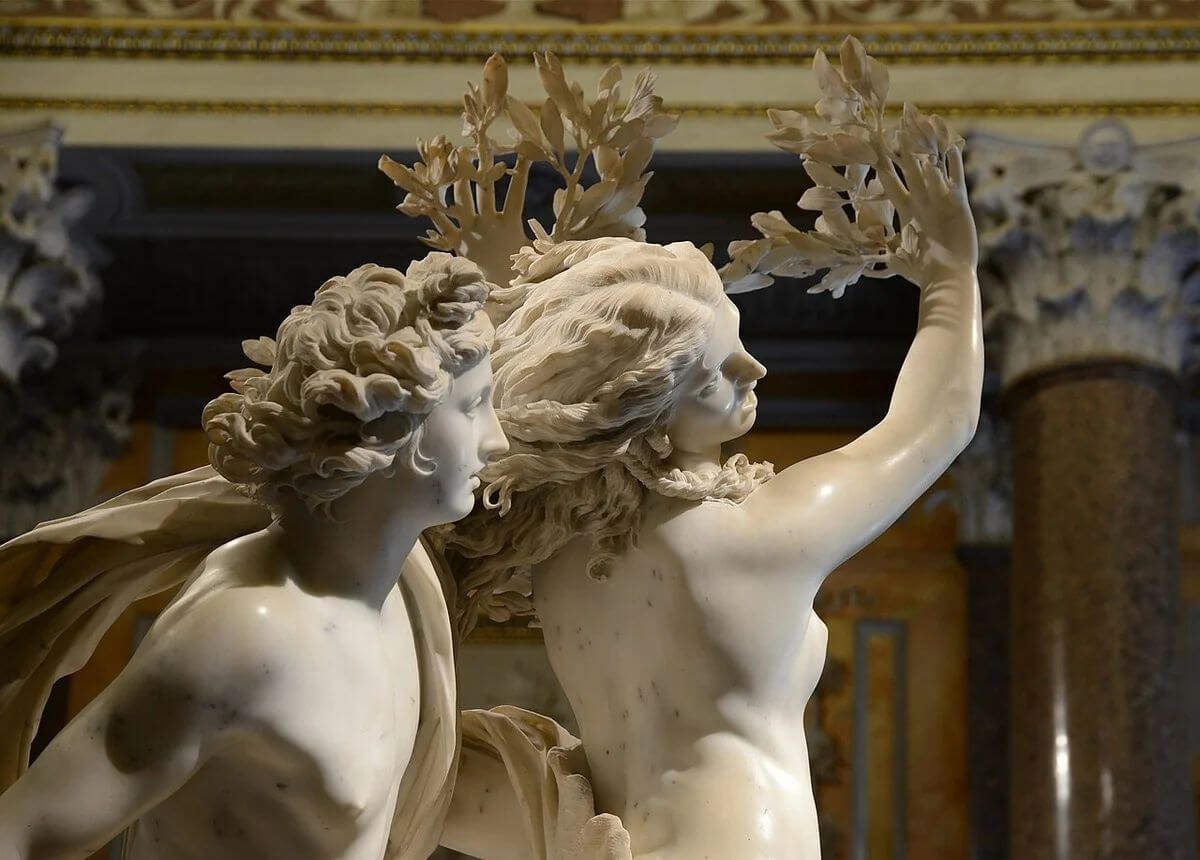
Her transformation begins just as Apollo reaches her. Her feet become roots, bark covers her body, and her hands and hair turn into laurel branches and leaves.
After Daphne becomes a tree, Apollo declares the laurel sacred to him and adopts its leaves as his crown. This explains why the laurel wreath became one of Apollo’s symbols and was later used to honor poets, musicians and victorious leaders.
Why Is Bernini’s Apollo and Daphne So Famous?
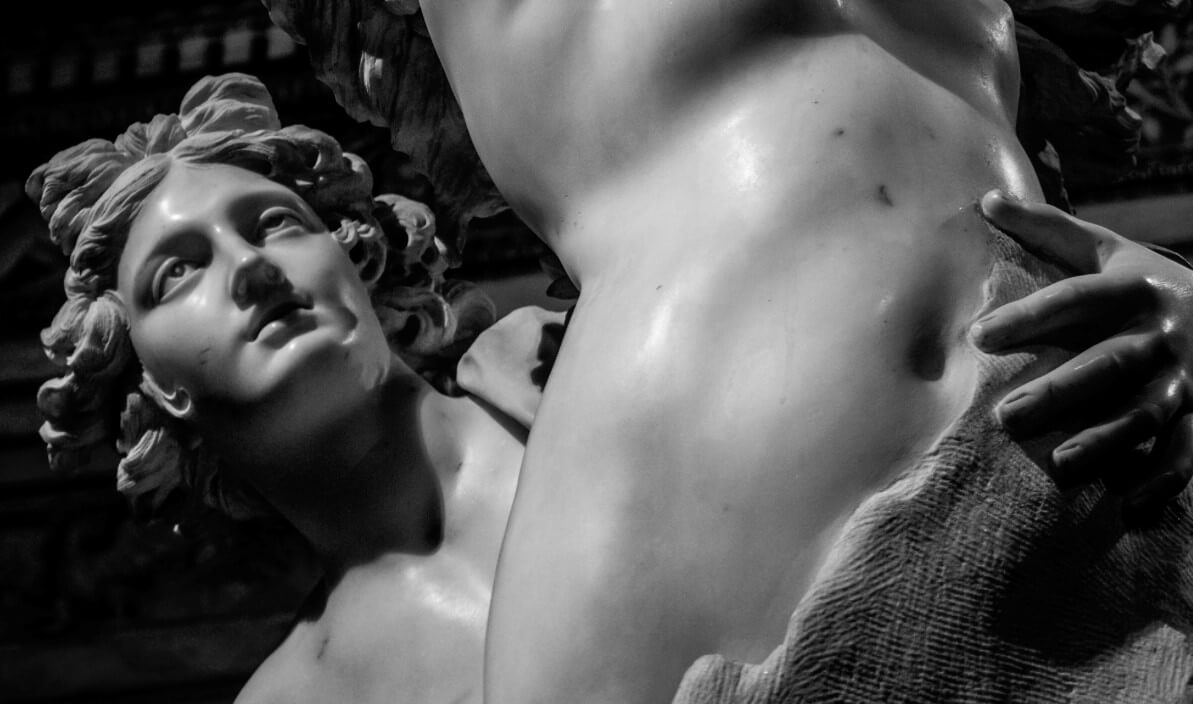
Bernini’s Apollo and Daphne is famous because it makes marble appear to move and transform. Bernini captured the split second when Daphne becomes a laurel tree, combining dramatic movement, emotional storytelling and exceptionally delicate carving.
The composition also combines classical and Renaissance influences. Apollo recalls the ancient Apollo Belvedere, while details in the movement and expressions have been linked to works by Annibale Carracci and Guido Reni.
A Sculpture That Moves as You View It
Bernini designed the sculpture to reveal its story gradually. It was originally positioned near a wall so that visitors would first approach it from Apollo’s right side.
From this viewpoint, you see Apollo reaching Daphne and reacting to her transformation. As you move around the sculpture, the roots, bark and leaves become more visible. Apollo’s right side remains the best place to begin viewing it.
Almost every part of the composition suggests motion:
- Apollo balances on one foot as he runs forward.
- His drapery appears to fly behind him.
- Daphne twists upward and away from his touch.
- Her hair, fingers and branches extend into the surrounding space.
- The two figures move in different directions.
Bernini used a similar approach in David, which captures the biblical hero in the middle of throwing his stone, and in The Rape of Proserpina, where Pluto’s grip and Proserpina’s struggle freeze a moment of violent action.
Marble That Looks Like Skin, Bark and Leaves
The sculpture is carved from Carrara marble, but Bernini made the same material resemble several different surfaces. He polished the figures’ skin until it appeared smooth, while using rougher and more detailed carving for the bark, roots and leaves.
Look closely at:
- the bark spreading across Daphne’s body;
- the roots growing from her toes;
- the thin leaves emerging from her fingers;
- Apollo’s hand touching skin that is turning into bark.
The leaves and branches are so thin that they appear almost translucent. Restoration studies found that Bernini protected some of these fragile details with temporary plaster supports while he continued carving.
Apollo and Daphne: Meaning and Symbolism
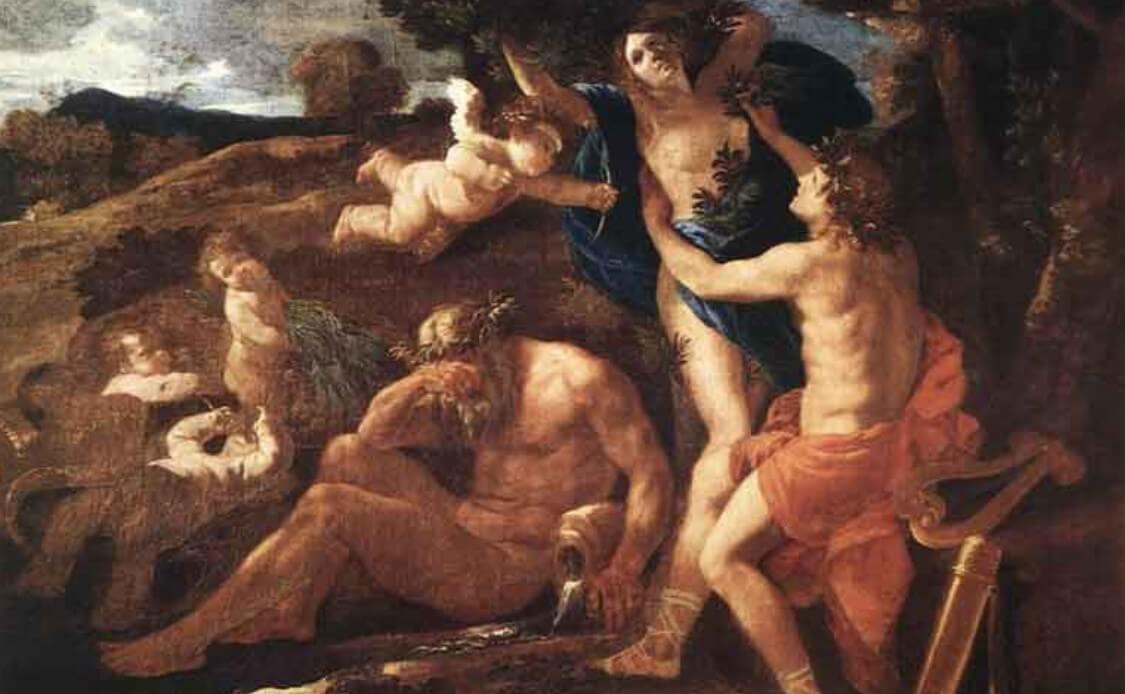
Bernini’s Apollo and Daphne symbolizes the conflict between desire and personal freedom, as well as transformation as a form of escape. The sculpture appears beautiful, but the scene it depicts is deeply unsettling: Daphne must lose her human body to escape Apollo.
What Does Apollo and Daphne Symbolize?
Apollo’s feelings are not shared by Daphne. The scene is therefore not one of mutual love, but of unwanted pursuit and resistance.
Daphne’s transformation saves her from Apollo, but at a severe cost. She preserves her freedom only by giving up her human form. Her open mouth and raised arms express fear and shock rather than relief.
 The laurel tree adds another layer of symbolism. It becomes sacred to Apollo and later represents poetry, artistic achievement and victory.
What Does the Inscription on the Base Mean?
The Latin inscription on the base was composed by Cardinal Maffeo Barberini, who later became Pope Urban VIII.
Its message can be summarized as follows: anyone who pursues the pleasures of fleeting beauty will be left holding only leaves and bitter fruit.
The inscription reframes the myth as a moral warning about uncontrolled desire. Apollo reaches Daphne, but at that exact moment, she becomes someone he can never possess. It also framed a pagan and sensual subject as a moral lesson suitable for a cardinal’s residence.
Who Commissioned Bernini’s Apollo and Daphne?
Cardinal Scipione Borghese commissioned Apollo and Daphne for his private collection at Villa Pinciana, which now houses the Borghese Gallery. The nephew of Pope Paul V, he was one of the most influential art patrons in 17th-century Rome.
Bernini began carving the sculpture in 1622. He paused the project for almost a year to work on David, also commissioned by the cardinal, before completing Apollo and Daphne in 1625 at the age of 26.
Some scholars have suggested that Giuliano Finelli, a member of Bernini’s workshop, helped carve the delicate leaves and branches. However, the Galleria Borghese’s official catalogue notes that modern scholars tend to attribute the carving to Bernini alone.
How to See Apollo and Daphne at the Borghese Gallery?
The Apollo and Daphne statue is displayed on the ground floor of the Borghese Gallery, in Room 3, known as the Sala di Apollo e Dafne.
- Address: Piazzale Scipione Borghese 5, 00197 Rome
- Opening hours: Tuesday to Sunday, 9:00 am to 7:00 pm
- Last admission: 5:45 pm
- Reservation: Required for all visitors, including those eligible for free admission
- Visit length: Two hours for standard entry slots; the final 5:45 pm slot is shorter
Opening hours and admission arrangements can change. Compare the official ticket, guided tours and other options in our Borghese Gallery ticket guide before booking.
Sources
- Galleria Borghese — Apollo and Daphne: official catalogue entry covering the sculpture’s history, technique, symbolism, attribution and intended viewing angle.
- Galleria Borghese — Tickets and Visitor Information: official opening hours, reservation requirements and admission details.
- Ovid — Metamorphoses, Book 1: English translation of the classical text that inspired Bernini’s sculpture.

Fanny, a skilled writer with a keen interest in art and culture, has been enchanted by the Borghese Gallery’s exquisite collection and its history. As a significant contributor to the Visit Borghese Gallery blog, she artfully shares insights and stories, bringing the gallery’s masterpieces and the lush gardens to life for readers around the world.