- On January 20, 2021
- In PLAN YOUR VISIT Top attractions
MACRO Rome: Contemporary Art in a Former Peroni Brewery
At MACRO Rome, the Museum of Contemporary Art of Rome, you can explore the reinvention of a Peroni brewery as you move between contemporary exhibitions. Odile Decq’s extension links the older buildings with galleries and elevated walkways, giving you different views of the spaces around its red auditorium.
The changing exhibition program might lead you to study a photographer’s portraits, watch a film or spend time listening to a sound project. Choosing a show that interests you gives the visit a focus, while the building offers another story to follow. This guide helps you explore both and plan your visit to Via Nizza.
MACRO Rome Key Facts
- Museum: Museum of Contemporary Art of Rome (Museo d’Arte Contemporanea di Roma), a municipal museum.
- Address: Via Nizza 138, in the Salario area, outside Villa Borghese.
- Exhibition admission: Standard tickets cost €6, with reduced admission at €4.
- Opening days: Tuesday–Sunday; closed Mondays.
- Mattatoio: The former “MACRO Testaccio” is a separate venue in Testaccio, with its own exhibitions and admission arrangements.
What to See at MACRO?
Odile Decq’s Architecture
At the street corner, Odile Decq’s glass-fronted extension reflects the buildings opposite. The surrounding streets appear on its facade, bringing the neighborhood into your first view of the museum.
Inside, the red auditorium rises like a building within the foyer. A walkway with glass balustrades passes beside it, letting you look across its walls and the open space around them.
There is another connection to discover above the foyer. Decq designed its glass roof as a fountain at terrace level, so the structure overhead belongs to the outdoor space too.
Exhibitions and the Collection
MACRO’s changing exhibitions are the starting point for choosing what you’d like to explore. The museum also holds a municipal contemporary art collection, but an artist’s inclusion in it does not guarantee that their work will be on view.
If museum architecture catches your interest, MAXXI Rome offers another building to explore, with Zaha Hadid’s curving galleries in Flaminio.
Exhibitions to Explore
These exhibitions offer different ways to explore photography, design, theater, music and film at MACRO:
- Marialba Russo: Sguardo rovescio: In one series, men are photographed from behind. With their faces hidden, clothing and posture become clues to identity, building a collective portrait of masculinity. It gives you a reason to linger over details that a face might otherwise draw attention away from. Through January 31, 2027.
- MACRO. Museum of the Everyday: Nine student design proposals imagine the museum as a place for learning, work and everyday encounters. They open up a question you can bring to your own visit: how could a museum become part of daily life? Through December 13, 2026.
- Una stanza per Bene: Recently rediscovered photographs and archival documents help reconstruct Carmelo Bene’s early theater productions, long known mainly through the memories of people who saw them. Across four successive chapters, these traces offer a closer look at performances that might otherwise have been lost. Through March 28, 2027, with breaks between chapters. No chapter is listed for December 7–9, 2026; January 18, 2027; or February 15–17, 2027.
- Palestinian Sound Archive: In the Sala Audio, music and recordings from the 1960s–1990s carry memories of Palestinian places and communities. The selection ranges from traditional celebrations to funk and spoken word, offering a way to explore this history through listening. Through January 10, 2027.
- Noor Abed: we walk in our sleep: Filmed in Super 8, this work brings two women’s monologues together with everyday scenes and choreographed movement in Palestinian landscapes. Voices, gestures and places become threads to follow as the film explores the histories carried by the land. Through January 10, 2027.
Explore the official exhibition program to find a show that fits your interests and dates.

MACRO Rome Tickets and Opening Hours
Ticket Prices, Discounts, and Booking
For a visit to MACRO’s exhibitions, the admission rates are:
- Standard ticket: €6.
- Reduced ticket: €4, including visitors ages 7–26, visitors over 65, university students, doctoral candidates and researchers, and Roma Pass holders.
- Free admission: Available to children age 6 and under, visitors with disabilities and an accompanying person, and ICOM or ICROM cardholders.
If you hold a MIC Card, you qualify for the €4 exhibition ticket and free exhibition admission on the first Sunday of each month under the museum’s MIC Card conditions.
Use the Tickets button on the official museum website for online booking. The same page lists the full reduced and free admission categories. Groups of 10 or more must reserve.
 If you’re coming for a cinema screening, check its event listing: cinema admission has its own standard rates of €7, or €5 reduced.
Opening Hours and Last Admission
The regular opening hours are:
Days | Hours |
Tuesday–Friday | Noon–7 p.m. |
Saturday–Sunday | 10 a.m.–7 p.m. |
Monday | Closed |
Last admission is at 6:30 p.m., 30 minutes before closing. For a holiday visit, check the museum’s official opening hours for special arrangements.
How to Get to MACRO on Via Nizza?
A visit to MACRO takes you into the Salario neighborhood, outside Villa Borghese. The museum entrance is on Via Nizza.
Address: Via Nizza 138, 00198 Rome, Italy.
- From Termini by bus: Take bus 90 toward Labia from Piazza dei Cinquecento, in front of the station. Get off at Nomentana/Regina Margherita, then continue on foot to the museum.
- Alternative bus route: From Termini, take bus 38 toward Porta di Roma and get off at Nizza/Regina Margherita.
- Metro: Take Line A to Termini for the bus connections above, or Line B to Castro Pretorio and continue on foot to the museum.
- Taxi: Ask for MACRO, Via Nizza 138.
- Parking: Paid parking is available in the museum’s underground garage.
Facilities and Accessibility
Restaurant, Bookshop, and Study Rooms
- Restaurant: Materia – Terrazza MACRO has an indoor dining area and an outdoor terrace. Its meal times differ from gallery hours, so check the restaurant’s schedule if you’d like to eat before or after your visit.
- Bookshop: Browse the museum bookshop for art books, catalogs and magazines, with a focus on independent publishers. You’ll also find illustrated books for children and teenagers, ceramics and design objects.
- Study rooms: Two study and reading spaces offer a place to read or work, with free Wi-Fi and no reservation required.
Access and Visiting Rules
- Mobility access: Wheelchairs are available to borrow free of charge, and the museum has accessible restrooms. Mobility scooters and powered wheelchairs are admitted, but some areas have limited space and may require a transfer to a manual wheelchair. See the museum’s accessibility details when planning your visit.
- Cloakroom: Available to exhibition visitors during museum opening hours.
- Photography and video: Flash photography and video recording are not permitted during a regular visit. Professional photo or video shoots require authorization under the museum’s visiting rules.

How a Peroni Brewery Became MACRO?
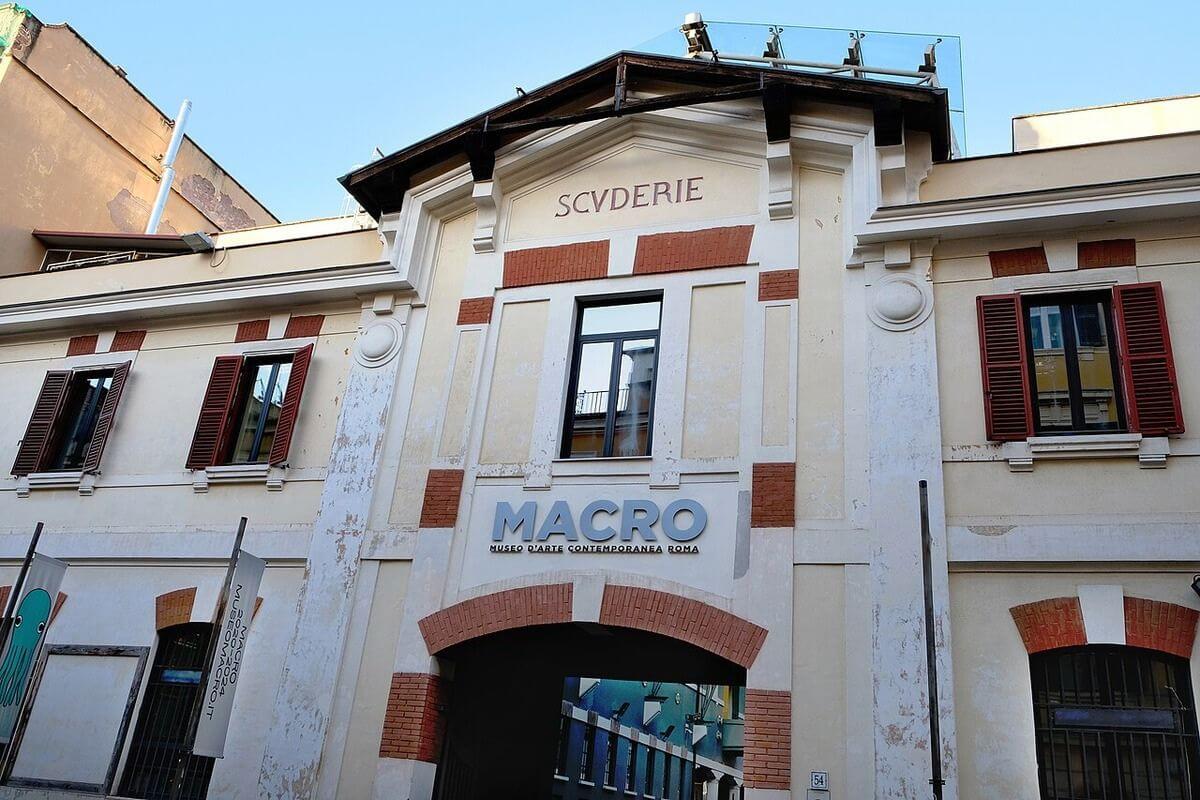
On Via Cagliari, the old Società Birra Peroni Ghiaccia inscription preserves a trace of the brewery that once occupied this complex. Its early-1900s buildings, designed by Gustavo Giovannoni, included stables and warehouses.
Brewing ended here in 1971. The city later took over part of the complex and restored it as the Municipal Gallery of Modern and Contemporary Art, which opened in 1999. The museum adopted the name MACRO in 2002.
The first conversion soon ran short of gallery and storage space, prompting an international competition for an extension. Odile Decq’s new wing opened in 2010, adding exhibition spaces and routes through the former industrial site. The museum’s changes of level grew out of the challenge of connecting the older buildings with this new addition.
Since 2018, the museum has been managed by Palaexpo. Projects including MACRO Asilo and Museo per l’Immaginazione Preventiva have explored public participation and new exhibition formats, continuing to reshape what happens inside the former brewery.
Required credit: Photo by Nicholas Gemini – Own work, CC BY-SA 4.0, Link
MACRO Testaccio: What Is the Mattatoio Today?
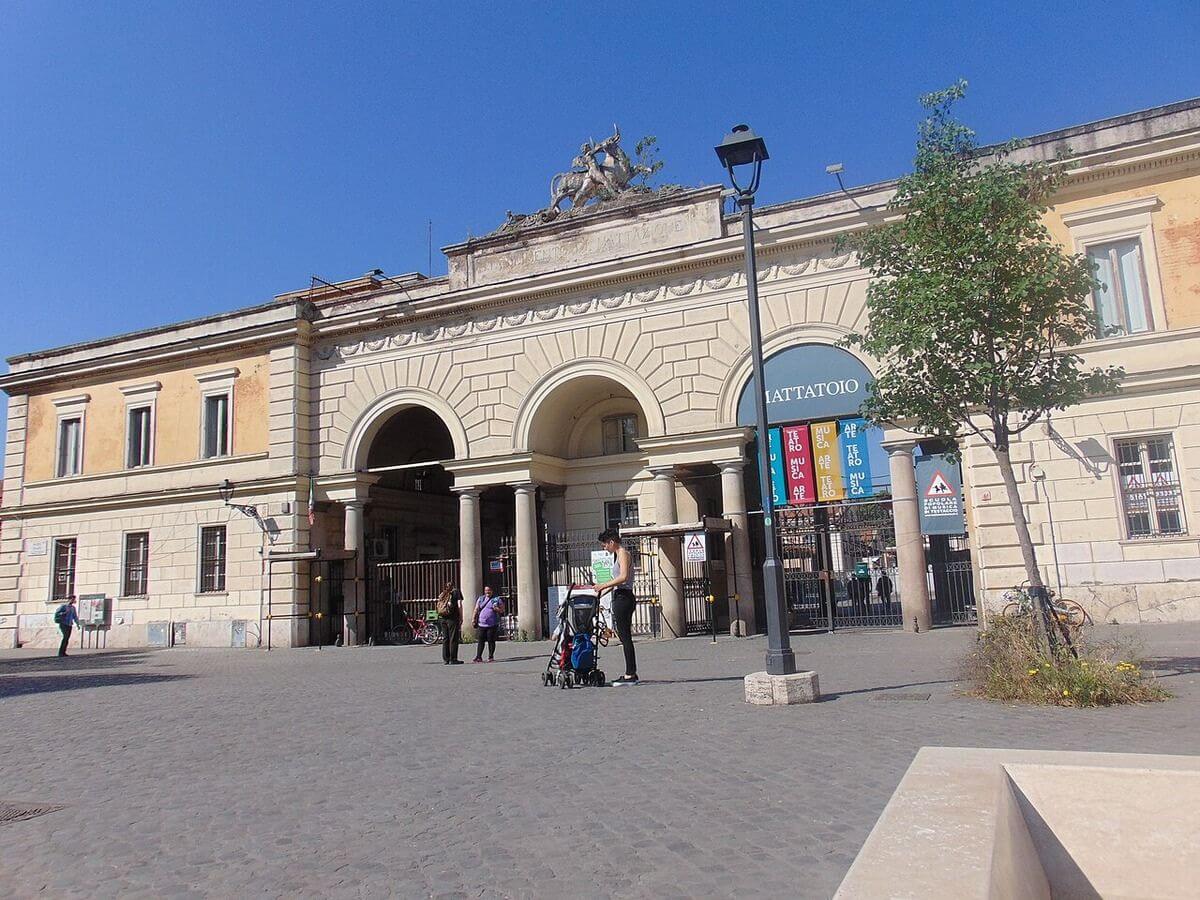
MACRO Testaccio refers to the former MACRO exhibition spaces at the Mattatoio, Rome’s old slaughterhouse in Testaccio. It is a separate venue from MACRO on Via Nizza, with its own program.
Address: Piazza Orazio Giustiniani 4, 00153 Rome, Italy.
Its cultural spaces include restored industrial pavilions and La Pelanda, used for exhibitions, performances and other projects.
To plan a visit, check Mattatoio’s visitor information for exhibition dates, opening hours and admission conditions. These arrangements are separate from those of the museum on Via Nizza.
What to See Near MACRO?
- Near MACRO’s Via Nizza building, Villa Torlonia offers a contrast to contemporary exhibitions, with the House of the Owls’ stained glass and Casino Nobile’s grand reception rooms.
- Porta Pia: Compare Michelangelo’s city-facing design with the grand 19th-century outer facade. The nearby breach memorial marks where Italian troops entered Rome in 1870. A stop here fits a walk back toward the city center.
- Quartiere Coppedè: A chandelier hangs beneath the entrance arch, with the Fountain of the Frogs beyond in Piazza Mincio. A walk around the public streets lets you pick out animal motifs and painted decorations on the facades.
- Villa Borghese Gardens: For a longer outdoor outing, continue toward the park’s tree-lined paths and fountains. Its lake and island Temple of Asclepius offer a distinctive stop within a large park, where the sights are spread out.
- Capuchin Museum and Crypt: A longer continuation toward Via Veneto brings you to a museum about the friars’ history and chapels decorated with human bones. Their patterns form part of a religious reflection on life and death. Plan this as a separate museum visit with its own admission.

Fanny, a skilled writer with a keen interest in art and culture, has been enchanted by the Borghese Gallery’s exquisite collection and its history. As a significant contributor to the Visit Borghese Gallery blog, she artfully shares insights and stories, bringing the gallery’s masterpieces and the lush gardens to life for readers around the world.