- On November 26, 2026
- In PLAN YOUR VISIT Top attractions
Visiting Rome’s National Gallery of Modern and Contemporary Art
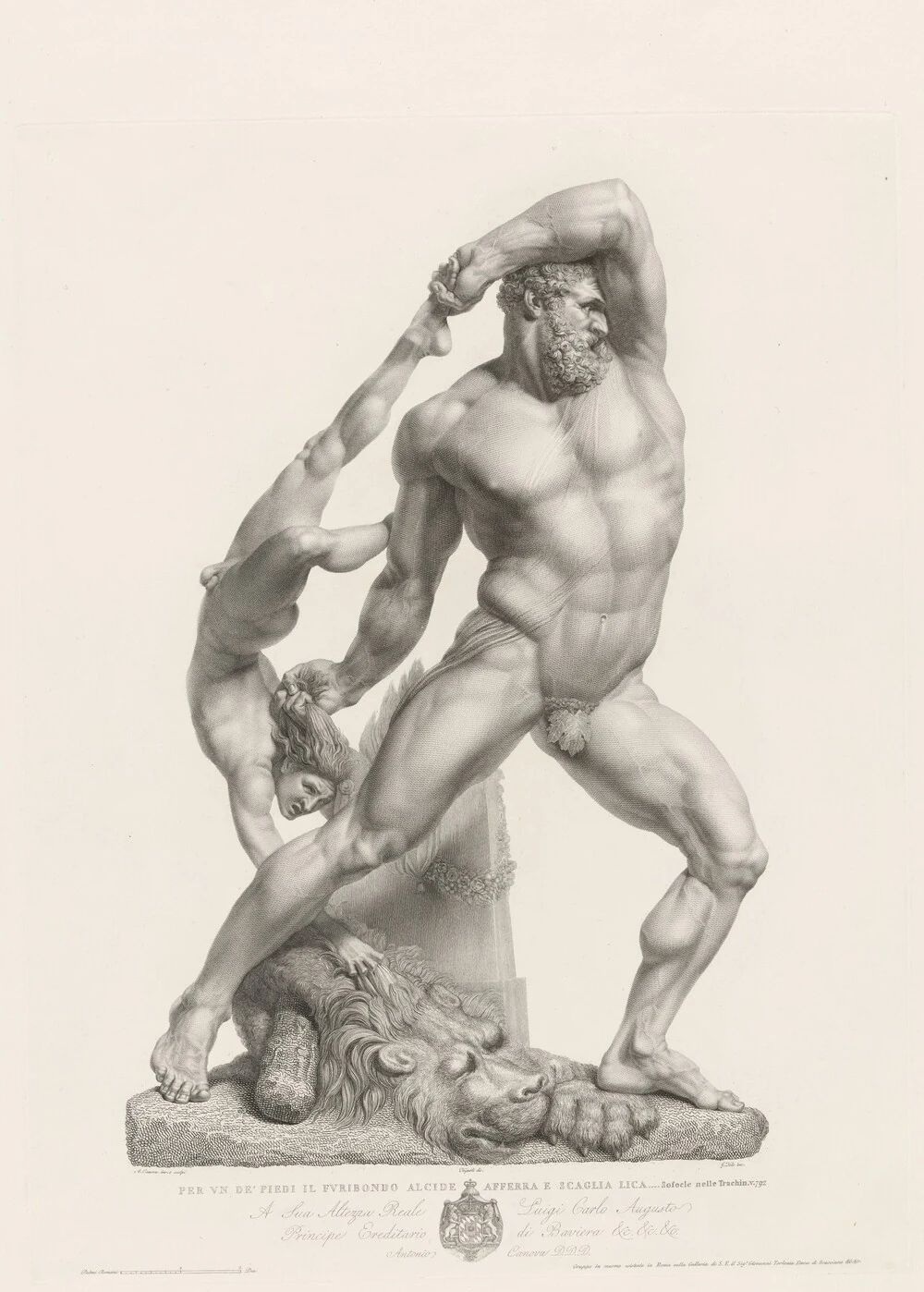
In Antonio Canova’s Hercules and Lichas, Hercules plants his feet wide as he swings Lichas upside down. At Rome’s National Gallery of Modern and Contemporary Art, you can follow that sense of movement from the turn of Canova’s marble figures to the repeated lines and shapes of Italian Futurist painting.
The museum, known in Italian as the Galleria Nazionale d’Arte Moderna e Contemporanea (GNAMC), sits in Valle Giulia on the edge of Villa Borghese. This guide helps you choose which rooms to explore, book your ticket, and pair the museum with a walk through the park or a visit to the Borghese Gallery.
Galleria Nazionale d’Arte Moderna Key Facts
- Address: Viale delle Belle Arti 131, Rome. The city’s similarly named Galleria d’Arte Moderna is at Via Francesco Crispi 24.
- Opening hours: Tuesday–Sunday, 9 a.m.–7 p.m. Closed Mondays.
- Last admission: 6:15 p.m. during regular opening hours.
- Admission: The standard ticket costs €20.
Galleria Nazionale d’Arte Moderna Tickets and Opening Hours
Admission, Discounts, and Free Days
If you’re visiting the Borghese Gallery, I’d head to the GNAMC afterward. The walk across Villa Borghese gives you a break between museums.
Keep your Borghese Gallery ticket and show it at the GNAMC that same day. You’ll pay €10 for admission. A standard GNAMC ticket costs €20.
If your dates are flexible, you can visit for free on the first Sunday of each month, April 25, June 2, or November 4. You’ll need to reserve online in advance for any of those dates.
- Free admission: If you’re traveling with children or teens, anyone under 18 gets in free. Visitors with disabilities and one companion also enter free.
- €2 youth ticket: If you’re an EU citizen, you can get this rate from your 18th birthday up to and including your 25th birthday. The same rate and age limits apply to citizens of some countries outside the EU.
If you’d like an audio guide for the city, I recommend this GNAMC ticket bundle. It includes admission for a self-guided museum visit and a Rome audio guide app.
Opening Hours and Last Admission
- Regular hours: Tuesday through Sunday, 9 a.m. to 7 p.m.
- Last admission: 6:15 p.m. during regular hours.
- Closed: Mondays and December 25.
Your three-hour window starts at the time you select when booking. You can enter after that time if your window is still open and you arrive by last admission. If you want to see both the collection and an exhibition, I’d arrive near the start of your slot.
What to See at Rome’s National Gallery of Modern Art
If you only have time for a few rooms, I’d spend it on the ground floor. Give yourself a few minutes to walk around Canova’s marble, then pick a couple of painting rooms that catch your eye on the museum’s floor plan.
The works below are highlights from the collection.
Canova’s Hercules and Lichas
Give yourself room to take in both figures in the Salone di Ercole (Room 3). The marble stands about 11½ feet tall. As you walk around it, follow the curve of Lichas’s back up to the ankle in Hercules’ hand. Hercules has him by the hair, too. In the myth, Lichas brings Hercules a tunic without knowing it’s poisoned. Canova shows the moment just before Hercules throws Lichas.
The Hayez, Van Gogh, and Klimt Rooms
Start with the Hayez Room (4) if you like paintings that tell a story. In The Sicilian Vespers, a woman falls back into a man’s arms. Look around her and you can see the alarm spread through the crowd. In the Van Gogh Room (15), The Gardener is the portrait I’d look for. The red and green strokes in his jacket are easy to pick out, and the trees behind him are full of the same quick brushwork.
In the Klimt Room (17), look for The Three Ages of Woman. A mother and sleeping child are tucked into a patch of color and pattern. The older woman stands apart, her face hidden.
Futurism and Postwar Italian Art
If the sense of movement in Canova stays with you, make time for the Balla Room (20) on the ground floor. Follow the repeated curves and diagonals in Dynamic Expansion + Speed to see how Giacomo Balla gives a still painting the feeling of speed.
One floor up, I’d pair the Fontana Room (29) and the Burri Room (33). In Lucio Fontana’s Spatial Concept from 1949, tiny holes spiral across white paper. In Alberto Burri’s Grande rosso P. N. 18, red plastic puckers around a burned opening. Both works reward a close look at what the artist did to the surface.
History of the Galleria Nazionale d’Arte Moderna
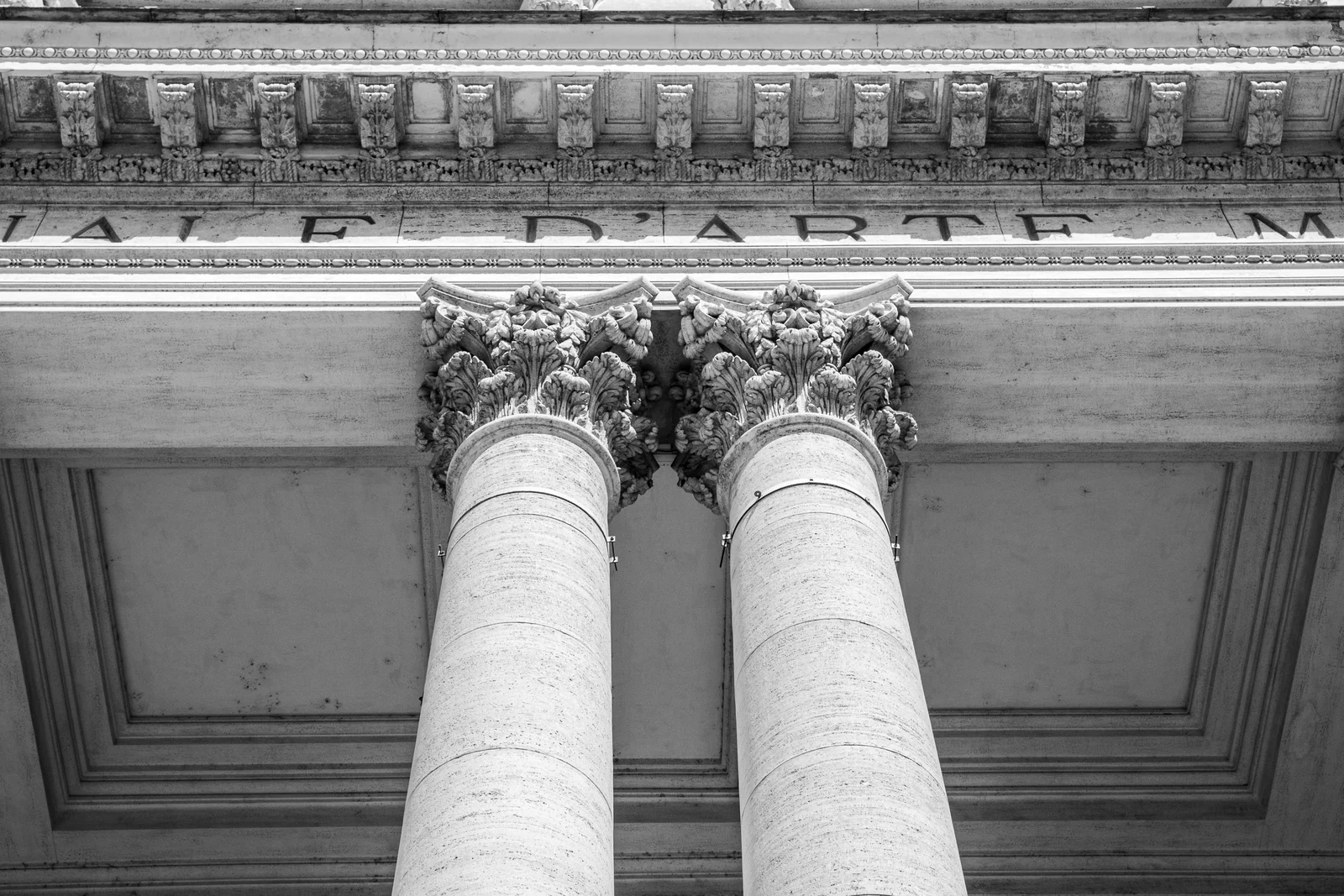
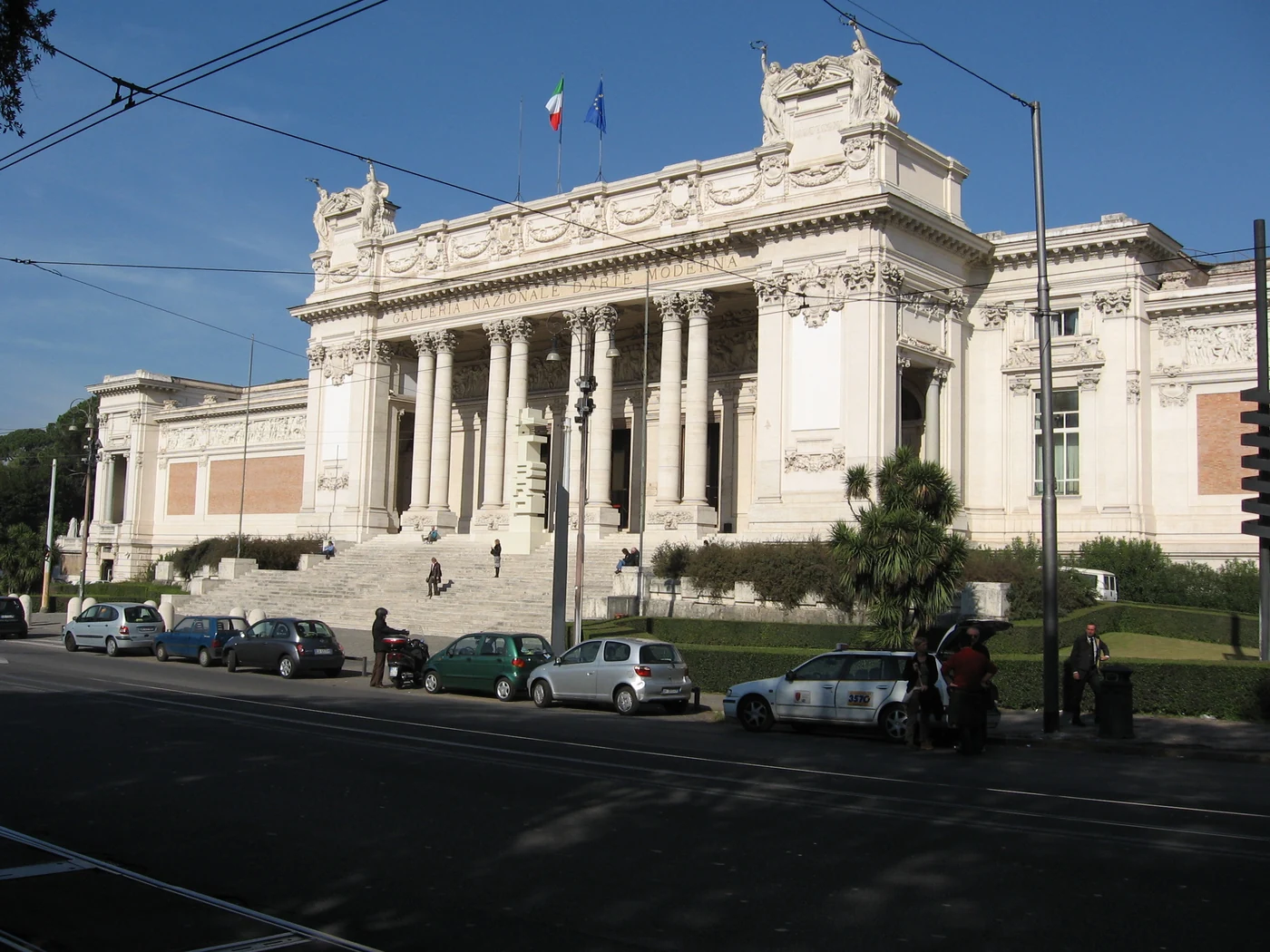
From the foot of the museum steps, you can see how the paired columns frame the entrance and the wings sit back on either side. Cesare Bazzani designed the Palazzo delle Belle Arti for Rome’s 1911 International Exhibition, which marked 50 years of Italian unification.
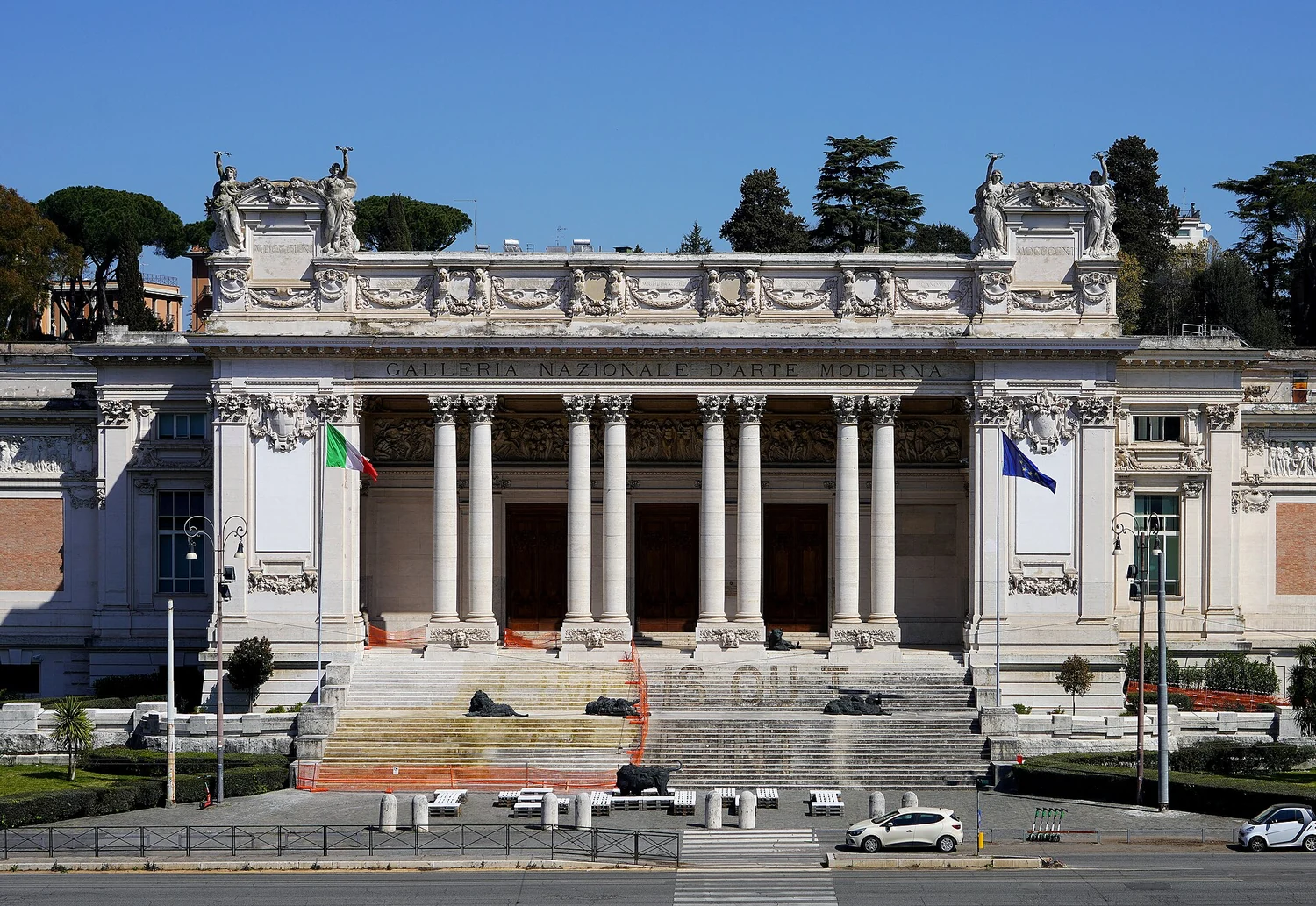
The gallery’s history began in 1883, when the newly unified country set out to build a national collection of modern art. Its first home was the Palazzo delle Esposizioni on Via Nazionale. Whenever a temporary exhibition opened there, the works had to be moved.
After the 1911 exhibition, the Italian state acquired Bazzani’s palace as a permanent home for the gallery. The museum still collects art of its own time, a practice that now brings work from the 21st century into the collection.
How to Get to the Galleria Nazionale d’Arte Moderna
The main entrance is at Viale delle Belle Arti 131, at the top of the steps facing Villa Borghese.
Arriving from Flaminio or Villa Borghese
- By metro: Get off at Flaminio (Line A). From Piazzale Flaminio, follow Via Flaminia north and turn right onto Viale delle Belle Arti.
- By tram: Lines 3 and 19 serve Valle Giulia.
- On foot from Villa Borghese: From Piazzale Ferdowsi, take the Bruno Zevi staircase down to Valle Giulia. The museum is right across the street.
Step-Free Access and Visitor Facilities
For step-free entry, use the ramp on Via Antonio Gramsci. If you’re being dropped off, call the museum at +39 06 67 23 6555 to confirm where to stop. Inside, the museum has elevators and platform lifts, and two wheelchairs are available for visitors.
If you’ve been out all day with a backpack, you’ll need to leave it in the cloakroom before heading into the galleries. If you’d like to pause for coffee, you can step out to Caffè delle Arti and return to the galleries within your original three-hour ticket window.
What to See Near the Galleria Nazionale d’Arte Moderna
- Villa Giulia: Just down Viale delle Belle Arti, a Renaissance villa with open courtyards houses the National Etruscan Museum. Look for the Apollo of Veii, a terracotta figure caught mid-stride that once stood on the roof of an Etruscan temple.
- Villa Borghese Gardens: For a break outdoors, follow the paths to the lake. The Temple of Asclepius stands on a small island, and you can see it from the shore.
- Borghese Gallery: If Canova’s marble caught your eye, look for the leaves growing from Daphne’s fingertips in Bernini’s Apollo and Daphne.
- MAXXI: In Flaminio, Zaha Hadid’s curved walls and crossing stairways make the route between exhibitions part of what you came to see.
- MACRO: If you’re in the mood for photography, video art, or installations, see what’s on at this former Peroni brewery on Via Nizza.
- Villa Torlonia: For a longer outing, head to Via Nomentana. The Casino Nobile houses the Museum of the Scuola Romana, where cityscapes show how painters saw Rome between the two world wars.
Cover image credit: Gab.coletta, Wikimedia Commons, CC BY-SA 4.0 (resized).

Fanny, a skilled writer with a keen interest in art and culture, has been enchanted by the Borghese Gallery’s exquisite collection and its history. As a significant contributor to the Visit Borghese Gallery blog, she artfully shares insights and stories, bringing the gallery’s masterpieces and the lush gardens to life for readers around the world.