- On January 4, 2021
- In PLAN YOUR VISIT Top attractions
Villa Giulia in Rome: The Etruscan Museum, Gardens and Renaissance Villa
At Villa Giulia in Rome, you can spend a morning with Etruscan masterpieces, then wander through the courtyards and gardens of a Renaissance villa. Look out for the smiling couple on the Sarcophagus of the Spouses, and pause at the loggia for a view down into the nymphaeum, a sunken fountain court.
Once a retreat for Pope Julius III, the villa now houses the National Etruscan Museum. You’ll find it just outside Villa Borghese on the park’s northwestern side, separate from the Borghese Gallery.
Villa Giulia: Key Facts
- Address: Piazzale di Villa Giulia 9, Rome.
- Admission: €13 standard; €2 reduced for eligible visitors.
- Opening hours: Tuesday–Sunday, 8:30 a.m.–7:30 p.m. Last entry 6:30 p.m.; galleries close 7 p.m. Closed Mondays, December 25 and January 1, except for announced special openings.
- Getting there: Metro A to Flaminio, followed by a walk of about 14 minutes.
- Suggested visit: Allow 2–3 hours for the collection and villa.
- François Tomb frescoes: Included in museum admission, but reservations are required. Not accessible on free-admission days.
What to See at the National Etruscan Museum?
The museum’s best-known works are full of small details. Look at hands, clothing and painted names: they help turn unfamiliar objects into stories.
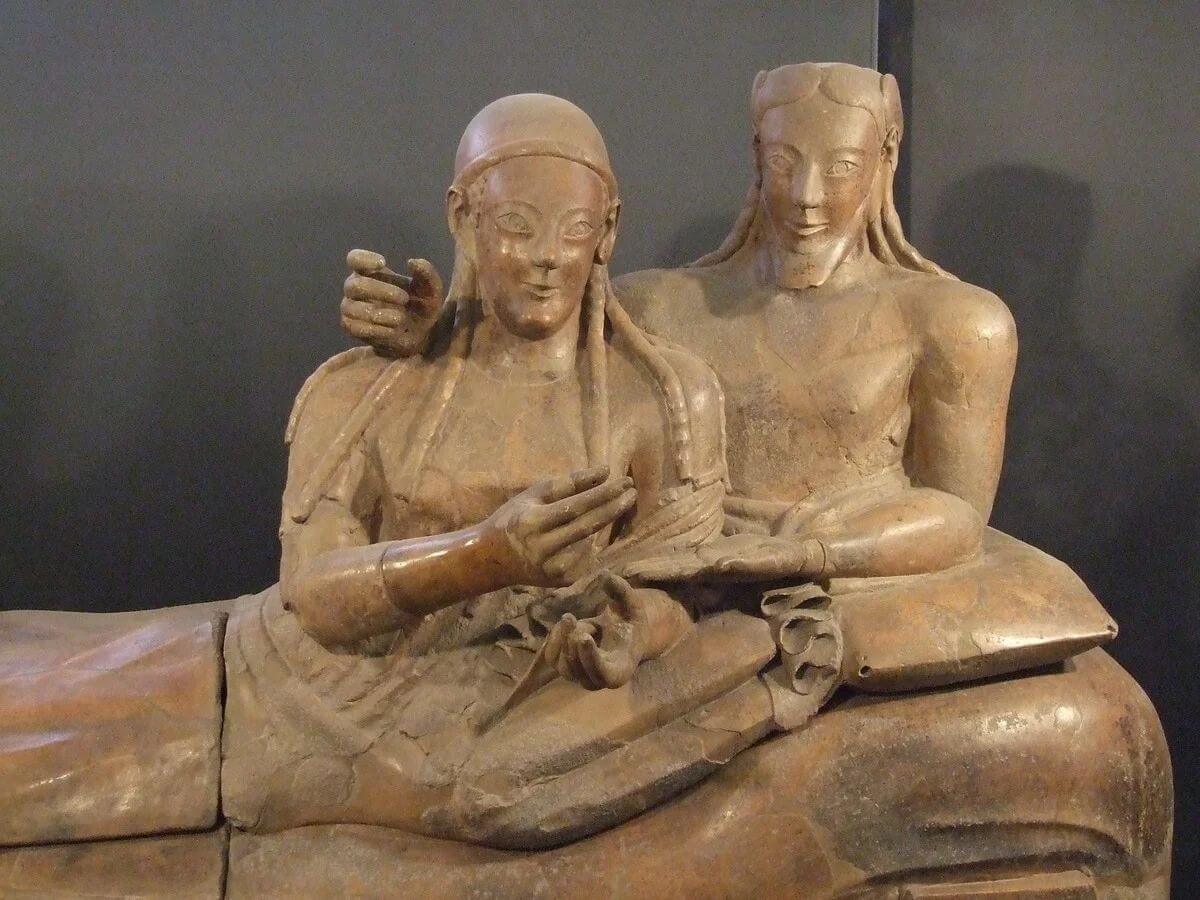
The Sarcophagus of the Spouses
Spend a moment with the couple’s hands. They may once have held objects such as a drinking cup or a small perfume vessel. The man wraps an arm around the woman, and both recline as guests at a banquet.
Made at Cerveteri around 530–520 BCE, this painted terracotta work is a cinerary urn, designed to hold cremated remains. The banquet brings a scene of shared pleasure into a funerary setting. The woman takes her place beside the man as an equal participant in the meal, a distinctive feature of Etruscan elite banqueting.
Apollo of Veii
The Apollo of Veii looks as though he is striding into the room. Follow the folds of his robe and the forward step, then imagine the figure high above you: it once stood on the roof of a temple at Portonaccio, in Veii.
Modeled in painted terracotta around 510–500 BCE, Apollo belonged to a larger group of figures. His opponent was Heracles, who had seized the golden-horned deer sacred to Apollo’s sister Artemis. That encounter helps explain the purposeful stride: this is a god heading into a confrontation.
The François Tomb Frescoes and Other Highlights
Make time for the François Tomb frescoes, original paintings from a tomb at Vulci, displayed in a reconstruction of its rooms. These fourth-century BCE scenes bring Greek myths together with Etruscan heroes and the memory of an aristocratic family.
Look for the painted names beside the figures. They help identify the characters in the action, including Macstarna, shown freeing the captured Etruscan leader Caelius Vibenna. The paintings turn a burial place into a statement about the family’s identity and power.
For a different kind of craftsmanship, look for the Cista Ficoroni, a finely engraved bronze container for cosmetics and toiletries. The Latin inscription on its lid records that it was made in Rome and given by a mother to her daughter.

Explore Villa Giulia’s Architecture, Gardens and Nymphaeum
The villa’s courtyards and gardens reveal what the building was made for: pleasure, display and time outdoors.
From a Papal Retreat to a Museum
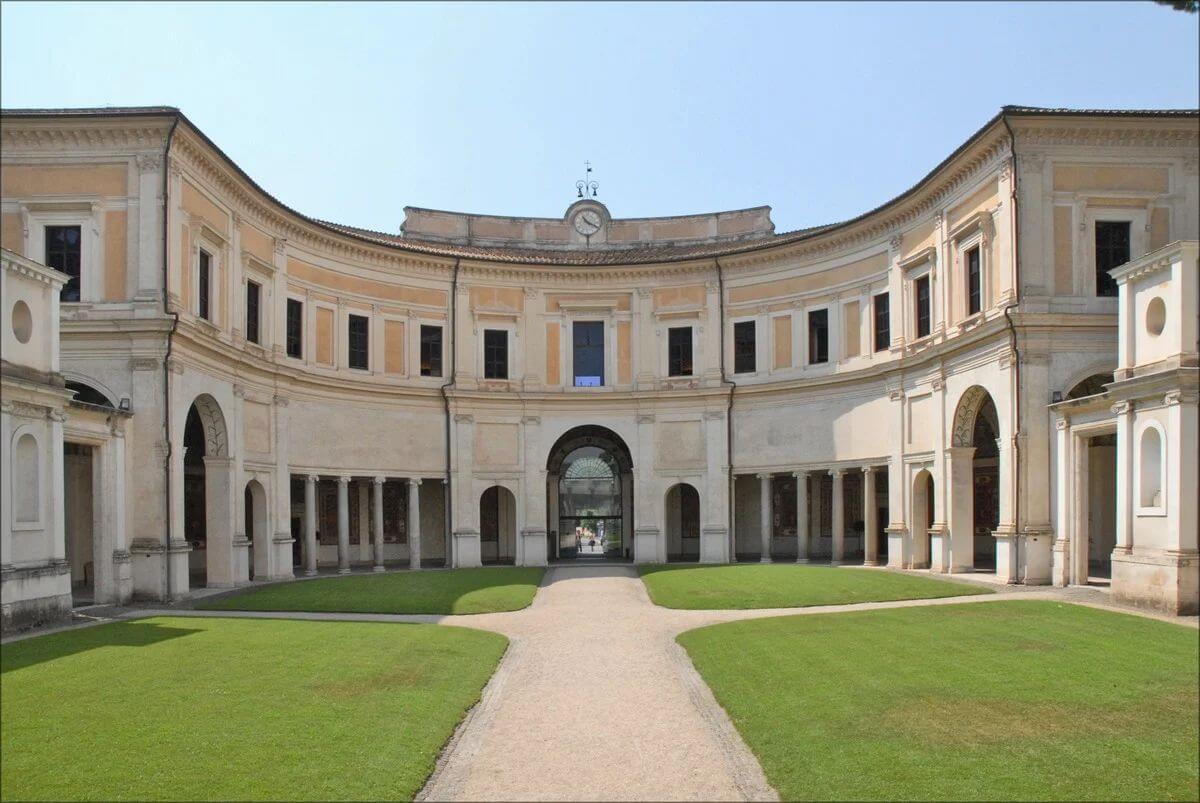
Picture Villa Giulia as a summer retreat beyond Rome’s city walls. Pope Julius III had it built between 1550 and 1555, bringing in Vignola and Bartolomeo Ammannati to create a setting for rest and entertaining.
The sequence of rooms, sheltered walks and open-air spaces belongs to that earlier life. In 1889, the villa became the home of the National Etruscan Museum, giving its Renaissance rooms a new role as a setting for ancient art.
The Courtyards and Sunken Nymphaeum
Pause under the curved portico and look up. A painted pergola filled with plants and birds carries the garden overhead. It’s a detail worth finding before you move on to the open courtyard. Gravel paths and low hedges divide the villa’s own garden beds.
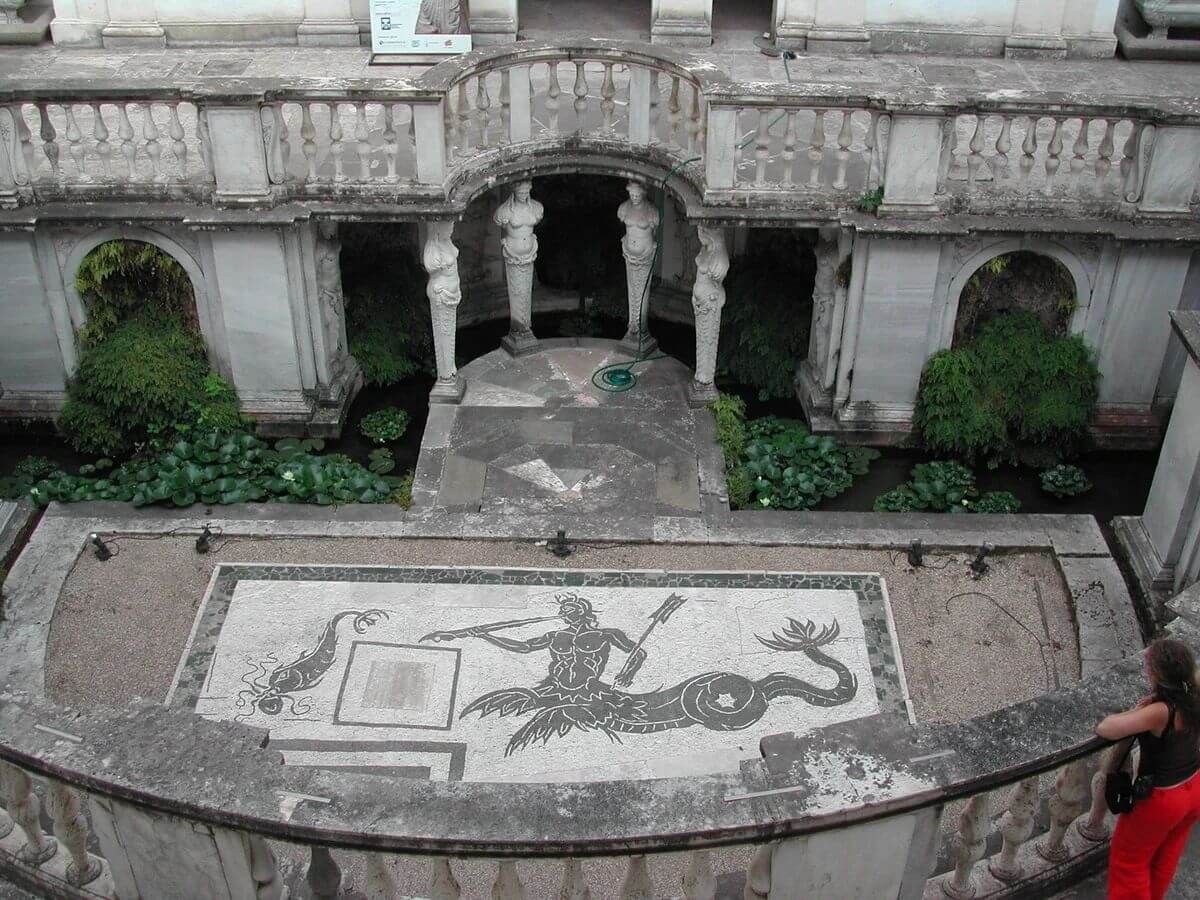
From Ammannati’s loggia, look down into the nymphaeum, a fountain court arranged across three levels. Stairways, columns and niches frame the spaces below. The two large reclining river figures represent the Tiber and Arno; the Arno recalls the pope’s Tuscan family origins.
Water from the ancient Acqua Vergine aqueduct supplied this elaborate setting for summer banquets.
The Reconstructed Temple of Alatri
In the gardens, the Temple of Alatri gives the museum’s architectural fragments a setting you can picture. This life-size reconstruction was built in the late 19th century, using discoveries from an excavated Etrusco-Italic temple.
Its timber roof, tiles and painted terracotta decoration show how individual pieces could form part of a complete building. The model represents a temple at Alatri; Apollo’s original temple stood at Portonaccio, in Veii, a separate site.
Plan Your Visit to Villa Giulia: Tickets, Hours and Access
Ticket Prices and Reservations
- Admission: Standard admission costs €13. The €2 reduced rate is available to eligible visitors under the official admission rules, and visitors under 18 enter free.
- Ticket and audio-guide package: You can choose the museum-entry and Rome audio-guide package. It includes a downloadable Rome city audio guide. The museum’s own collection audioguide is available separately.
- François Tomb reservations: If the François Tomb frescoes are a priority, arrange their reservation first. They are included in museum admission, but you need to book an available slot online or at the ticket office.
- Free admission: General admission is free on the first Sunday of each month, April 25, June 2 and November 4. The François Tomb frescoes are closed on those free-admission days.
- Garden events: For events held in the gardens, the museum lists a €4 garden-only ticket. Check the event’s admission arrangements when planning that visit.
Opening Hours, Room Closures and Villa Poniatowski
The usual opening hours are:
- Tuesday–Sunday: 8:30 a.m.–7:30 p.m.
- Last entry: 6:30 p.m.
- Galleries close: 7 p.m.
- Closed: Mondays, December 25 and January 1, except for announced special openings.
Room openings and access to the lower nymphaeum can change with conservation work. Check the museum’s visitor notices if you are coming for a particular work or space.
Only add Villa Poniatowski, the museum’s second site, to your day once you have confirmed its opening arrangements.
 If you use a wheelchair, check the accessible-route arrangements before visiting: some rooms rely on stairlifts that are not certified for powered wheelchairs.
How Much Time to Allow?
Allow 2–3 hours for the collection, the François Tomb frescoes and the villa, with more time if you enjoy reading labels or using an audioguide. For an afternoon visit, arriving by 4 p.m. leaves three hours before the galleries close.
With children, turn the highlights into a short search: find the reclining couple, spot Apollo’s forward step, then take a break in the courtyards.
How to Get to Villa Giulia?
Set your destination to Piazzale di Villa Giulia 9, the entrance to the National Etruscan Museum. The villa stands just outside Villa Borghese on the park’s northwestern side.
- By metro: Take Line A to Flaminio, then allow about 14 minutes on foot to reach the museum.
- On foot from Villa Borghese: Head toward the Valle Giulia side of the park. The Galleria Nazionale, on Viale delle Belle Arti, is a useful nearby landmark; keep the museum’s entrance address as the endpoint of your walk.
- By bus or tram: Use ATAC’s journey planner with the museum’s full address to find a route from your starting point.
- By taxi: Ask for the Museo Nazionale Etrusco di Villa Giulia at Piazzale di Villa Giulia 9.

What to Visit Near Villa Giulia?
If you have time after Villa Giulia, these nearby sights offer different ways to continue your day.
- Villa Borghese Gardens: for an outdoor break. Follow the tree-lined paths toward the lake and the Temple of Asclepius, where a small temple stands on an island. It’s a good way to stretch your legs after the galleries and enjoy the park’s landscaped setting. Entry to the public park is free; rentals and paid attractions have their own charges.
- Galleria Nazionale d’Arte Moderna e Contemporanea: for more art. On Viale delle Belle Arti, this museum takes you from 19th-century painting to contemporary art, with a collection that includes Monet and Van Gogh. Choose it if you’d like to continue exploring painting and sculpture after the Etruscan collection. Plan it as a separate museum visit, with its own admission.
- Piazza del Popolo: for a grand Roman square. The Flaminio Obelisk rises at the center, while the paired churches of Santa Maria dei Miracoli and Santa Maria in Montesanto frame the entrance to Via del Corso. Choose this stop if you’re heading toward the historic center and want to continue your day on foot.
- Terrazza del Pincio: for a view across Rome. Above Piazza del Popolo, this terrace looks across the city’s rooftops toward St. Peter’s dome. From the balustrade, look down at the square. It works well as a final viewpoint after a walk through the park.

Fanny, a skilled writer with a keen interest in art and culture, has been enchanted by the Borghese Gallery’s exquisite collection and its history. As a significant contributor to the Visit Borghese Gallery blog, she artfully shares insights and stories, bringing the gallery’s masterpieces and the lush gardens to life for readers around the world.