- On September 17, 2026
- In PLAN YOUR VISIT Top attractions
Quartiere Coppedè in Rome: Map, What to See and Visiting Tips
Quartiere Coppedè is a compact architectural complex centered on Piazza Mincio in Rome’s Trieste neighborhood. Designed mainly by Gino Coppedè between 1915 and 1927, it combines Art Nouveau, Art Deco, medieval, Baroque and classical influences.
This guide includes a map, a five-stop walking route and practical directions for visiting the district independently.
Quartiere Coppedè at a glance
- Where: Piazza Mincio, Rome
- Cost: Free to explore
- Access: The streets are accessible 24/7, but the buildings are private
- Time needed: 20–30 minutes, or up to one hour with photo stops
- Best time to visit: During daylight, preferably in the morning
- Best place to start: The arch on Via Dora
Quartiere Coppedè map and walking route
Start on Via Tagliamento and turn into Via Dora. You will enter Quartiere Coppedè through the monumental arch connecting the Palazzi degli Ambasciatori.
All five stops are grouped around Piazza Mincio. You can walk between them in less than five minutes.
- Arch of the Palazzi degli Ambasciatori – Enter from Via Dora and look up at the large wrought-iron chandelier.
- Fontana delle Rane – Continue into Piazza Mincio to reach the fountain at the center of the square.
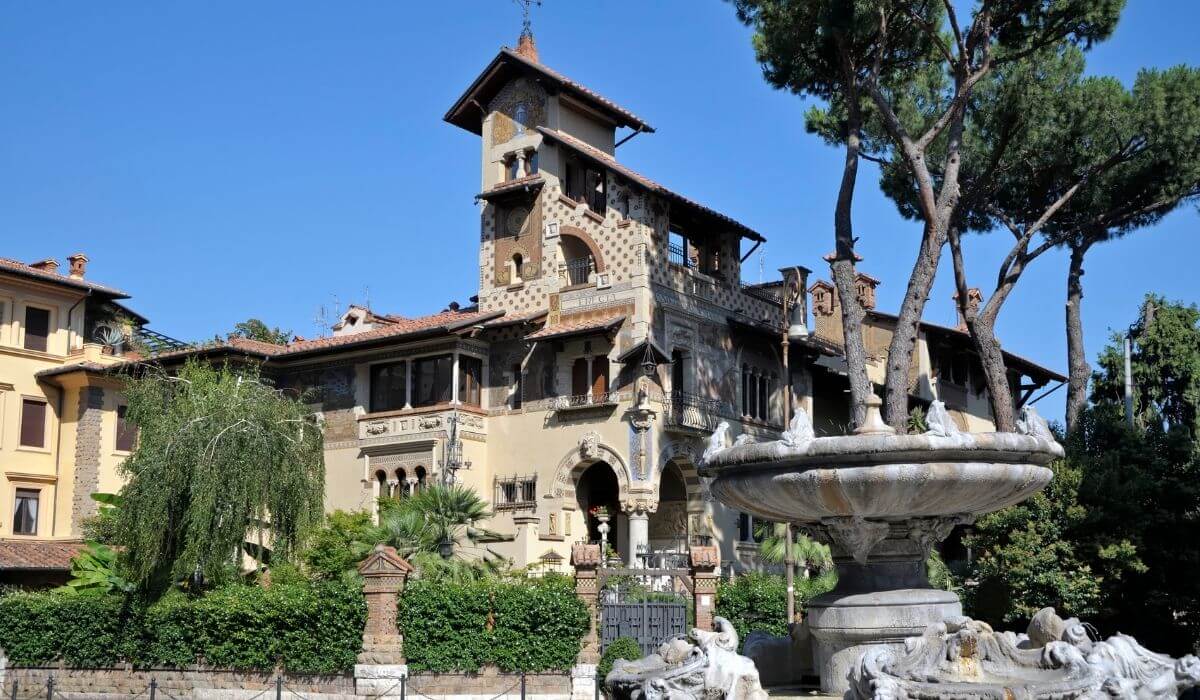
- Villini delle Fate – Look across Piazza Mincio toward number 3 for the district’s most decorative villas.
- Palazzina del Ragno – Walk to Piazza Mincio 4 and find the spider above the entrance.
- Palazzo Senza Nome – Finish at Piazza Mincio 2, opposite the other main buildings.
What to see in Quartiere Coppedè?
The Palazzi degli Ambasciatori arch
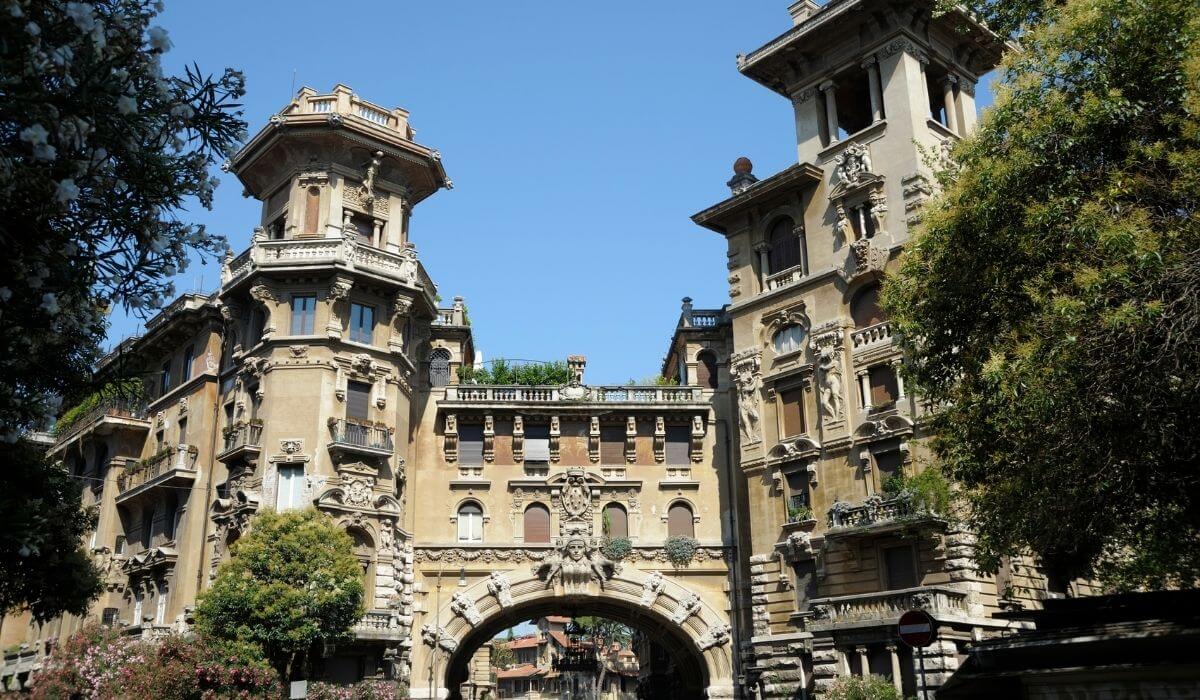
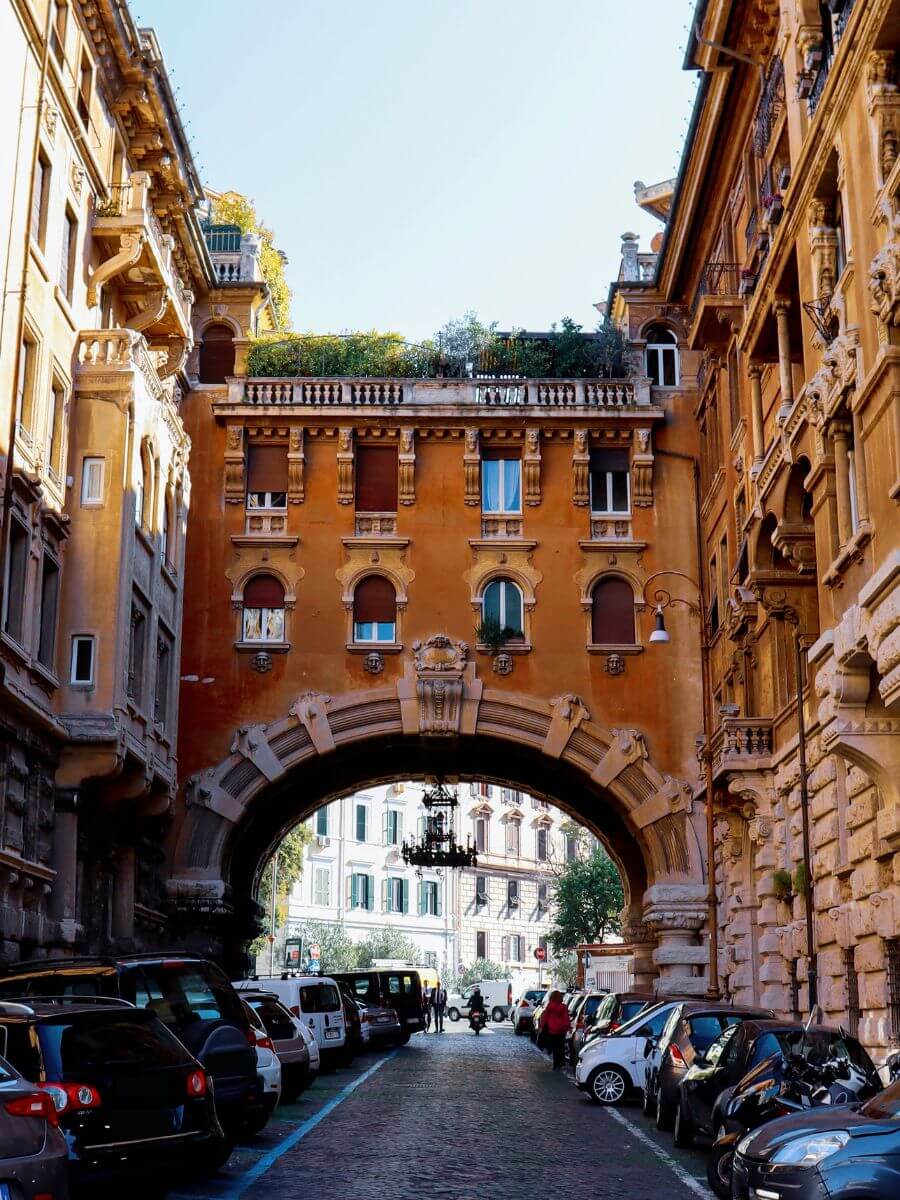
Enter Quartiere Coppedè from Via Dora through the monumental arch connecting the two Palazzi degli Ambasciatori.
Pause underneath to see the large wrought-iron chandelier hanging above the street. From this spot, the arch frames Piazza Mincio and the Fountain of the Frogs, creating one of the district’s best photo opportunities.
Fontana delle Rane (Fountain of the Frogs)
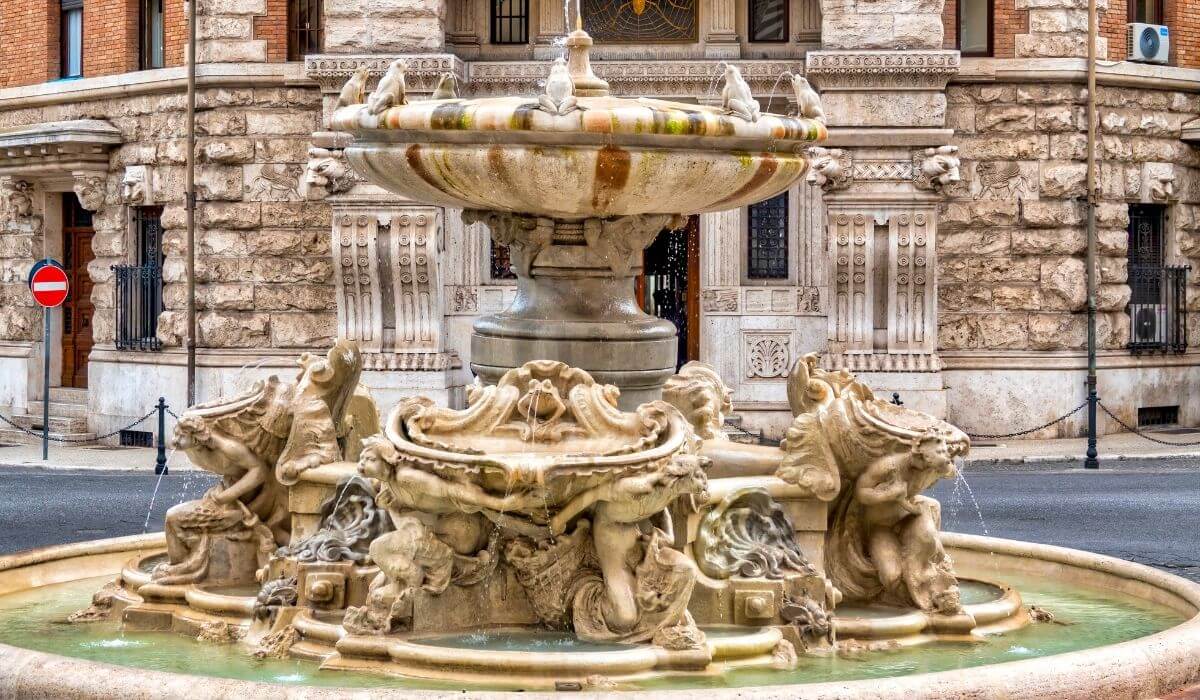
The Fontana delle Rane is the focal point of Piazza Mincio. Its upper basin is surrounded by 12 stone frogs, which give the fountain its name. A major restoration completed in 2020 removed vegetation, limescale and discoloration from the stonework.
According to a popular local story, the Beatles jumped into the fountain fully clothed after performing at the nearby Piper Club. For the best wide-angle photograph, stand beneath the entrance arch and frame the fountain through it.
 First-hand tip: The decorative details are easier to photograph in the morning, when the square is quieter and parked vehicles are less likely to obstruct the lower facades.
Villini delle Fate (Fairy Villas)
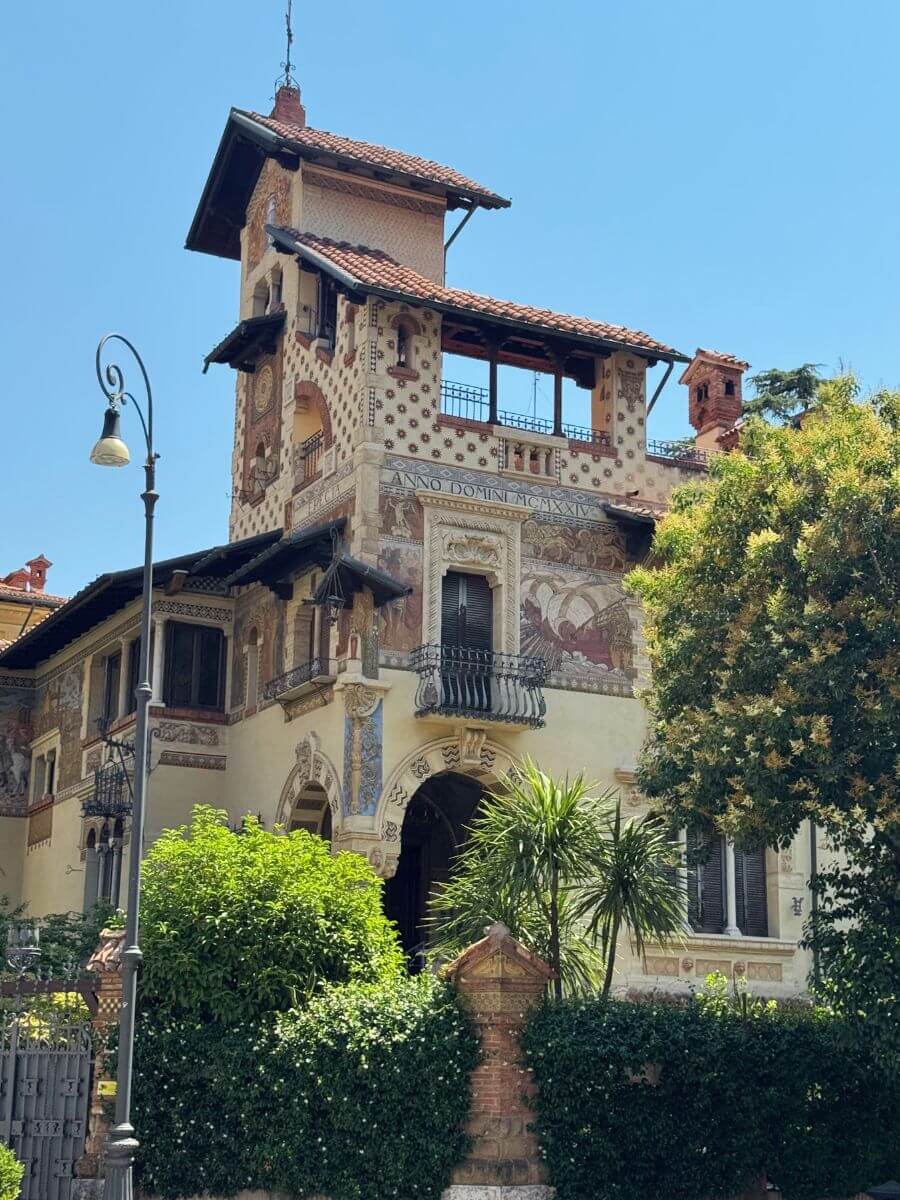
The Villini delle Fate at Piazza Mincio 3 are three adjoining villas built between 1920 and 1927. Their asymmetrical design combines marble, brick, terracotta and colored glass.
Look for the inscription Fiorenza Bella, portraits of Dante and Petrarch, and references to Florence’s skyline. Decorations on the other facades represent Rome and Venice. An entrance mosaic depicts three women named Neme, Melete and Aede, although it may not be visible from the street.
Palazzina del Ragno (Spider Palace)
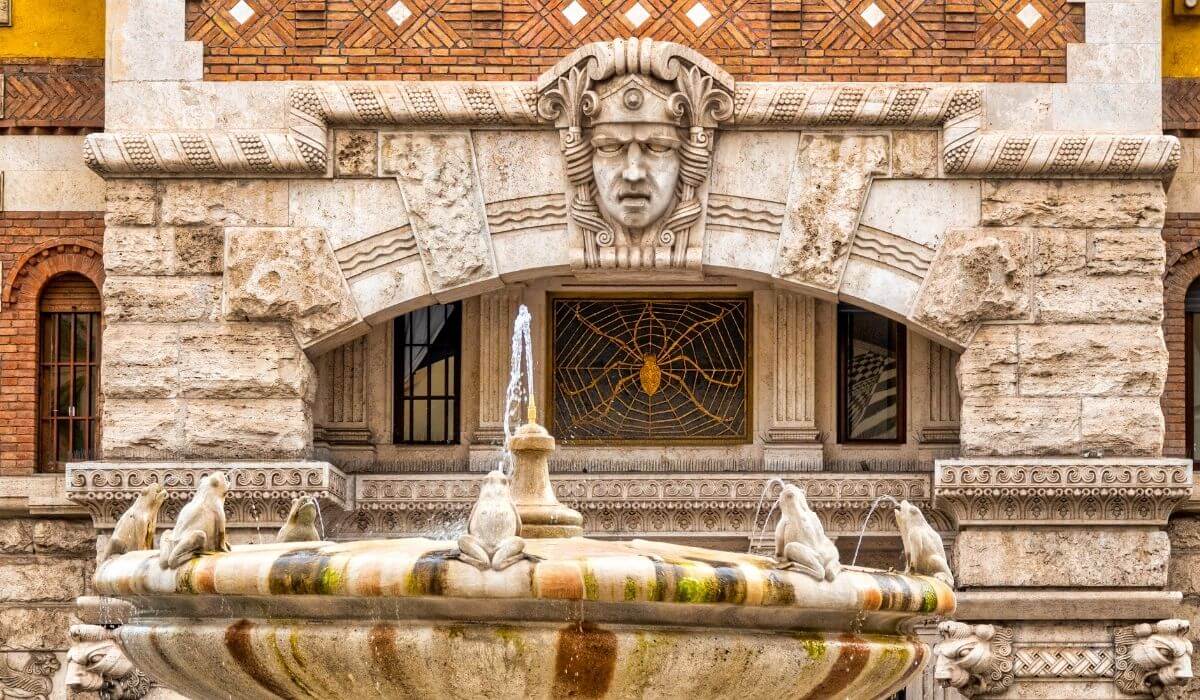
The large spider above the entrance makes Palazzina del Ragno, at Piazza Mincio 4, one of the easiest buildings to recognize.
The facade also features the word LABOR, a knight between two griffins and several animal and geometric motifs. Step back toward the fountain for a complete view of its tower, balconies, mosaics and painted decorations.
Palazzo Senza Nome
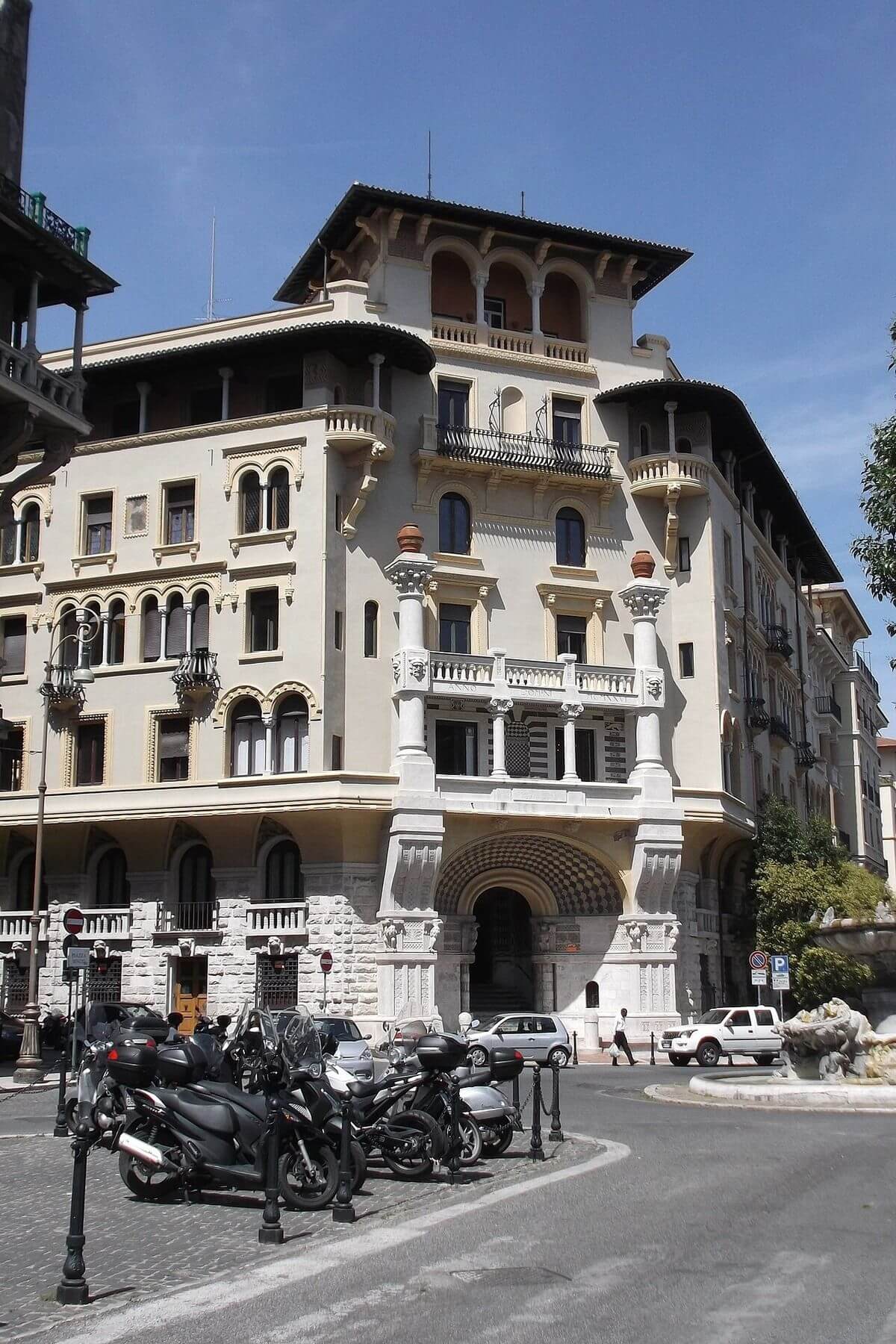
At Piazza Mincio 2, Palazzo Senza Nome is also known as Palazzo Ospes Salve. The name comes from the inscription OSPES SALVE above the entrance, meaning “Welcome, guest.”
Look for its broad entrance arch and unusual combination of medieval forms and Art Nouveau decoration.
How to get to Quartiere Coppedè?
Use Piazza Mincio as your destination. The main entrance is under the monumental arch on Via Dora, just off Via Tagliamento.
- From Termini Station: A direct bus or taxi is usually easier than the metro.
- By bus or tram: Several services stop near Via Tagliamento and Piazza Buenos Aires. Tram lines 3 and 19 also serve the area.
- By metro: Sant’Agnese–Annibaliano on Line B1 is one of the closest stations, but it is still around a 20-minute walk away.
- From the Borghese Gallery: Allow approximately 20–25 minutes on foot.
Do you need a guided tour of Quartiere Coppedè?
The route is compact enough to explore Quartiere Coppedè independently with the map above.
A tour is more useful if you want to understand the district’s symbols, inscriptions and architectural influences or combine Coppedè with other lesser-known parts of Rome.
- Best match for a Coppedè-focused visit – Small-group walking tour: This 2.5-hour tour starts on Via Dora and explores Piazza Mincio and the surrounding Trieste neighborhood. Groups are limited to eight people. The itinerary also includes stops at local bakeries and cafés, although food and drinks are paid separately. Check availability for the Coppedè walking tour >>.
- Premium private option – Villa Torlonia and Coppedè: This private tour combines the district with Villa Torlonia, its museums and the Casina delle Civette. Choose it if you want a private guide and a more complete introduction to both neighborhoods rather than a tour focused entirely on Coppedè. Check availability for the private tour >>.
A short history of Quartiere Coppedè
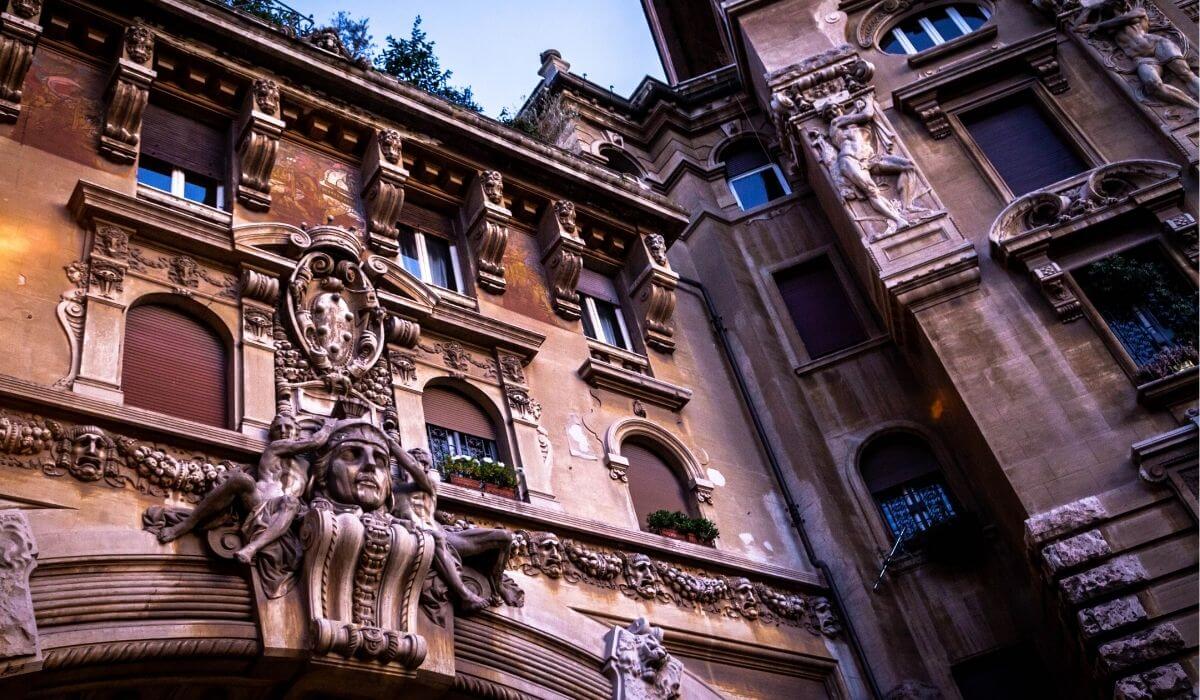
Despite its name, Quartiere Coppedè is not an official district of Rome but a group of palaces and villas within the Trieste neighborhood.
Florentine architect Gino Coppedè designed the complex between 1915 and 1927. After his death, his son-in-law Paolo Emilio André completed the remaining work. The architecture combines Italian Liberty and Art Deco with medieval towers, Baroque decoration, classical figures, mosaics and animal motifs.
Its surreal appearance later attracted filmmakers, particularly Dario Argento, who used the district in The Bird with the Crystal Plumage in 1970 and Inferno in 1980.
What to see near Quartiere Coppedè?
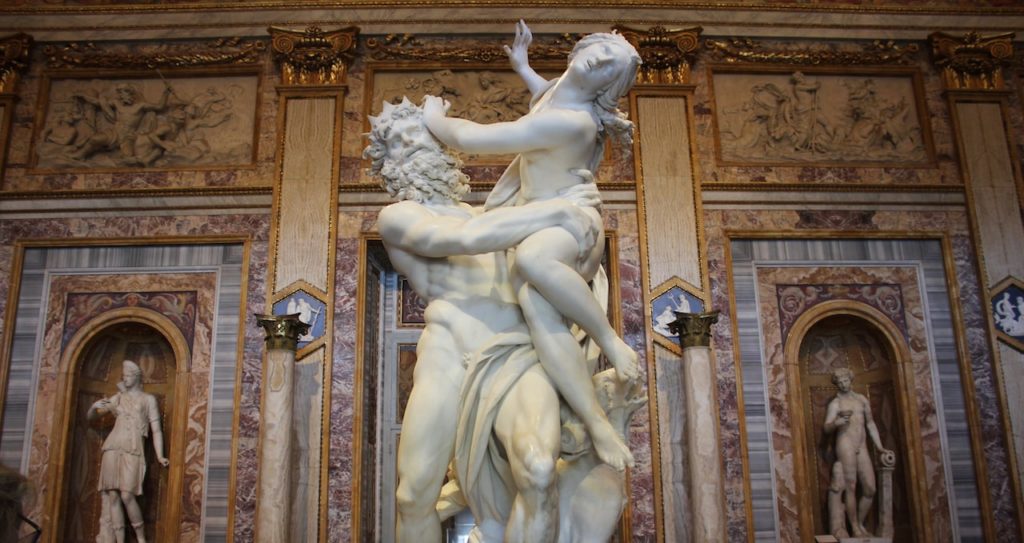
Because the main sights are concentrated around Piazza Mincio, you can easily combine Quartiere Coppedè with another attraction in northern Rome.
Villa Torlonia is the most convenient overall pairing, while Villa Borghese works well if you already have a timed museum reservation.
- Villa Torlonia : Best overall pairing, around 15 minutes on foot: Walk through its public park and visit the Casino Nobile or the Art Nouveau-style Casina delle Civette. Allow at least 90 minutes if you plan to enter the museums.
- Villa Borghese Gardens and the Borghese Gallery – Best if you already have museum tickets, around 20–25 minutes on foot: Explore Coppedè before or after your gallery visit. The gardens are free, but Borghese Gallery tickets require a timed reservation, so leave enough time between both stops.
- Catacombs of Priscilla : Best for underground history, around 20 minutes on foot: These early Christian catacombs can only be visited with a member of staff. The guided visit lasts approximately 45 minutes, and the site is closed on Mondays.
Is Quartiere Coppedè worth visiting?
Yes, especially if you enjoy unusual architecture, decorative details and photography. Coppedè offers a quieter and more imaginative contrast to Rome’s ancient monuments without requiring a large part of your day.
- Add it to your itinerary if: You have already planned Rome’s main attractions and want to discover a quieter, less conventional side of the city.
- It may not be a priority if: This is your first visit to Rome, you only have two or three days, and you still need to see the Colosseum, Vatican and historic center.

Fanny, a skilled writer with a keen interest in art and culture, has been enchanted by the Borghese Gallery’s exquisite collection and its history. As a significant contributor to the Visit Borghese Gallery blog, she artfully shares insights and stories, bringing the gallery’s masterpieces and the lush gardens to life for readers around the world.