
- On October 9, 2026
- In Art collections
Apollo of Veii (Apulu): History, Meaning and Analysis
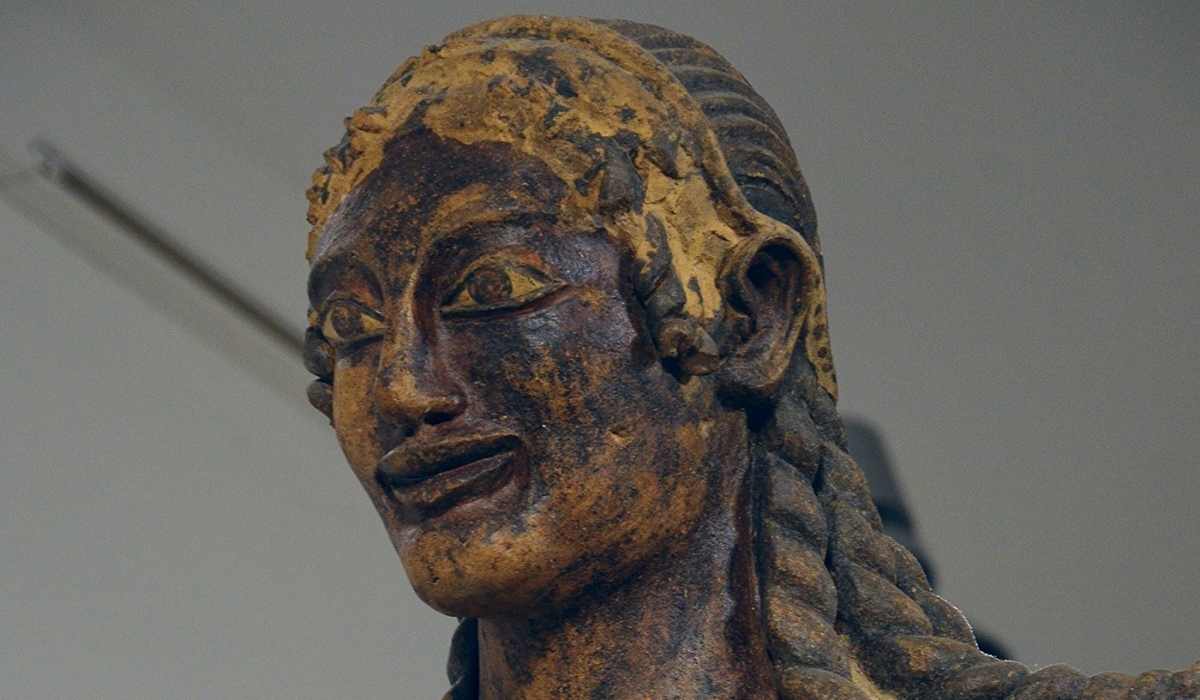
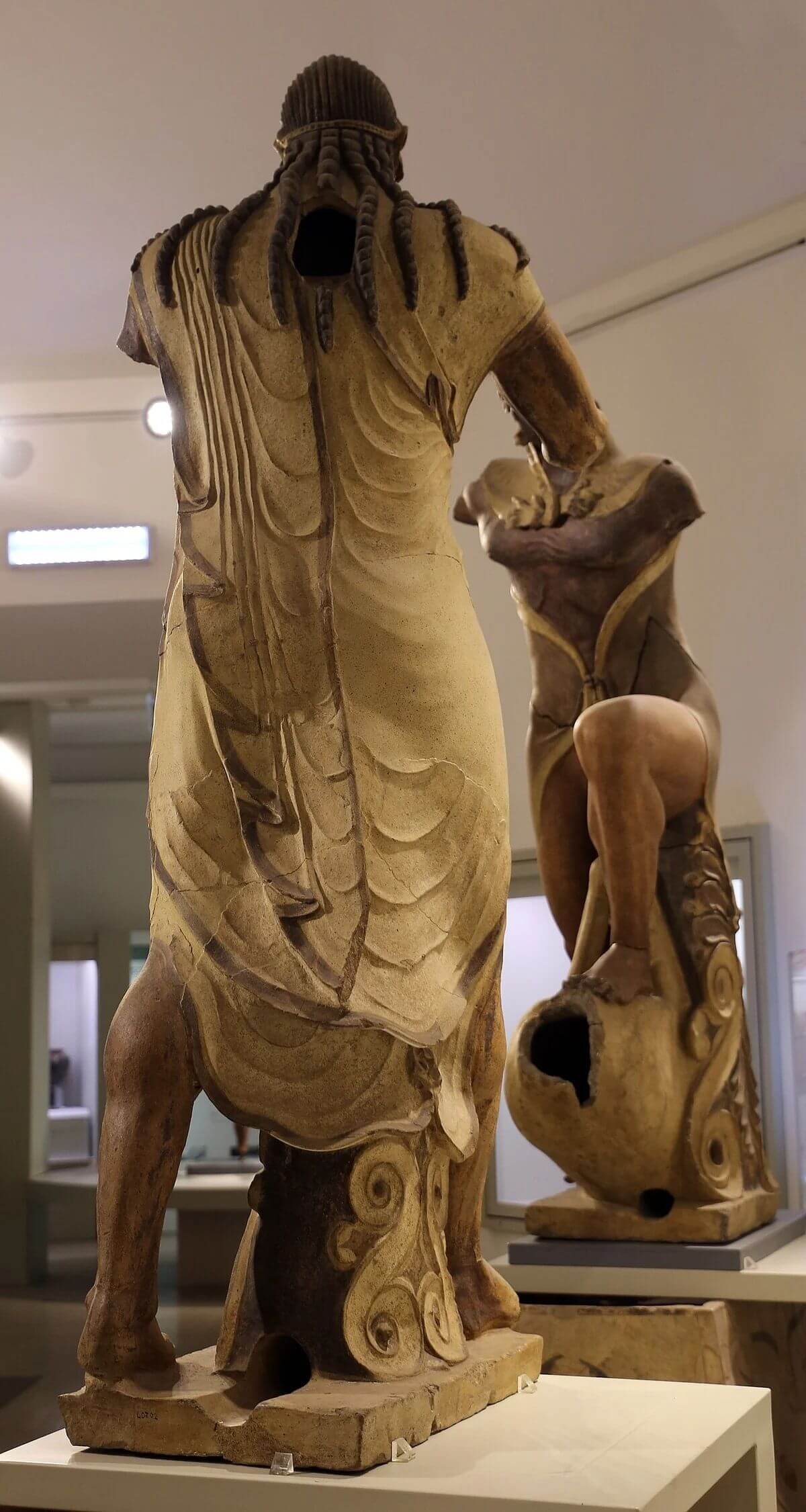
The Apollo of Veii, also known as Apulu, is an Etruscan statue made of painted terracotta around 510–500 BCE. It depicts Apollo advancing toward Heracles in a dispute over a sacred deer. Originally placed on the roof of the Temple of Minerva at Veii, the statue formed part of a larger mythological scene.
Today, you can see the original at the National Etruscan Museum of Villa Giulia in Rome, a separate museum from the Borghese Gallery.
Apollo of Veii: Key Facts
- Created: Around 510–500 BCE
- Culture: Etruscan
- Artist: Unknown; attributed to the “Master of Apollo”
- Subject: Apollo (Apulu) advancing toward Heracles
- Material: Painted terracotta (fired clay)
- Height: About 6 ft 1 in (1.86 m)
- Original setting: Roof of the Temple of Minerva at Portonaccio, Veii
- Location: Room 40, National Etruscan Museum of Villa Giulia, Rome
- Discovered: May 1916
The Temple of Minerva and the Sculpture of Apollo
Where the Statue Originally Stood
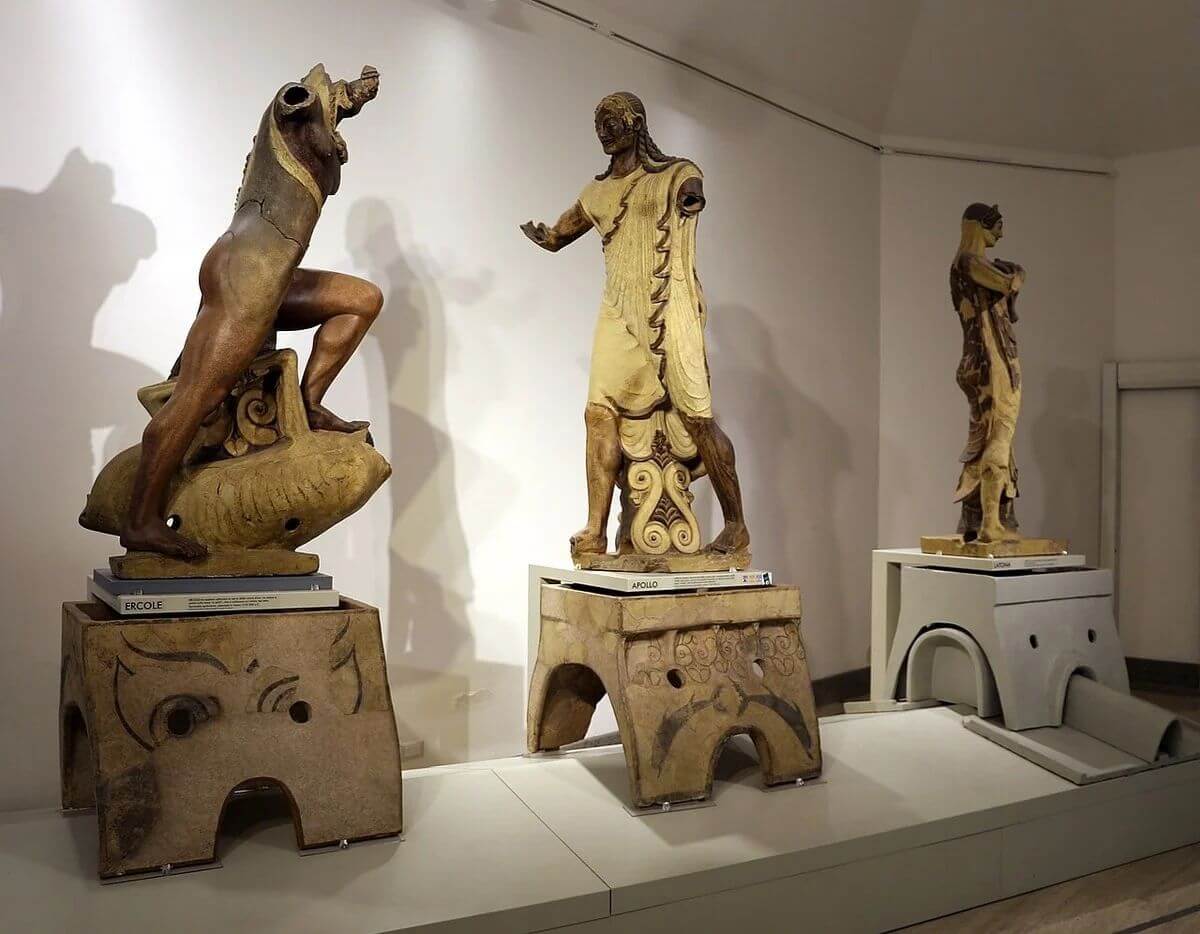
Apollo stood on the roof of the Temple of Minerva at Portonaccio, a sanctuary outside the ancient Etruscan city of Veii, north of Rome. It was an acroterion, a rooftop sculpture, rather than a cult statue housed inside the temple. Villa Giulia’s reconstruction places the group of gods and heroes about 40 feet (12 meters) above ground.
The temple had a high podium and a deep front porch. Wood and mudbrick formed much of its structure, while terracotta provided sculptural decoration. Its surviving foundations and fragments help archaeologists reconstruct the building and the setting for Apollo.
Apollo, Heracles and the Ceryneian Hind
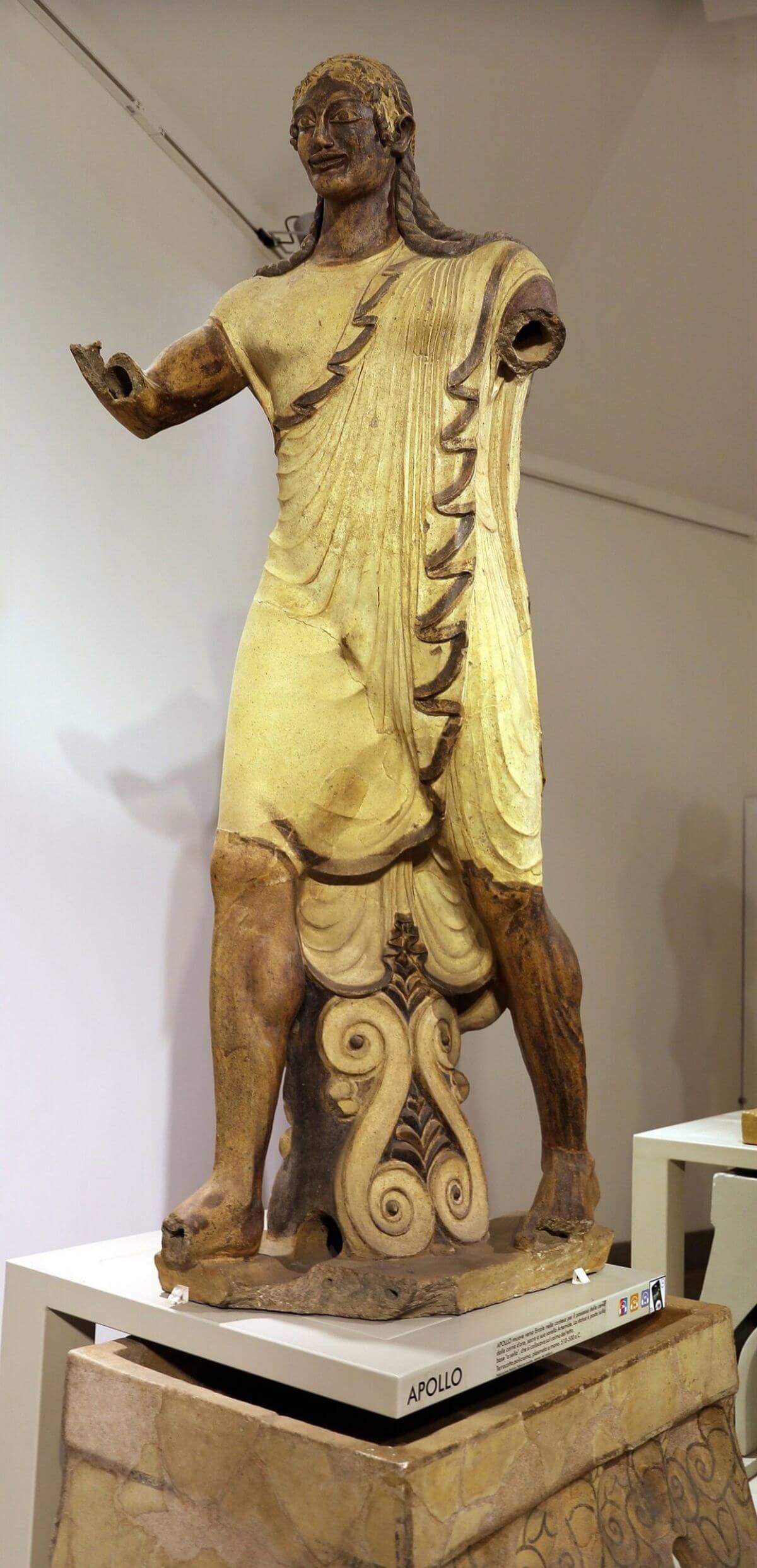
The group depicted a confrontation between Apollo and Heracles, known to the Romans as Hercules, over the Ceryneian hind. This deer had golden antlers and was sacred to Artemis, Apollo’s sister. Heracles had captured it as one of his Twelve Labors.
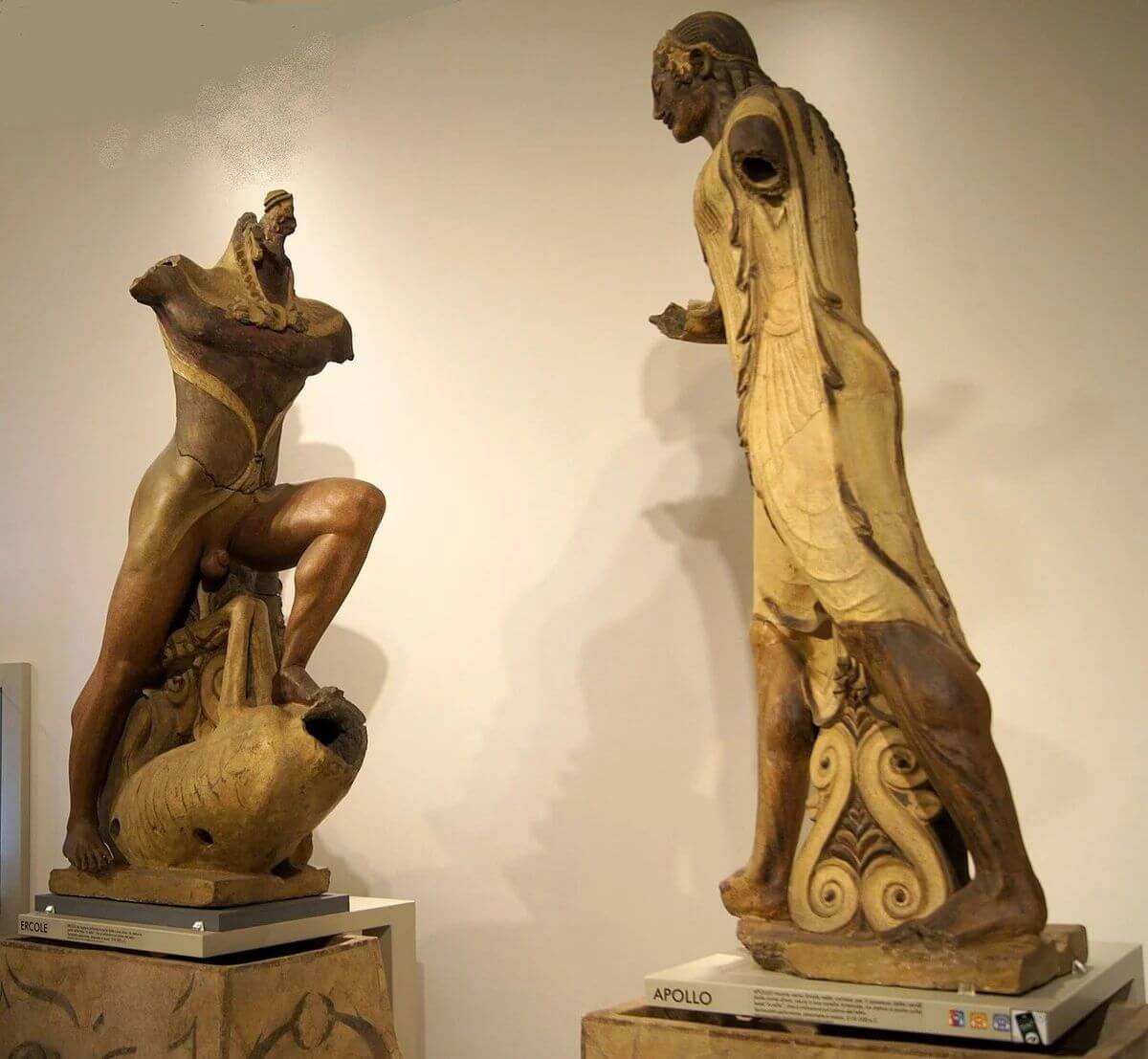
The surviving Heracles sculpture provides the context for Apollo’s pose: his forward stride expresses a confrontation with the hero who has seized his sister’s sacred animal. Seen together, the figures reveal the story behind the statue’s movement.
Apollo of Veii Analysis: Style and Meaning
Painted Terracotta
Apollo is made of polychrome terracotta: clay that was modeled, fired and painted in several colors. Etruscan sculptors used this material for large figures as well as architectural decoration.
Traces of paint help reveal the statue’s original appearance. The museum identifies brown-painted skin and white garments with dark borders. Apollo wears a chiton, or tunic, beneath a cloak. The contrasting colors separated flesh from fabric and emphasized the outlines of his clothing.
Movement and the Archaic Smile
Apollo’s wide stride gives the figure a clear direction, while the repeated folds of his garments add visual rhythm.
His face carries an Archaic smile, a stylized expression found in Greek and Etruscan sculpture of this period. It is a formal feature of the style, so it should not be read as a literal sign of happiness during the confrontation.
The emphatic pose also makes sense in the statue’s original setting. Viewed from the ground, its broad stride and distinct outline would have helped communicate the action high above the visitor.
Greek Influences and Etruscan Adaptation
Greek influence appears in the mythological subject and the Archaic treatment of Apollo’s face. These shared features reflect the cultural exchanges between Etruscan communities and the Greek world.
At Veii, artists adapted them to a local sanctuary. Apollo became part of a group of painted terracotta figures whose gestures connected them across the temple roof. The sculpture combined a Greek story with the materials and architectural setting of an Etruscan religious building.
The Sculptor and the Discovery of 1916
The sculptor of the Apollo of Veii is unknown. Villa Giulia’s collection catalogue attributes the statue to the “Master of Apollo,” a name used for an unidentified artist associated with Vulca’s workshop tradition. Vulca himself is not confirmed as its creator.
The statue was discovered in fragments during excavations at Portonaccio in May 1916. Pieces of Apollo and other roof sculptures had been carefully gathered and deposited together. In its account of the discovery, the museum interprets this arrangement as a sign of continued religious respect for the figures.
Restorers reassembled the surviving pieces, although the statue remains incomplete.
Where to See the Apollo of Veii?
The original Apollo of Veii is displayed in Room 40 of the National Etruscan Museum of Villa Giulia in Rome.
- Address: Piazzale di Villa Giulia 9, Rome
- Nearest metro: Flaminio, Line A, about a 15-minute walk away
- Opening hours: Tuesday–Sunday, 8:30 a.m.–7:30 p.m.
- Last admission: 6:30 p.m. Exhibition rooms close at 7 p.m.
- Closed: Mondays, December 25 and January 1
- Standard admission: €13
Check the official visitor information for current opening arrangements, admission details and the museum’s online ticketing link.
Check Villa Giulia tickets on Tiqets for available dates and prices. This package includes museum admission and a downloadable Rome city audio guide. The audio guide covers the city, not the museum’s collection.
For a guided visit, check availability for a private tour of Villa Giulia.
You can combine the museum with a walk through the nearby Villa Borghese Gardens. For another depiction of Apollo, Bernini’s Apollo and Daphne at the Borghese Gallery tells a different myth in marble.
 Planning a trip to ancient Veii? The archaeological area is currently closed to visitors. Check the museum’s official updates before arranging a separate visit to Portonaccio.
Sources
- Villa Giulia: The Statues of Apollo and Hercules: excavation photographs and reconstruction of the rooftop group.
- Smarthistory: Temple of Minerva and the Sculpture of Apollo (Veii): Laurel Taylor’s explanation of the temple and its sculpture, republished by LibreTexts.
- The Metropolitan Museum of Art: Etruscan Art: Greek influences and the broader context of Etruscan art.

Fanny, a skilled writer with a keen interest in art and culture, has been enchanted by the Borghese Gallery’s exquisite collection and its history. As a significant contributor to the Visit Borghese Gallery blog, she artfully shares insights and stories, bringing the gallery’s masterpieces and the lush gardens to life for readers around the world.